Fortune 500 Companies Expand Mindfulness, Yoga to Boost Employee Wellbeing
Fortune 500 mindfulness has crossed from perk to policy, and yoga is part of the package. The real question is whether that access changes workers’ lives or just polishes a brand.
The new corporate baseline
When 60 percent of Fortune 500 companies are offering structured mindfulness training, the story is no longer about an experimental wellness perk. It is about a mainstream employee benefit that now sits beside healthcare, retirement, and flexibility as part of how big employers package modern work. In practice, that shift shows up as meditation apps, on-site yoga classes, daily mindfulness breaks, and breathwork training, all designed to move companies away from reactive employee assistance and toward prevention.
For the yoga world, that matters because it changes the terms of the conversation. Yoga is no longer being sold only as a mat-based practice or a studio membership. It is being folded into a broader corporate wellness strategy, one that treats calm, focus, and recovery as assets tied to productivity and retention.
What workplace yoga actually looks like
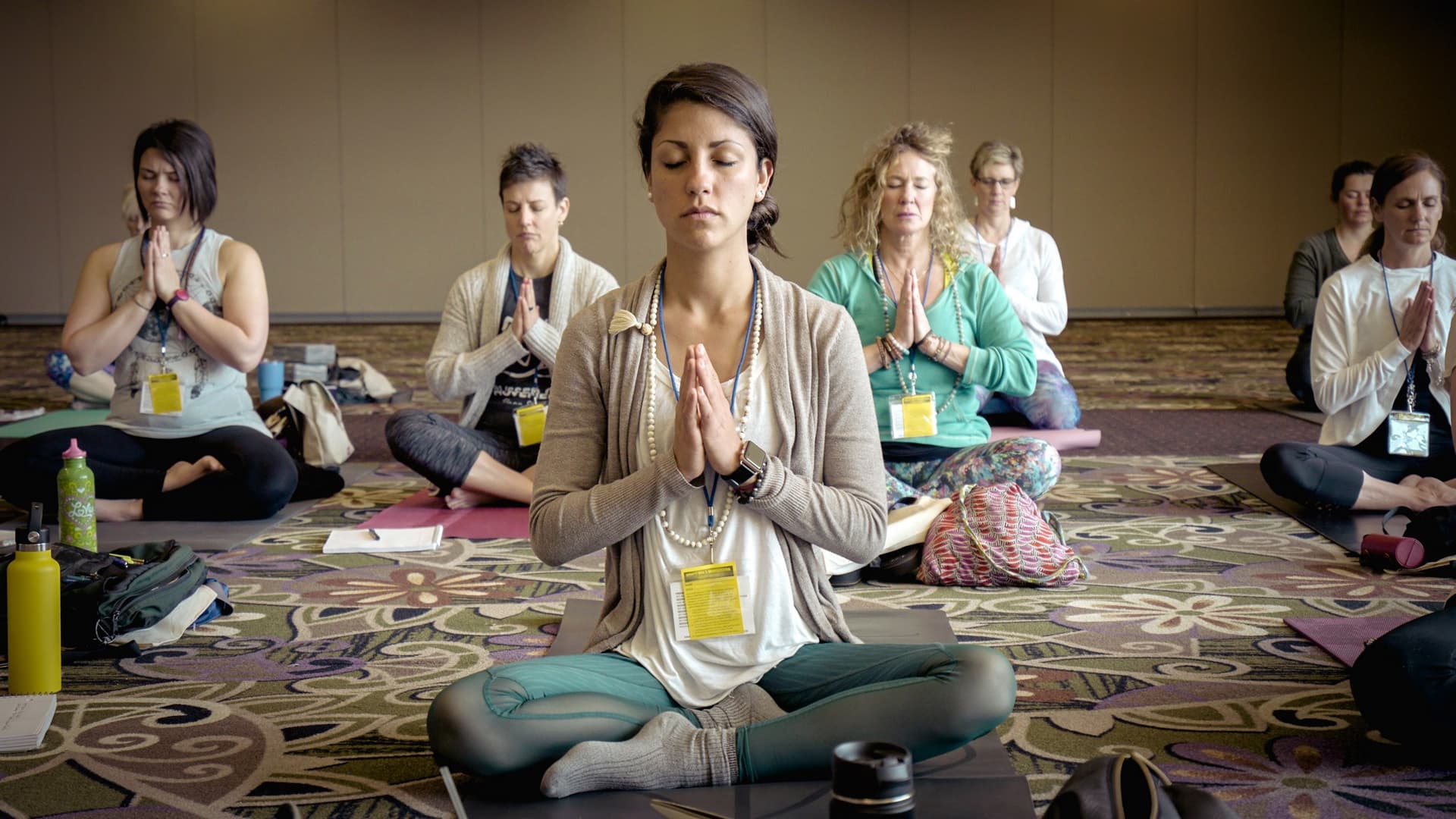
Inside companies, these offerings rarely resemble a full studio experience. More often, they are short sessions carved into the workday, app-based guidance on demand, or scheduled classes that happen in conference rooms, wellness spaces, or via livestream. Breathwork and meditation tend to be packaged as quick resets, while yoga is framed as a low-friction way to help employees manage stress without leaving the office environment.
That format tells you a lot about the audience employers think they are serving. These programs are not being presented as spiritual practice first. They are being positioned as practical tools for focus, stress reduction, and staying power, which is why they fit so neatly into conversations about performance and retention. For teachers and studio operators, the corporate channel is becoming a real pipeline, not just a side hustle.
Why employers are paying attention
The appeal is not hard to see. The reporting around these programs points to measurable gains in employee satisfaction, stress reduction, and healthcare costs, which helps explain why mindfulness is moving from optional amenity to mainstream investment. The American Psychological Association says workplace mindfulness interventions are being adopted as organizations look to support employee health, wellbeing, and performance, and that language has now become central to how employers justify these offerings.
That said, the promise is bigger than any single class or app. A company is not simply buying a 30-minute yoga break. It is buying a narrative of care, a signal to workers that the organization is taking wellbeing seriously, and a potential lever for keeping people engaged in a labor market where burnout and turnover are expensive.
Yoga’s rise did not start in the boardroom
Corporate wellness is building on a broader increase in yoga participation, not creating interest out of thin air. The Centers for Disease Control and Prevention reported that yoga practice among U.S. workers nearly doubled, rising from 6.0 percent in 2002 to 11.0 percent in 2012 using U.S. National Health Interview Survey data. That kind of growth matters because it suggests workplace programs are meeting an existing cultural shift toward mind-body practices.
In other words, employers are not introducing yoga to a population with no prior interest. They are translating a practice that many workers already recognize into a format that fits office life. For the yoga community, that can be both an opportunity and a tension point. It opens a new channel for access, but it also recasts yoga in the language of outcomes, utilization, and human resources rather than lineage, breath, or embodied practice.

The catch: mindfulness is not a cure-all
The enthusiasm around workplace mindfulness comes with an important caveat. Harvard Business Review’s research in 2022 warned that mindfulness meditation can reduce stress and improve wellbeing in some contexts, but it is not always clear whether these programs are actually paying off for employers. That nuance matters, because a lot of corporate wellness messaging suggests that a little meditation can solve a lot of workplace pain.
The American Psychological Association is blunt about the real drivers of burnout: excessive workloads, low control, poor support, and unfair or toxic environments. That framing changes how you should read any yoga or mindfulness benefit. A guided breathing session may help a worker recover from a hard day, but it does not fix the conditions that made the day hard in the first place. Harvard Business Review has made the same broader point since 2019, arguing that burnout is a workplace problem, not simply a people problem.
The strongest inference here is also the simplest: if a company offers yoga while leaving chronic overload untouched, the program risks becoming branding gloss. If it pairs mindfulness with workload review, flexibility, and better management, it starts to look more like meaningful care.
Corporate wellness already knows how to measure bodies
This is not the first time employers have used wellness programs to shape behavior. KFF reported that in 2019, 72 percent of large firms offering health benefits provided employees with the opportunity to complete a health risk assessment, biometric screening, or both. It also found that 18 percent of large employers used wearable technologies in wellness programs that year. That history matters because it shows how comfortable companies already are with wellness infrastructure, data, and behavior nudges.
Mindfulness and yoga are the softer, friendlier version of that same management instinct. Instead of measuring steps or cholesterol, they measure calm, resilience, and engagement. The packaging is gentler, but the logic is familiar: wellness is not just personal, it is operational.
Where the market is headed next
The Global Wellness Institute’s Workplace Wellbeing Initiative has pushed the 2026 conversation toward holistic well-being and readiness, which fits the direction corporate yoga is already moving. Employers are no longer looking only for stress relief after the fact. They want programs that help workers show up regulated, focused, and available for the next demand.
- Offer classes that are accessible to mixed abilities and mixed schedules.
- Make room for breathwork, meditation, and short reset sessions alongside full-length yoga.
- Treat participation data carefully, so the program feels supportive rather than surveilled.
- Push for paid time and manager buy-in, not just optional add-ons tucked between meetings.
- Measure more than attendance, including stress, retention, and actual follow-through.
For yoga teachers, studios, and platform operators, that creates a practical roadmap:
The companies that make this shift credible will be the ones that treat yoga as part of a healthier work design, not a substitute for it. That is where the mainstreaming milestone becomes more than a headline: it becomes the point at which yoga either deepens its role in everyday life, or gets reduced to another polished symbol of corporate wellness.
This article was produced by Prism’s automated news system from verified source data, official records, and press releases, then run through automated quality and moderation checks before publishing. The system is built and supervised by the people who set the standards it runs under. Read our full AI policy.
Did this article answer your question?