Schools Turn to Yoga to Address Teen Mental Health Crisis
Schools are testing yoga as a low-barrier response to teen distress, pairing short classroom sessions with bigger goals: calmer students, sharper focus, and less strain on counselors.
Why yoga is moving into the school day
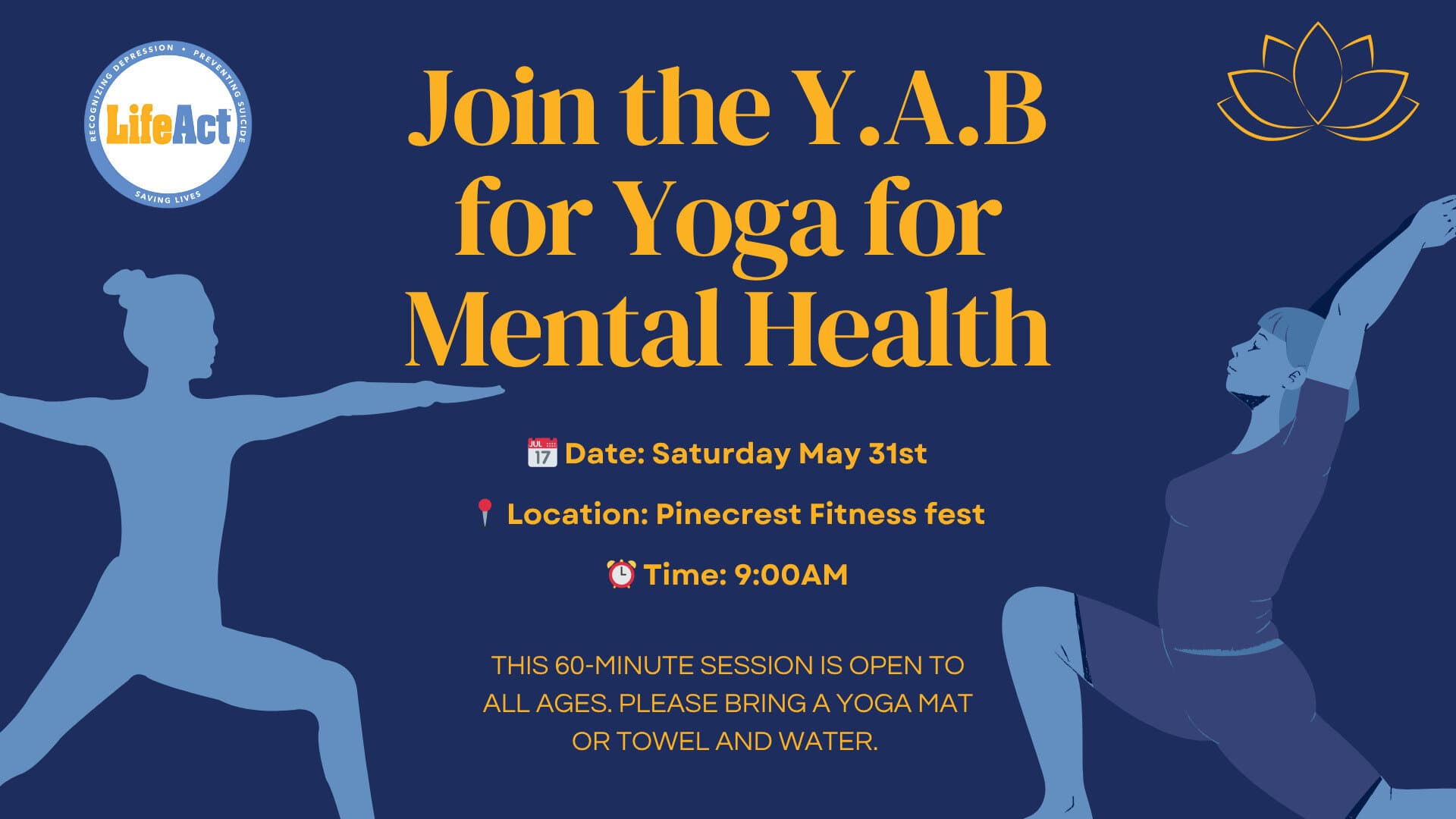
The teen mental health crisis has gotten so severe that schools are no longer treating wellness as an add-on. They are testing yoga as an institutional response, something that can be folded into the school day to help students regulate emotion, focus attention, and manage stress when traditional supports are stretched thin.
That shift matters because the numbers are not abstract. The Centers for Disease Control and Prevention’s 2023 Youth Risk Behavior Survey found that 39.7% of high school students reported persistent feelings of sadness or hopelessness, 28.5% reported poor mental health, 20.4% seriously considered suicide, and 9.5% attempted suicide. The CDC also says adolescent mental health continues to worsen and that schools can play an important role in reversing those trends.
What schools think yoga can do
The appeal of yoga in education is not about turning classrooms into studios. It is about giving students something repeatable, low-cost, and usable in real time. Schools are drawn to interventions that do not require major infrastructure, can be delivered in short sessions, and can be taught by staff with modest training. In practice, that means a few minutes of breathing, movement, or mindfulness can be built into the rhythm of the day without derailing academics.
That is why yoga is showing up in elementary classrooms in California and in secondary schools in India. Across those settings, the goal is less athletic performance and more emotional regulation, concentration, and stress reduction. The practice is being treated as a practical support tool, not a niche extracurricular.
The school-based logic is straightforward: if students cannot self-regulate, it becomes harder to learn, harder to behave, and harder to stay connected to class. CDC guidance for adolescent and school health emphasizes that schools and families can create protective relationships with students, and it encourages in-school strategies that support mental health and well-being. Yoga fits neatly into that framework because it can be used as part of the school day, not apart from it.
What the evidence is showing
The case for school yoga is stronger than a trend piece, but it is not settled science. A 2022 scoping review concluded that school yoga may improve self-concept, subjective well-being, executive function, academic performance, and attention. A 2023 review was more cautious, saying the evidence for yoga therapies in children is encouraging but limited by methodological flaws, small sample sizes, and sparse details about the interventions themselves.
That tension is exactly where many schools now find themselves. The field has enough evidence to justify experimentation, but not enough to pretend yoga is a stand-alone treatment for depression or anxiety. A 2024 integrative review summarized yoga as feasible and potentially effective as both a school-based intervention and a complementary psychiatric-care intervention for children and adolescents. In other words, schools are not being asked to choose between yoga and counseling, but to think about how yoga might support the rest of the mental health ecosystem.
A more concrete example comes from the Pure Power school wellness curriculum, which was evaluated with 461 students in intervention schools and 420 students in matched comparison schools. That program, built to teach youth yoga techniques, mindfulness, and emotion regulation, reported promise for better coping skills, stronger socio-emotional competence, improved prosocial skills, better academic performance, longer attention span, and greater ability to deal with stress. Those are exactly the outcomes school leaders care about because they show up in classrooms, hallways, and attendance patterns.
Why educators are looking beyond the studio
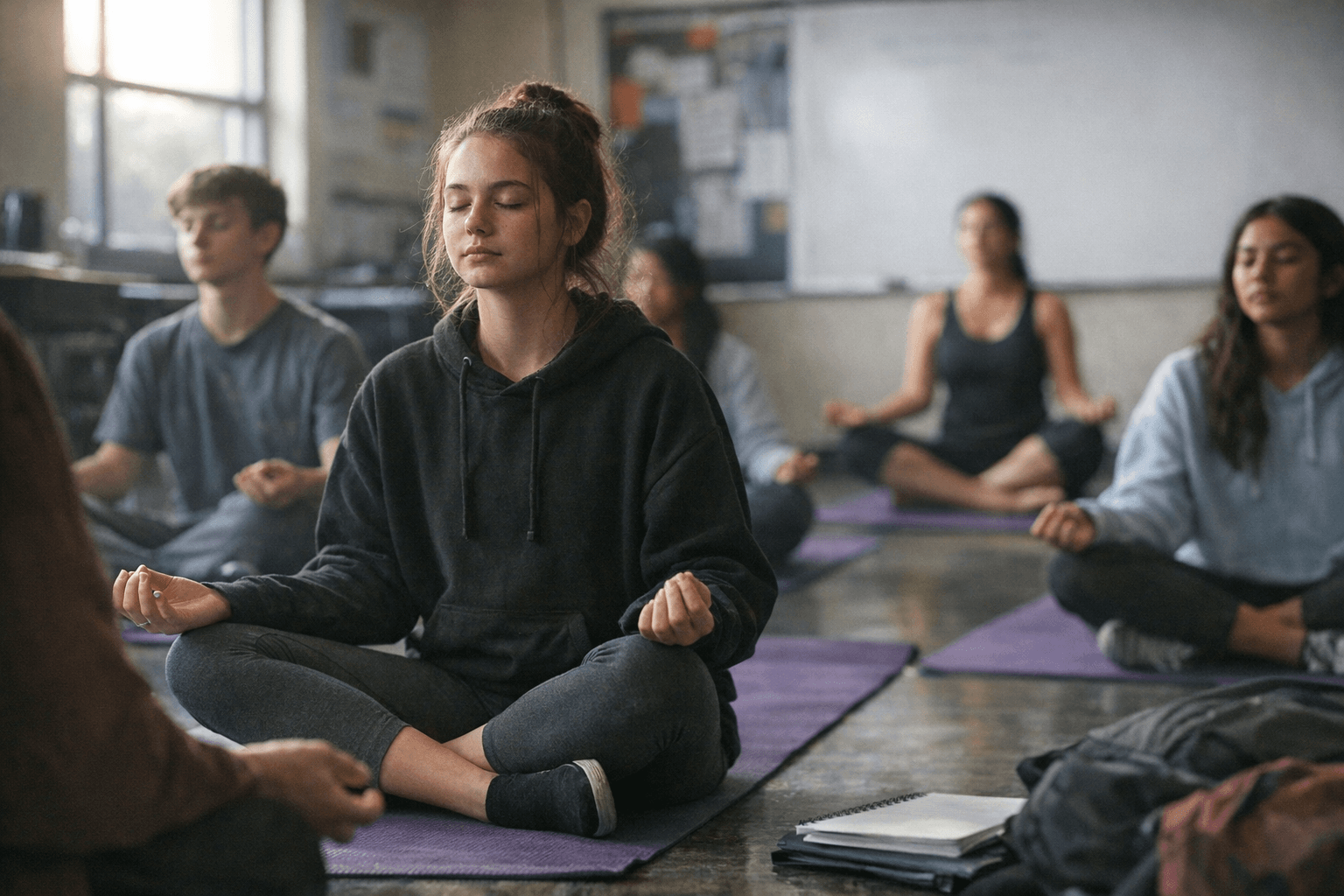
The most interesting part of this movement is not just that yoga is being used, but where it is being used. SCHOOL, Inc., the Pasadena-based organization that says its name stands for Smiling Calm Hearts Open Our Learning, has integrated secular yoga mindfulness methods in K-12 classrooms since 2002. It says it has reached more than 46,000 students and 2,000 teachers, including work in Title I schools in Los Angeles Unified School District and Pasadena Unified School District.
That history matters because it shows school yoga is not a brand-new idea suddenly surfacing in a panic. What is new is the urgency around youth anxiety, depression, and the limits of school counseling capacity. Yoga is being pulled into a larger conversation about what public education can realistically provide when every student in need cannot be handed a private therapist.
The American Academy of Pediatrics has added to that institutional credibility, saying yoga can be safe and potentially effective for children dealing with emotional, mental, physical, and behavioral health conditions. That kind of endorsement does not settle the research debate, but it does give administrators and parents a medical reference point as they weigh whether the practice belongs in a school setting.
Why India is part of the same story
India offers a useful comparison because adolescent health is already organized at national scale. The Rashtriya Kishor Swasthya Karyakram, or RKSK, is a flagship adolescent health program for ages 10 to 19 under the National Health Mission, India. The country’s national adolescent health strategy could cover 25.3 crore adolescents, about 253 million people.
That scale helps explain why yoga is appearing in Indian school settings as part of broader adolescent health efforts. It is not just a classroom wellness idea imported from elsewhere. It is being folded into a system already built to think about adolescent health as a public responsibility, which makes yoga feel less like a special program and more like one tool among many.
What still keeps schools cautious
For all the momentum, skepticism remains healthy. The reviews keep pointing to the same limitations, small samples, uneven intervention detail, and a need for better research design. Schools that adopt yoga are generally doing it as a complement to social-emotional learning, counseling, and broader wellness programming, not as proof that a few stretches can solve depression or suicide risk.
That is the clearest way to understand the current moment. Schools are not embracing yoga because it sounds soothing. They are testing it because the youth mental health crisis is forcing them to look for interventions that are scalable, teachable, and realistic during a normal school day. Yoga is moving into the institution not as a lifestyle flourish, but as a practical response to a problem schools can no longer ignore.
This article was produced by Prism’s automated news system from verified source data, official records, and press releases, then run through automated quality and moderation checks before publishing. The system is built and supervised by the people who set the standards it runs under. Read our full AI policy.
Did this article answer your question?