Free Yoga Classes Are Available in Every U.S. State, Here's How to Find Them
Yoga Journal's national guide proves free classes exist in all 50 states, from Birmingham parks to Anchorage community halls, with no mat, membership, or money required.
Free yoga is not a myth, a Groupon deal waiting to expire, or a bait-and-switch for a studio membership. It exists in every U.S. state, and a Yoga Journal guide updated March 27, 2026 has mapped exactly where to find it. The guide collates free and donation-based options across all 50 states, with a clear-eyed distinction between classes that are genuinely no-cost and those operating on a pay-what-you-can model. If the price of a drop-in class has ever been the reason you skipped the mat, this is the resource that removes that excuse entirely.
Why Free Classes Are Everywhere Right Now
The growth in no-cost yoga programming is not accidental. A convergence of funding models has made it structurally viable: city parks departments, grassroots nonprofits, public libraries, and corporate-community sponsorships are increasingly underwriting classes so that instructors get paid and attendees get in free. Teachers in many of these setups are compensated directly by the sponsoring organization, which means no awkward tip jar, no guilt about not leaving a donation, and no compromised class quality. The instructor still earns; the community still benefits.
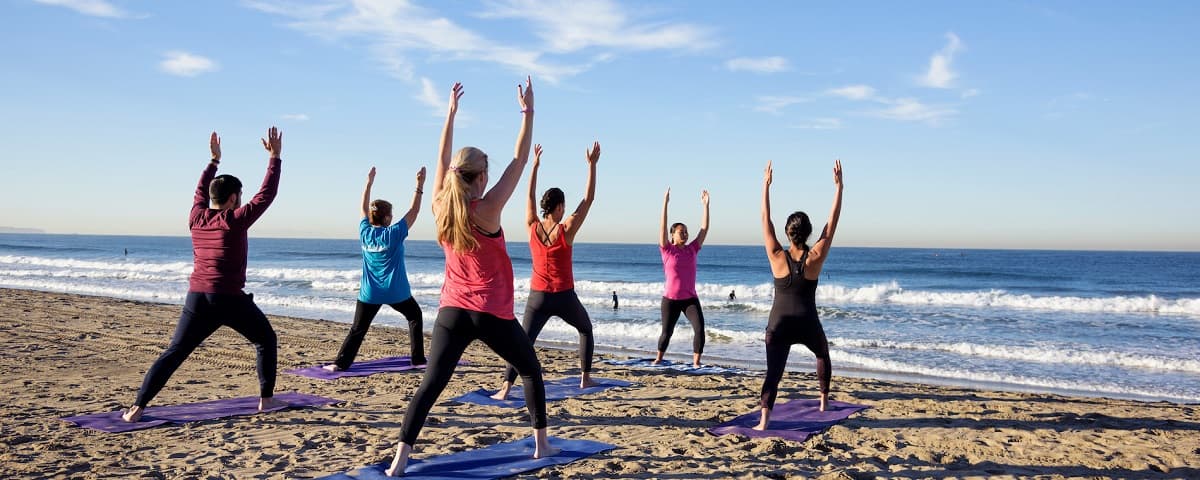
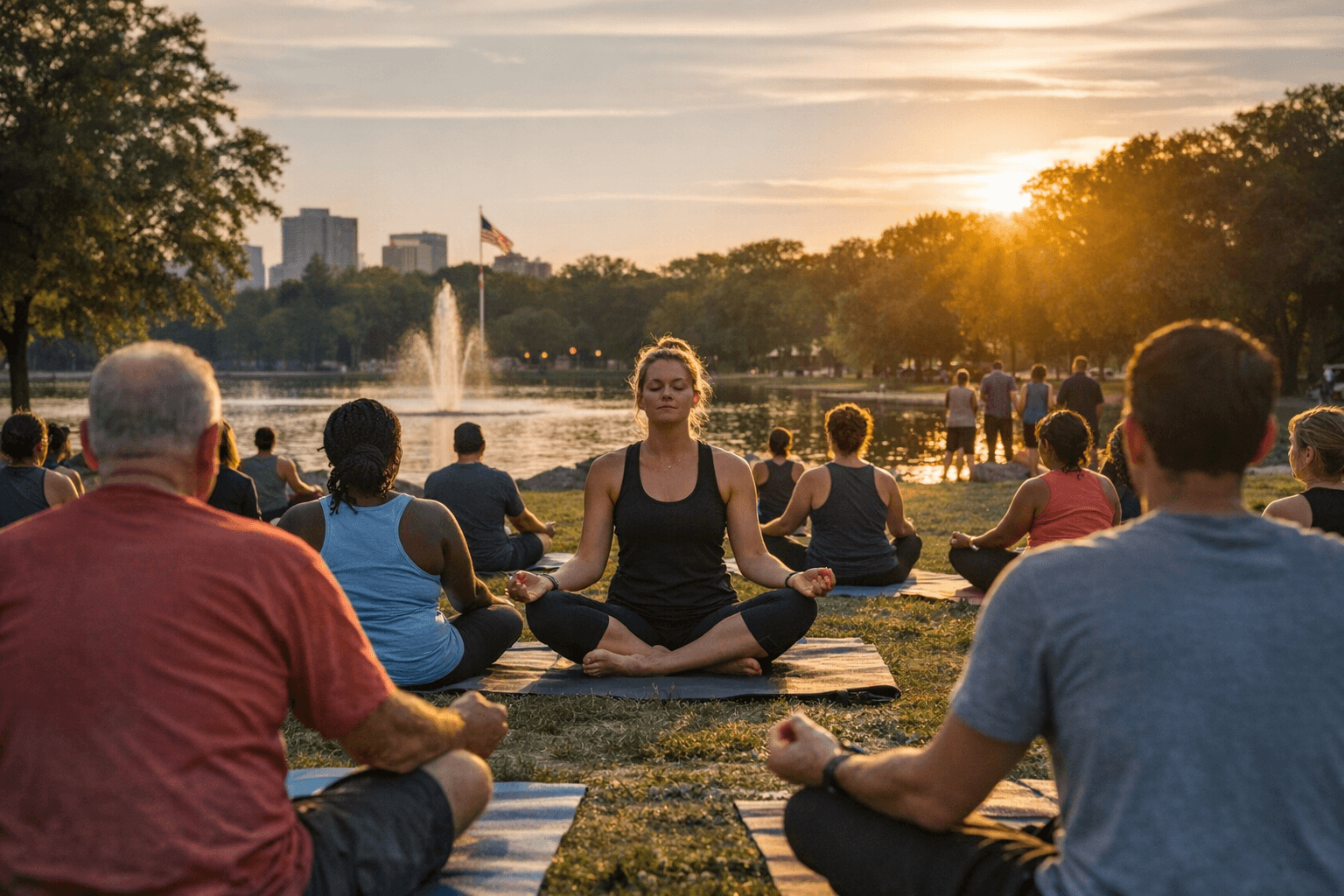
Detroit, for example, has a partnership between the Detroit Parks Coalition, the Michigan Department of Health and Human Services, and three local studios including Yoganic Flow and Full Lotus Yoga, which collectively deliver free community yoga across nine city parks every day of the week. Los Angeles's Grand Park runs free outdoor yoga every Wednesday and Friday at noon, right in the heart of downtown. Cincinnati Parks Foundation partners with local studios to offer year-round free yoga at Burnet Woods, with Saturday morning classes that have been running across both warmer and colder months at the park's bandstand and Trailside Nature Center. These are not one-off events. They are structured, recurring programs backed by institutional funding.
What the State-by-State Listings Actually Cover
The Yoga Journal guide goes beyond a generic "search your city" directive and provides state-level examples with enough specificity to act on. Alabama gets Yoga on the Green in Birmingham, a park-based program that has become a fixture of the city's outdoor wellness calendar. Alaska's entry highlights weekly community classes in Anchorage, notable because free programming in lower-traffic markets like Anchorage signals just how widely this model has spread. California's listings lean heavily on its park infrastructure, reflecting a state where outdoor yoga is nearly a civic institution.
The guide is explicit about format differences across listings:
- Truly free: No payment expected, no donation jar, no suggested amount. Sponsoring organizations cover teacher compensation entirely.
- Donation-based: Attendees contribute what they can. The guide flags these separately so you know what you're walking into.
- Pay-what-you-can / sliding scale: A structured range rather than a fixed price, designed to ensure no one is priced out.
That distinction matters. Showing up to a "free" class only to discover it's socially pressured pay-what-you-can is a friction point the guide specifically tries to eliminate.
How to Find and Prepare for a Free Class Near You
The search process itself is straightforward, but a few practical filters narrow it down fast. Libraries are a significantly underutilized venue: the Free Library of Philadelphia, for instance, hosts chair-accessible gentle yoga taught by registered instructors at multiple branches, with mats provided. Union Depot in St. Paul runs free classes by Studio 9-to-5 three days a week. If your city has a parks foundation, their programming calendar is worth checking directly, as Cincinnati's example shows.
Once you have found a class, the preparation checklist is short:
1. Bring your own mat. Most free community classes do not provide equipment. A basic mat costs under $25 and will pay for itself the first time you use it.
2. Bring water. Outdoor sessions especially can run warm, and there is rarely a hydration station at a park program.
3. Verify registration requirements. Some programs require advance sign-up, either to manage capacity at smaller venues or to comply with a park permit. Showing up without registering can mean getting turned away.
4. Check the donation policy before you go. If a class is listed as donation-based, knowing the expected range in advance prevents awkward uncertainty at the end of class.
The Studio Angle: Why This Benefits the Whole Ecosystem
For studio owners and independent teachers, the rise of free community programming is not competition; it is a pipeline. Someone who discovers yoga at a free park session and builds a consistent practice is far more likely to eventually pay for a studio membership, a workshop, or a teacher training than someone who has never tried the practice at all. The Yoga Journal guide makes this point explicitly, framing free and donation-based classes as a gateway that removes price as the first hurdle.
Studios that want to accelerate this pipeline can do it directly: partnering with municipal parks departments or hosting their own donation-based community classes builds neighborhood goodwill, introduces the studio's teaching style to new students, and supports public health goals that local governments are often happy to co-fund. The hybridized funding model, where corporate or nonprofit sponsors underwrite programming that studios deliver, has become a real structural option rather than a novelty.
The Bigger Picture
The fact that Yoga Journal built a state-by-state resource around this issue reflects something real about where the practice is heading. Accessibility and participation are not soft values; they are the long-term health metrics of the yoga ecosystem. A practice that remains expensive and gear-dependent will plateau. One that is genuinely available in every state, at a park, a library, a transit hub, or a retailer's community space, keeps growing. The infrastructure for that access already exists. The guide is simply the map.
This article was produced by Prism’s automated news system from verified source data, official records, and press releases, then run through automated quality and moderation checks before publishing. The system is built and supervised by the people who set the standards it runs under. Read our full AI policy.
Did this article answer your question?