Gaza teacher turns tent into yoga refuge for traumatized children
In a Gaza City tent, Hadeel al-Gharbawi turned yoga into a brief pocket of calm for displaced children living with war trauma.
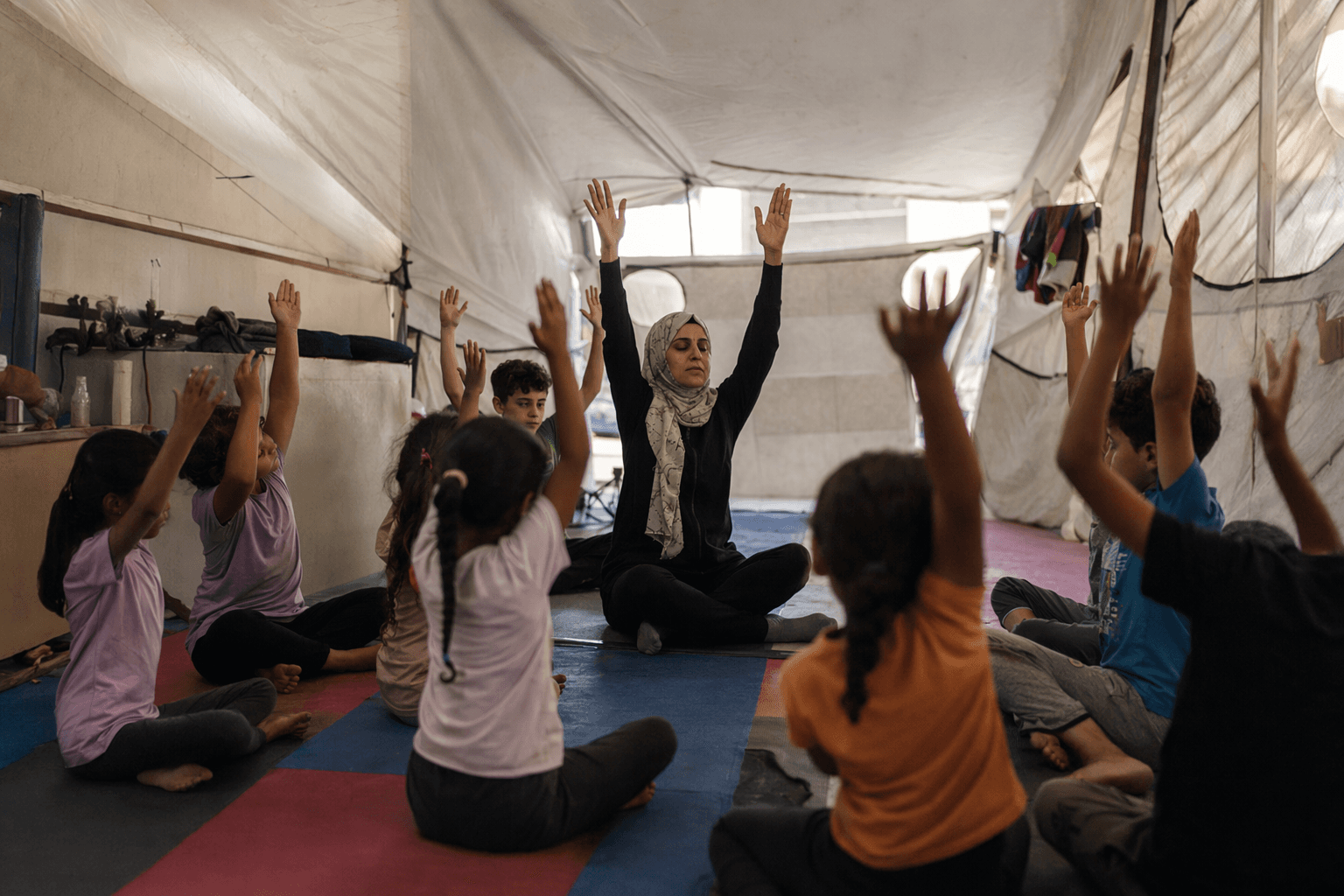
A tent in Gaza City became a small yoga room, where displaced children found a few minutes of breathing, gentle stretches and a kind of safety that had become rare in northern Gaza.
The teacher behind it was Hadeel al-Gharbawi, who had been looking for a way to help children cope with trauma as siege conditions and daily hardship continued to shape life in the enclave. Her classes were stripped to basics: simple breathing, light movement and a focus on peace and emotional relief. In a place where ordinary routines had been shattered, that simplicity was the point.
The sessions took place in northern Gaza, where families have endured repeated upheaval and severe shortages. The children who came to the tent were displaced and living amid war-related stress, and the yoga space offered a short pause from the noise and fear that surrounded them. It was not a cure and it was not a substitute for formal care. It was a low-resource intervention built for crisis conditions, giving children a few controlled breaths and a familiar rhythm when much of life had become unpredictable.
That makes the tent classes part of a broader humanitarian response rather than a standalone wellness story. UNICEF has said that everyday life for children and families across the Gaza Strip is shaped by severe and compounding harms, with extreme trauma driving urgent mental health needs. In a December 20, 2024 statement, UNICEF described Gaza’s children as “cold, sick and traumatized,” a blunt assessment of the physical and emotional toll on young people across the Strip.
Against that backdrop, al-Gharbawi’s work showed both the reach and the limits of yoga. A few stretches in a tent could not replace medicine, shelter or sustained psychological care. But they could create routine, regulate breath and carve out a brief pocket of psychological safety for children who had too little of it elsewhere.
In northern Gaza, where crisis has stripped away so many ordinary supports, that kind of improvised practice carried unusual weight. The tent was small, the tools were simple, and the need was vast.
This article was produced by Prism’s automated news system from verified source data, official records, and press releases, then run through automated quality and moderation checks before publishing. The system is built and supervised by the people who set the standards it runs under. Read our full AI policy.
Did this article answer your question?