Gentle yoga pose may lower stress hormones in five minutes
A wall-supported inversion is getting framed as a five-minute stress reset, but its real value is a gentle, low-barrier downshift.
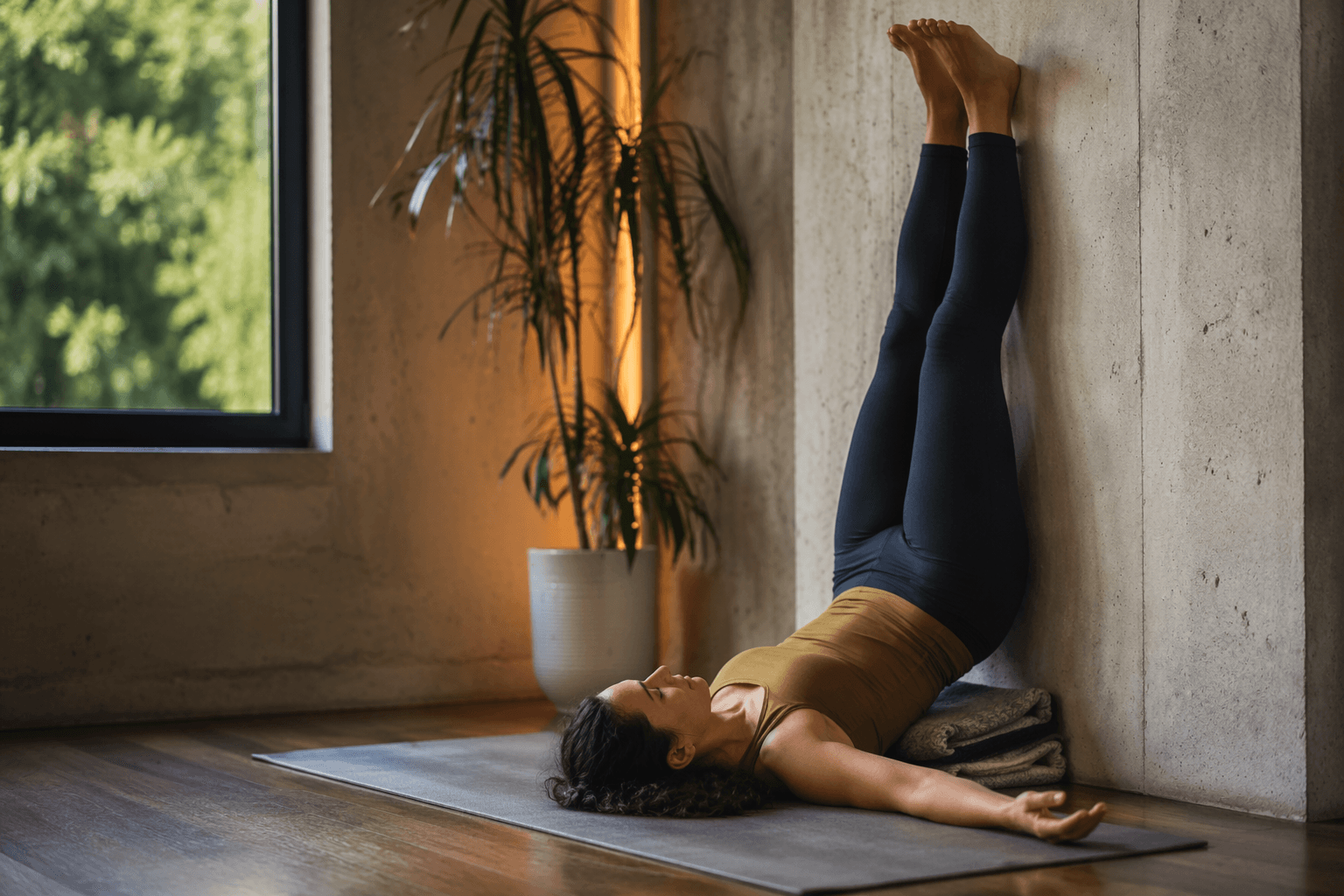
Vidya Malavade has said she finishes her asana practice with a 15-minute Viparita Karani: legs on a wall, a pelvis sometimes propped on a folded blanket, and a nervous system cue to slow down. The wider yoga conversation has recently kept circling quick, stress-laced poses, which is exactly the terrain where a five-minute claim can travel fast.
What Viparita Karani actually is
Viparita Karani is the Sanskrit name for Legs-Up-the-Wall Pose. Cleveland Clinic includes it among simple inversions that even people who cannot do more demanding inversion poses can use, and Yoga Journal's supported version places a folded blanket under the pelvis.
The phrase also carries the old yogic logic of “inverted action,” which is why the pose shows up so often at the end of a class. In modern practice, it is less about athletic display than about reversing the day’s load-bearing patterns, especially the hours spent standing, sitting, and carrying tension in the legs.
What five minutes can realistically do
In five minutes, the body can stop doing the thing it spends all day doing. The pose can help return bodily fluids from the legs and may reduce lower-leg swelling, and Yoga Journal frames it as a way to refresh tired legs and the reproductive area after long stretches on your feet or at a desk.
The “lowers stress hormones” claim is best read as a plausible short reset, not a guaranteed hormone event. A 2020 systematic review of healthy adults found that most yoga practices studied had positive effects on stress reduction, and a 2017 systematic review and meta-analysis looked at yoga-asana studies through physiological markers including cortisol, blood pressure and heart rate. A newer 2024 review in stressed adults found low-quality evidence for short-term stress benefits.
Who this pose suits best, and who should skip it
The pose works well for time-poor beginners because it is passive, low-skill, and accessible even when full inversions are off the table. It also makes sense as a recovery shape after a day on your feet or after a more active practice, because the pose asks for surrender rather than strength.
- Skip it if you have uncontrolled high blood pressure.
- Avoid it if you have glaucoma or a hernia.
- Some traditions also advise against it during menstruation.
The pose’s simplicity can make it feel universally safe, but it is not. The wall helps, the support helps, and the passive shape lowers the barrier to entry, but it does not erase the need to respect individual limits.
Why the short version keeps beating longer instruction
Yoga Journal framed the pose as a chance to relax and revive energy, and the modern version is even more portable: Cyndi Lee wrote about practicing it in hotel beds, against trees on retreats, and in a gym steam room. Vogue India’s recent yoga coverage has also stayed in the same low-barrier lane, with pieces on beginner-friendly poses, a cortisol-linked sequence, and a quick “longevity pose,” all of which reward a promise you can act on immediately.
The five-minute version spreads faster than a longer tutorial because it does not ask for a class pass, a complicated sequence, or a peak-pose mindset, and it looks like something you can test tonight without reorganizing your life around it.
How to try the five-minute version
Set yourself up beside a wall, slide the pelvis close enough to rest comfortably, and let the legs rise without strain. If you want the supported version, place a folded blanket under the pelvis, then stay for five minutes with an easy breath and a quiet finish.
Use the wall as your anchor, not as a challenge. If you fall into one of the contraindicated groups, choose a different restorative shape instead of trying to push through for the sake of the trend.
This article was produced by Prism’s automated news system from verified source data, official records, and press releases, then run through automated quality and moderation checks before publishing. The system is built and supervised by the people who set the standards it runs under. Read our full AI policy.
Did this article answer your question?