International Yoga Day spans U.S. landmarks as wellness movement grows
Yoga is leaving the studio and claiming civic space, from the Lincoln Memorial and Central Park to neighborhood parks like Brazos River Park.
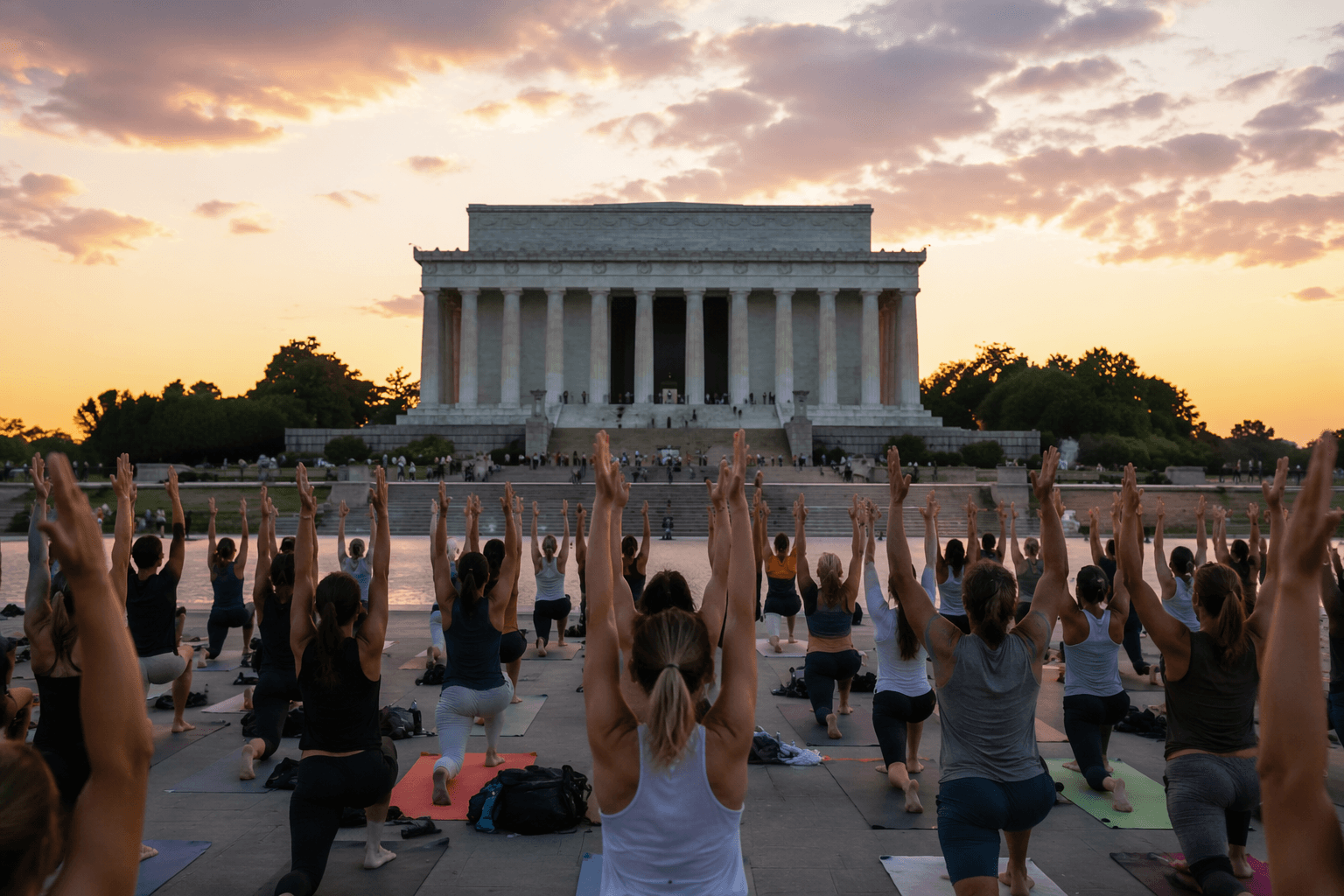
International Yoga Day now reads less like a niche observance and more like a civic ritual with real crowd pull. In 2026, the clearest scenes came from the Lincoln Memorial, Central Park, Times Square, and neighborhood parks across the country, where yoga was presented as a shared public practice rather than a studio-only discipline.
From iconic monument to neighborhood park
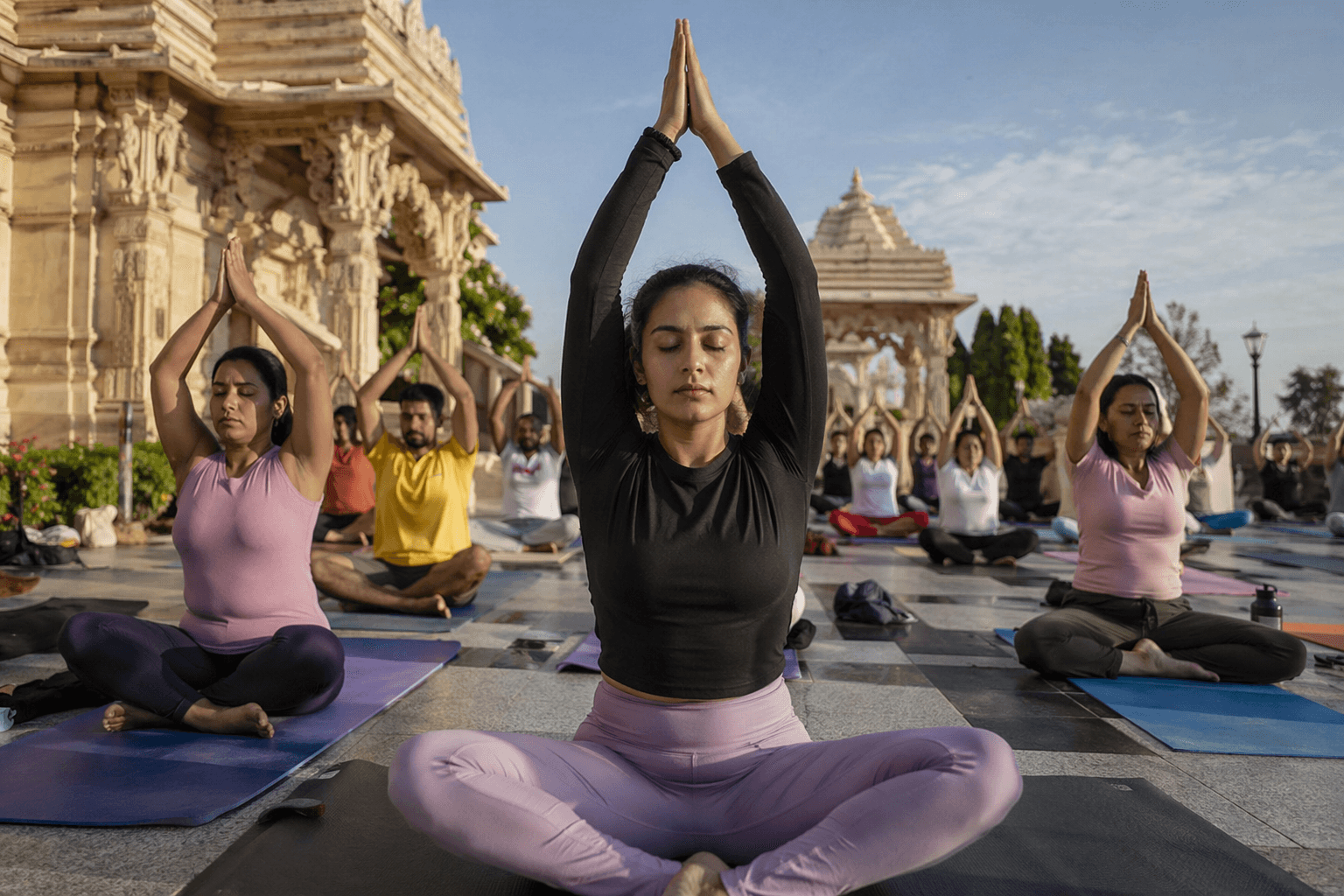
The strongest thread running through this year’s observance is geography. Washington, D.C., gave yoga the kind of frame that makes it feel nationally important, with the Lincoln Memorial set as the headline venue for the Indian Embassy’s June 19 event. New York added its own scale, first with a Central Park session organized by the Consulate General of India and then with a Times Square observance that turned one of the city’s most commercial blocks into an open-air mat room.
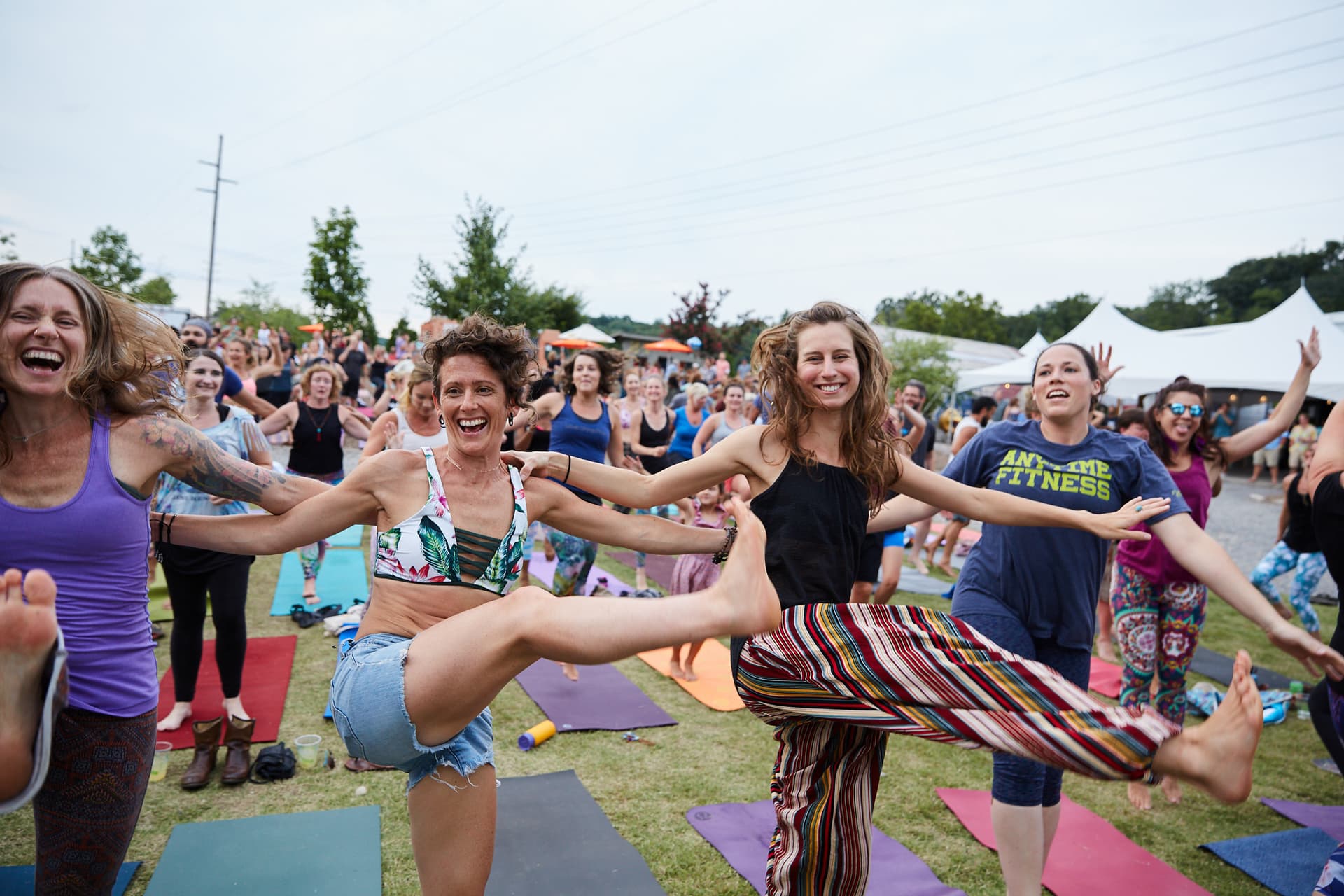
But the story did not stop at marquee landmarks. The report’s most revealing scene may have been in Sugar Land, Texas, at Brazos River Park, where Consul General D.C. Manjunath joined Mayor Carol McCutcheon for a community gathering organized by Hindu Swayamsevak Sangh and Hindu Yuva. That mix of outdoor yoga and wellness activity, with residents, elected officials, and community leaders all in the same space, shows how the day has moved from ceremonial display into local civic routine.
What the official calendar says about yoga’s place in public life
The United Nations marks the 12th International Day of Yoga on June 21, 2026, under the theme “Yoga for Healthy Ageing.” That theme is more than branding. The UN ties it to physical and mental wellbeing, mobility, and dignity as populations age, and it reminds readers that the observance began with India’s proposal in 2014, when Resolution 69/131 was endorsed by a record 175 member states.
That diplomatic origin still matters, because it explains why the biggest U.S. events carry the feel of statecraft as much as community programming. The Lincoln Memorial is not a random backdrop. Central Park is not just a convenient green space. These are symbols, and yoga at those sites sends a clear message: the practice has moved far beyond boutique wellness culture and into public life that institutions are willing to host, recognize, and amplify.
Why the crowds keep getting bigger
The 2026 observance sits on top of a pattern that was already visible in 2025. The Indian Embassy said more than 500 people took part in the Lincoln Memorial celebration that year, and the UN reported hundreds at its own observance at UN Headquarters in New York, where the North Lawn became an open-air yoga studio. That kind of turnout tells you the draw is not only the practice itself, but the shared experience of doing it in a place built for public gathering.
A packed landmark event also changes the energy of the room. At Central Park, the evening was described as vibrant, which is exactly what these gatherings need if they are going to feel like more than photo ops. People show up for the yoga, but they stay for the sense that they are part of something visible and collective, a rare moment when breath work, movement, and civic space line up cleanly.
Healthy ageing gives the observance a sharper edge
The 2026 theme lands because it connects yoga to a very practical public-health conversation. The Centers for Disease Control and Prevention says falls are a major threat to older adults’ independence and can be prevented. The World Health Organization also says physical activity in older age supports mobility, independence, and healthy ageing.
That matters for how International Yoga Day is being framed in the U.S. This is not just wellness as lifestyle language. It is wellness with an aging population in mind, which makes the practice feel useful rather than aspirational. Yoga’s public face in 2026 is not about handstand culture or studio exclusivity. It is about function, steadiness, and keeping people moving with dignity.
The local activations are where the movement looks most normal
If the landmark events show yoga’s prestige, the smaller local activations show its mainstreaming. Sugar Land is a good example because it strips away the glamour of the big-city spectacle and shows yoga doing what it increasingly does best: gathering people in a park, under open sky, with local leaders present and no need for a private club or specialty studio.
That is the real geography shift. A practice that once needed a defined wellness address now shows up in municipal parks, at civic monuments, and in public plazas that are already part of daily life. Hindu Swayamsevak Sangh, Hindu Yuva, the City of Sugar Land, and local officials all playing a role in the same event tells you this is no longer a fringe cultural import. It has become something cities can host without explanation.
The permitting calendar tells its own story
There is also a practical reason these events cluster where they do. New York City Parks warned in June 2026 that some special-events permits between June 11 and July 19 could be denied because of event volume tied to the FIFA World Cup and the U.S. 250th anniversary. In a crowded civic calendar, established places like Central Park and Times Square become even more valuable, because they are already known quantities for large public programming.
That helps explain the look of this year’s observance. The organizers leaned on places that can absorb a crowd, read well in photographs, and feel unmistakably public. In yoga terms, it is the difference between a class that disappears into a schedule and a gathering that claims the city for an hour.
International Yoga Day used to be easy to file under diplomatic ceremony. In 2026, it looked more like a civic wellness habit with real scale, from the Lincoln Memorial to Brazos River Park. If you want to understand where yoga has landed in the United States, skip the studio brochure and watch where people roll out their mats in public.
This article was produced by Prism’s automated news system from verified source data, official records, and press releases, then run through automated quality and moderation checks before publishing. The system is built and supervised by the people who set the standards it runs under. Read our full AI policy.
Did this article answer your question?