Isha Foundation Plans 112-Foot Adiyogi Statue, Yogic City in Bihar
Bihar's tourism department is now hunting for 120 acres to host Isha Foundation's Bhagalpur "Yogic City" and a 112-ft Adiyogi statue.
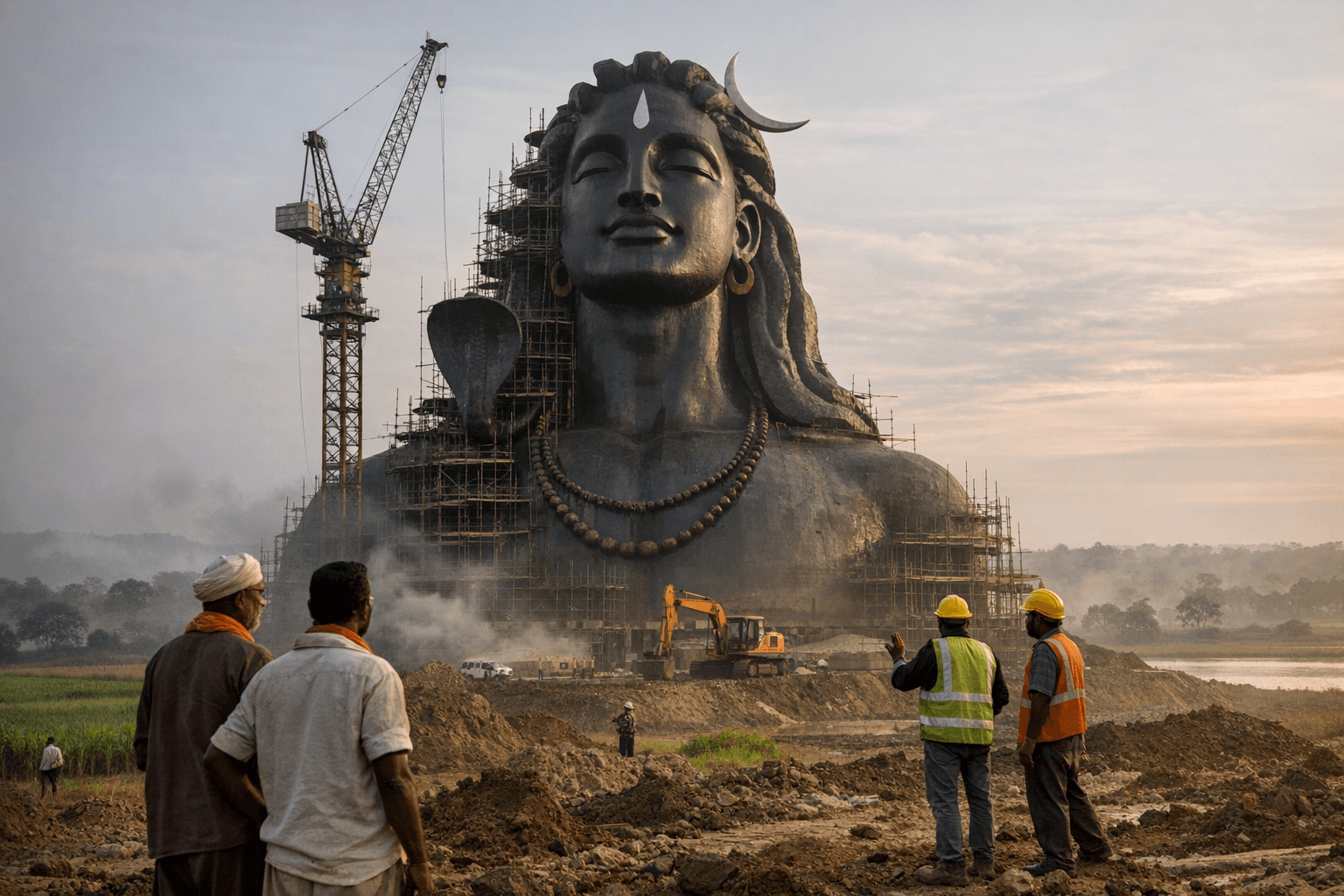
Bihar's state tourism department has formally launched a land-identification exercise in Bhagalpur, setting in motion what could become the most consequential spiritual infrastructure project in eastern India: a 112-foot Adiyogi Shiva statue and a large yoga complex that Isha Foundation has publicly described as a "Yogic City."
The foundation, established in 1992 near Coimbatore, Tamil Nadu by Sadhguru Jagadish Vasudev, has requested between 100 and 120 acres from the Bhagalpur district administration on a 99-year lease. Local officials confirmed that instructions have been issued to identify suitable land parcels, with a detailed availability report now being prepared for the state tourism department.
The proposal's centerpiece mirrors the original Adiyogi bust at Isha's Coimbatore campus, certified by Guinness World Records as the world's largest bust sculpture. Built from 20,000 iron plates supplied by the Steel Authority of India and weighing approximately 500 tonnes, the original was inaugurated by Prime Minister Narendra Modi on Mahashivaratri, 24 February 2017, and subsequently included by the Indian Ministry of Tourism in its "Incredible India" campaign. The 112-foot height carries specific symbolic weight in yogic tradition: it references both the 112 chakras in the human system and the 112 pathways to moksha, or liberation.
The Bihar project represents the eastern node of a plan Sadhguru announced publicly in January 2014: to install 112-foot Adiyogi statues at each of India's four historic corners. A second full-scale statue was inaugurated at Chikkaballapura, Karnataka on 15 January 2023 by then-Chief Minister Basavaraj Bommai. Discussions for a northern installation remain active with the Yamuna Expressway Industrial Development Authority in Greater Noida, while Mumbai has been cited as the western candidate.
The economic stakes are considerable. Isha's Coimbatore center draws millions of visitors annually from across India and internationally. The nearest comparable benchmark in India's mega-statue sector is the Statue of Unity in Gujarat, where 2.6 million visitors generated Rs. 570 million in ticket revenue in its first ten months. Supporters of the Bhagalpur project argue it would similarly transform a city not currently prominent on national spiritual tourism circuits, reduce the need for devotees from eastern and northern regions to travel long distances to Coimbatore, and generate direct employment across construction, hospitality, and operations.
The project is not without scrutiny. At its Coimbatore campus, Isha Foundation has faced persistent allegations of environmental violations, including claims of encroachment on forest land near the Nilgiri Biosphere Reserve, accusations the foundation has publicly and repeatedly contested. In Bihar, allocating 100 to 120 acres on a near-century lease will require the state to navigate competing land-use claims, and some observers have already raised secular concerns about assigning government-controlled land to a private spiritual organization at preferential terms.
Bhagalpur sits on the south bank of the Ganga and is accessible by both rail and road, but the scale of footfall that a Coimbatore-comparable destination generates would demand significant upgrades to local transport, sanitation, and accommodation infrastructure. How quickly Bihar moves from land identification to formal approval, and on what commercial terms, will determine whether Sadhguru's decade-old four-corners vision finally claims its eastern anchor.
This article was produced by Prism’s automated news system from verified source data, official records, and press releases, then run through automated quality and moderation checks before publishing. The system is built and supervised by the people who set the standards it runs under. Read our full AI policy.
Did this article answer your question?