Jammu & Kashmir rolls out yoga in schools and police lines to fight drug abuse
Yoga is now part of Jammu and Kashmir’s 100-day anti-drug push, reaching schools, colleges and police lines in a territory where officials say 70,000 people in Kashmir are affected.
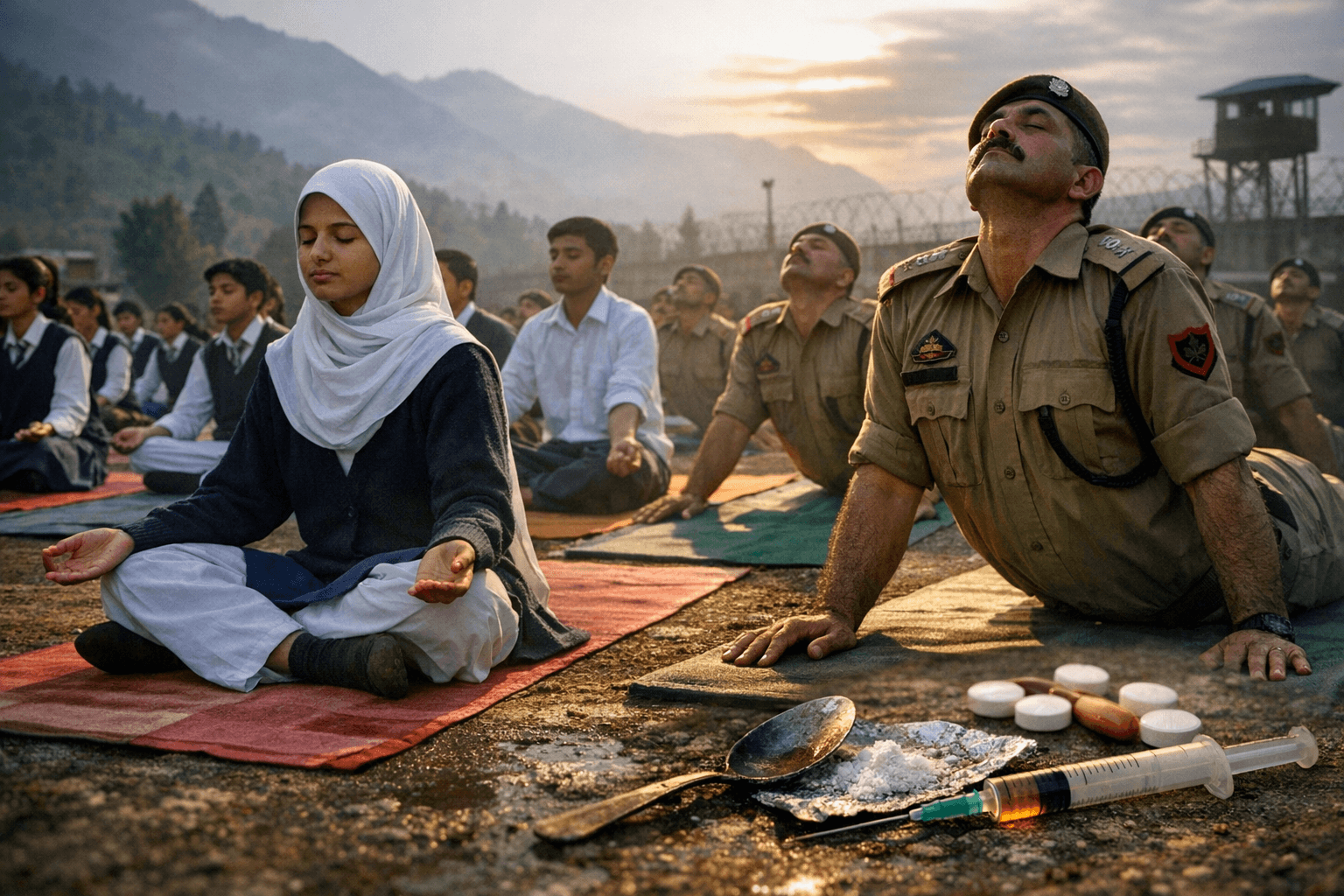
Jammu and Kashmir has pushed yoga out of the studio and into the front lines of its anti-drug campaign, rolling out sessions in schools, colleges, universities and police lines as part of a 100-day statewide drive against substance use.
The programme sits inside the Nasha Mukt Jammu & Kashmir Abhiyaan, launched by Lieutenant Governor Manoj Sinha on April 11, 2026, with a pad-yatra from M.A. Stadium in Jammu. Sinha said the campaign would bring in civil society, political parties, academicians, sports persons and citizens, and the administration has cast it as a mass movement rather than a one-department exercise.
That framing matters because the government is pairing wellness language with hard numbers. A 2022 survey cited in the Jammu and Kashmir Assembly in February 2026 found around 70,000 people in Kashmir affected by substance use, including nearly 50,000 heroin users. Officials also said nearly 69,000 patients have received treatment and rehabilitation at addiction treatment facilities across the Union Territory.
The yoga push is now being folded into that wider public-health response. The administration says its strategy combines awareness campaigns, preventive interventions, stronger enforcement and rehabilitation, while the police have extended the drive onto social media, opening a dedicated campaign presence on X, Facebook and Instagram to amplify anti-drug messaging and encourage public participation.
Sinha pressed universities and educational institutions to take a proactive role in the fight on April 8, 2026, and the campaign has since moved across districts, schools and colleges. The inclusion of yoga gives the effort a visible, repeatable activity that can be staged inside campuses and police compounds, where officials are trying to reach young people and uniformed personnel at the same time.
The practical question now is whether the programme will be judged by turnout, awareness, referrals or something broader, like fewer cases reaching treatment. For an administration already pointing to thousands in care and tens of thousands affected, the yoga sessions are less a symbolic add-on than a test of whether a wellness practice can carry part of the burden of a public-health campaign.
This article was produced by Prism’s automated news system from verified source data, official records, and press releases, then run through automated quality and moderation checks before publishing. The system is built and supervised by the people who set the standards it runs under. Read our full AI policy.
Did this article answer your question?