Mental Health Awareness Month 2026 spotlights yoga, breathwork, and community wellness
Yoga and breathwork are moving into mainstream mental-health messaging, with MHA’s 2026 campaign pairing simple practices, access tools, and growing clinical support.
Yoga moves from studio language to mental-health infrastructure
Yoga, breathwork, and meditation are no longer sitting at the margins of Mental Health Awareness Month. The clearest shift in 2026 is that these practices are being framed less as spiritual extras and more as practical tools for stress, resilience, and everyday care, right alongside public-health messaging.
Mental Health America, which founded Mental Health Awareness Month in 1949, is leading this year’s push with the theme “More Good Days, Together.” The idea is simple but telling: define what a good day looks like for yourself and your community, then use that insight to connect people to support at the right time. That language marks a major change in tone from wellness-as-a-lifestyle choice to wellness as a shared mental-health utility.
A campaign built around repeatable habits, not one-off awareness
The most revealing part of the 2026 campaign is how practical it is. Mental Health America’s capstone virtual wellness experience on May 20 centers on guided chair yoga, reflective journaling, and calming breathwork activities. That is not a ceremonial nod to wellness. It is a signal that short, accessible practices are now being treated as core entry points for mental health support.
The organization’s 2026 Action Guide makes the same point in plainer language. Mental and physical health are described as deeply connected, with stress, movement, sleep, nutrition, and existing health conditions all affecting well-being. For yoga readers, that framing matters: it places movement and breath in the same conversation as sleep and stress management, which is exactly where many clinicians and public-health advocates now want them.
Who is adopting these practices has changed
The old yoga audience was often defined by studio culture, retreat culture, or personal spirituality. In 2026, the adoption base is much broader. Mental Health America is building the campaign for organizations, workplaces, educators, advocates, and community groups, which means breathwork and meditation are being translated into settings far outside a traditional class schedule.
That broader reach is also visible in the activity options Mental Health America is offering this month. The campaign includes a Be Seen in Green fundraiser, a Mental Health Day of Action on May 15 focused on prevention and early intervention, and a 400 Minutes for More Good Days movement challenge with Strava and L.L.Bean. When a national mental-health campaign is partnering with a fitness platform and an outdoor brand, it shows how normalized movement-based wellness has become in public-facing health messaging.
The language has shifted from spiritual benefit to daily function
The mainstreaming is not just about who is participating. It is about how the practices are described. In the 2026 framing, yoga and breathwork are not being sold as mystical or niche. They are positioned as gentle, science-informed ways to support the whole self without pressure to do everything at once.
That is a meaningful shift for the yoga community. It reflects a move toward plain-language utility: breathing to regulate stress, movement to support mood, meditation to build steadiness. The emphasis on “small, sustainable practices” also makes the month more accessible to people who would never show up for a purely spiritual or fitness-coded offering, but will absolutely try a chair yoga session or a breathwork reset.
Access is improving, but the branding question is still real
There is a real access story here, not just a branding story. Mental Health America says more than 200 buildings across the nation will light up green for Mental Health Month in May, and the campaign includes a planning guide for institutions that want to participate. That combination of visibility and structure gives the month some scale, and scale matters if the goal is to reach people before stress turns into crisis.
SAMHSA’s materials reinforce that institutional turn. Its Mental Health Awareness Month toolkit includes stress management, breathing exercises, and mindfulness guidance for schools, employers, and community groups, along with links to 988, FindSupport.gov, and FindTreatment.gov. That is a strong sign that yoga-adjacent tools are now part of the broader public-health toolkit, not just studio marketing. The question is whether that access is deep enough to reach people who need low-cost, low-barrier options most.
Local events are making the trend concrete
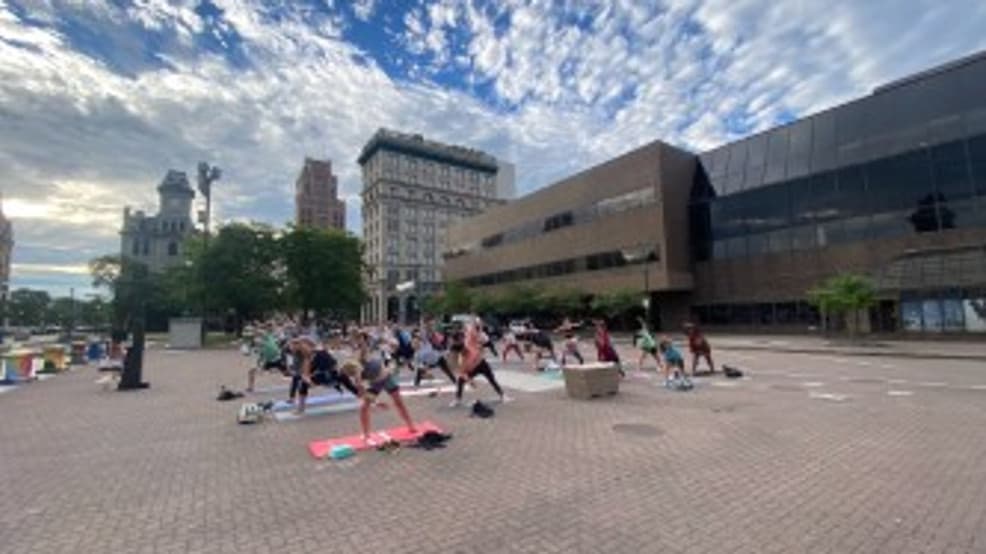
The national messaging is being echoed by local activation on the ground. In places like Santa Monica, independent studios are hosting donation-based yoga, meditation, and sound bath events tied to the month’s mental-health focus. That matters because it gives the campaign a visible street-level presence, where people can actually try these practices instead of only reading about them.
This is also where the trend becomes more than symbolism. A donation-based class, a guided chair yoga session, or a breathwork workshop can lower the entry barrier far more than a polished awareness graphic ever will. The strongest version of this movement is not just that yoga is being talked about during Mental Health Awareness Month, but that it is being packaged in ways people can realistically use.
What the evidence says about yoga as mental-health support
The science around yoga is one reason this language shift has traction. Stanford Lifestyle Medicine says yoga is now being used by some clinicians as a lifestyle intervention, and the National Center for Complementary and Integrative Health says yoga can be a helpful addition to treatment for depression and may help some anxiety symptoms. At the same time, the evidence for anxiety disorders, clinical depression, and PTSD remains preliminary, which is an important line to keep intact.
A 2025 randomized controlled trial published in Frontiers in Psychology, led by researchers at Massachusetts General Hospital and Harvard Medical School, followed 211 chronically stressed adults over eight weeks. Participants were assigned to meditation, yoga, or stress education, and the study found no significant differences between the three arms on the main outcome measures. Even so, most psychological measures improved within each group, and the yoga group showed increased HDL at follow-up, a useful reminder that the benefits of these practices may be real even when they do not separate neatly in a head-to-head trial.
A more practical future for the month
Taken together, the 2026 campaign shows a clear public pivot. Yoga, breathwork, and meditation are being mainstreamed not as fringe wellness trends, but as accessible, repeatable supports for stress regulation and emotional resilience. The most effective version of Mental Health Awareness Month now looks less like awareness theater and more like a public invitation to build habits that actually change the shape of the day.
That is the biggest story in this year’s shift: not that yoga has become popular, but that it has become legible inside mental-health policy, workplace wellness, and community programming. The movement is finally being judged not only by branding, but by whether it helps people have more good days.
This article was produced by Prism’s automated news system from verified source data, official records, and press releases, then run through automated quality and moderation checks before publishing. The system is built and supervised by the people who set the standards it runs under. Read our full AI policy.
Did this article answer your question?