School yoga program boosts children's self-esteem and gratitude, study finds
A morning school yoga routine may do more than settle kids down. Frontiers found longitudinal gains in self-esteem and gratitude after a school-based program.
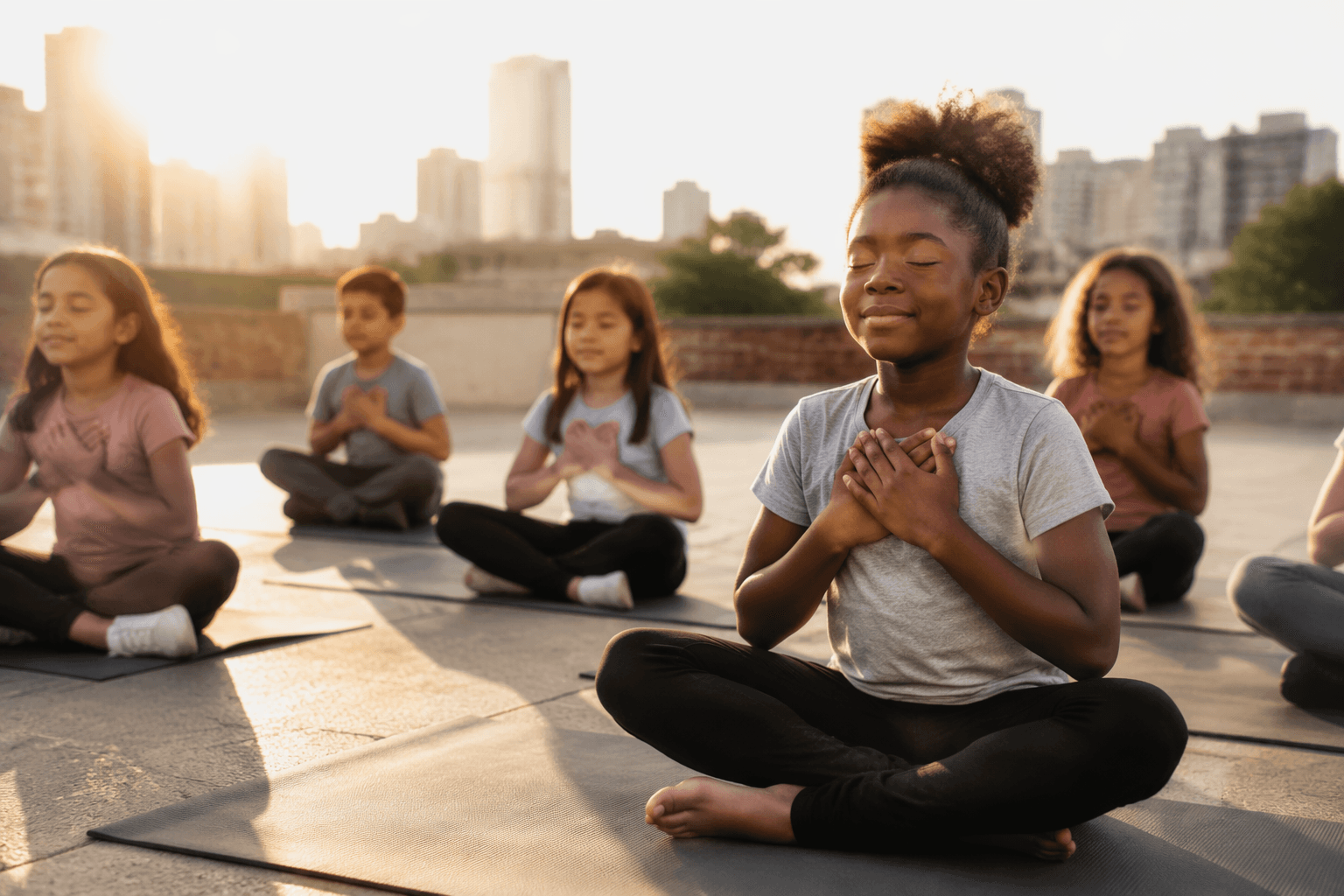
Children in a school-based morning yoga program showed longitudinal gains in self-esteem and gratitude, two measures teachers can actually watch for in daily classroom life. The paper in *Frontiers in Psychology* frames the practice as an embodied regulatory tool that fits the first part of the day instead of competing with it.
What the Frontiers paper found
The paper is titled *Morning yoga as an embodied regulatory practice: longitudinal changes in children’s self-esteem and gratitude following participation in a school-based yoga program*. It appears in *Front. Psychol.*, volume 17, in the Sport Psychology section, and it sits inside the Research Topic *Physical Education for Every Child: Psychological Mechanisms, Inclusion, and Mental Health in School Contexts*.
This is not yoga being treated as a wellness extra or a vague relaxation perk. It is being discussed in the same frame as physical education, inclusion, and mental health in school settings, with self-esteem and gratitude as the outcomes that changed over time.
What the intervention looked like in practice
The clearest practical detail is the timing: morning yoga. That makes the intervention a school-day routine rather than an after-school club, and it gives teachers a realistic window to test the idea before lessons start to pile up.
The paper uses the language of embodied regulatory practice, a useful clue for anyone trying to replicate it. The point is not a one-off stretch break, but a repeated movement-based routine that gives children a structured way to settle themselves at the start of the day.
For teachers, PE specialists, and youth yoga instructors, this kind of program is most actionable when it is built into the school morning and tracked as part of normal classroom rhythm. The research focus is on how the practice unfolds over time, not on a single feel-good session.
Why self-esteem and gratitude are the right measures
The two outcomes in the study are not random wellness buzzwords. Self-esteem gets at how children evaluate themselves, while gratitude captures whether they notice and register positive experiences. In a school context, those are meaningful markers because they can shape how a child enters a lesson, handles feedback, and recovers after a mistake.
A school program that improves flexibility is fine. A school program that also nudges self-esteem and gratitude in a measurable way gives educators something they can actually work with when they are trying to support emotional development, not just physical activity.
How this fits the broader school-yoga evidence
The new Frontiers paper builds on a growing school-yoga literature rather than appearing out of nowhere. In 2024, Beverley Martin, Blake Peck and Daniel Terry published a Frontiers scoping review on yoga in schools that contributes to a positive classroom atmosphere for young children and educators.
A 2023 Frontiers study looked at how yoga in schools affected young people’s relaxation and stress levels. The broader research context was edited by Raj Kumar Yadav of the All India Institute of Medical Sciences in India.
A 2019 paper in the *Journal of Child and Family Studies*, *Young Children’s Embodied Experiences: A Classroom-Based Yoga Intervention*, found mindfulness and yoga-based interventions had been widely implemented in schools and had shown promising results, while also noting that the literature on their effects was still limited.
In 2017, Goldsmiths, University of London found that just two minutes of yoga poses could increase self-esteem. That study compared average subjective energy and self-esteem ratings between two groups.
What parents, teachers and instructors should actually do with this
- Put the practice in the morning, when it can shape the tone of the day.
- Keep it school-based, so it is tied to routine rather than treated as a bonus activity.
- Watch for self-esteem and gratitude changes over time, not just immediate calm.
- Treat the evidence as cumulative, because the school-yoga literature is still developing.
This article was produced by Prism’s automated news system from verified source data, official records, and press releases, then run through automated quality and moderation checks before publishing. The system is built and supervised by the people who set the standards it runs under. Read our full AI policy.
Did this article answer your question?