Wildlife Yoga Retreats Blend Mindfulness, Conservation, and Awe
Yoga retreats are evolving into conservation trips, where practice, wildlife access, and habitat funding all belong in the same booking decision.
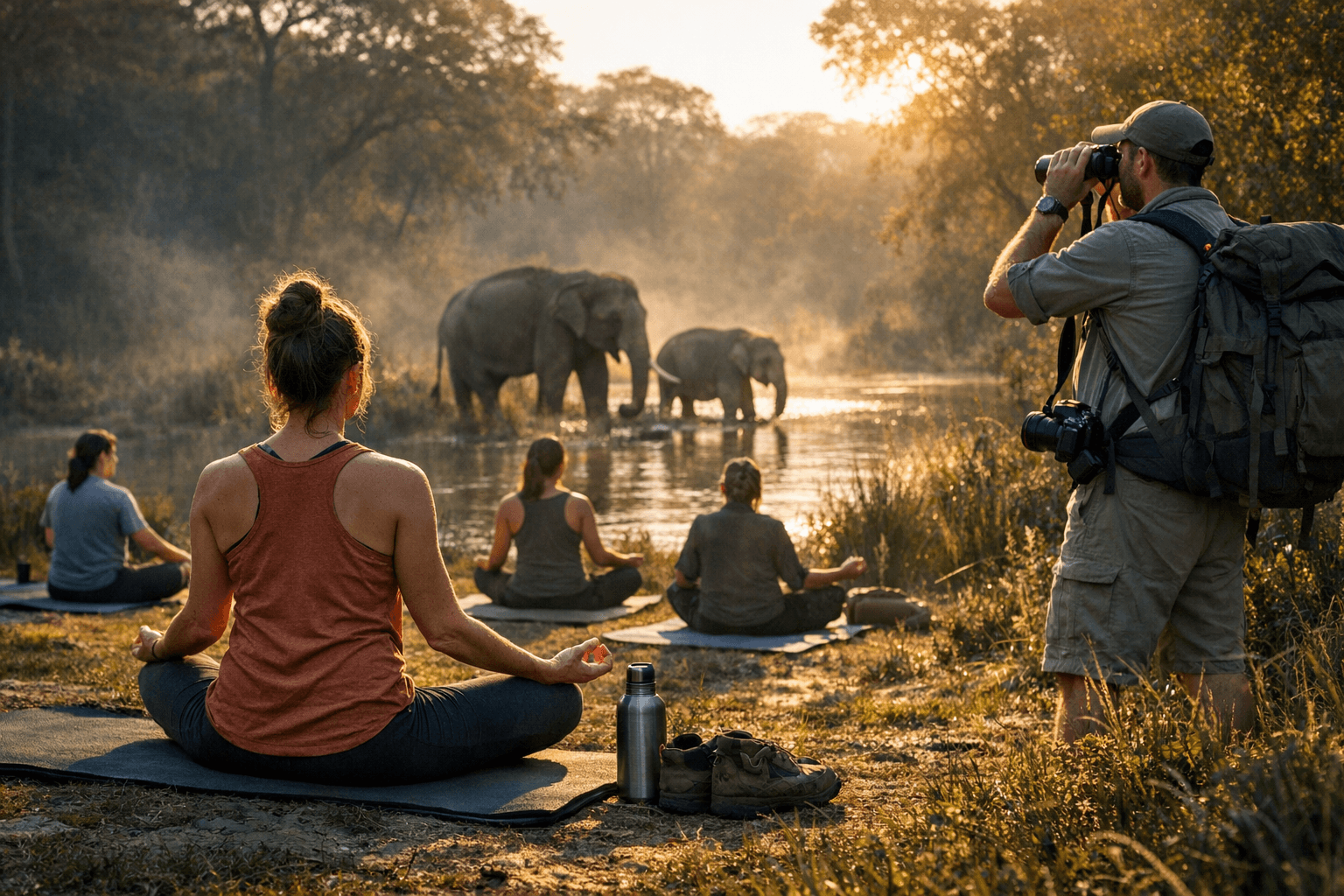
The retreat pitch has changed
The newest promise in yoga travel is not just rest, but access to a living ecosystem. These retreats place mats in Kenya, Scotland, private conservancies, and other wild settings where the point is not to escape nature, but to enter it with enough care to notice what is there.
That shift matters because the emotional payoff is different. Observing animals in their natural habitats can foster awe, belonging, and perspective, and that sense of being part of something larger is exactly what many practitioners are chasing now. Laura Bunting, founder of Wildlife & Yoga Retreats, describes the idea as a “seamless immersion in the wilderness,” with no rigid itinerary and a pace shaped by the land itself.
Why wildlife-centered yoga feels different from a resort stay
The strongest wildlife retreats do not treat yoga as a side dish. They build the whole experience around time in places where elephants, whales, gorillas, and other iconic species are part of the landscape, not a photo op on the margins of a luxury stay.
That is the appeal of the so-called wellness safari: movement and meditation paired with ethical, low-impact travel and close encounters that feel earned, not staged. Wildlife & Yoga Retreats, for example, works in Kenya and Scotland, which shows that this model can stretch from safari country to other rugged, biodiversity-rich settings without losing the sense that the environment itself is part of the practice.
What Yoga For The Wild is actually selling
Yoga For The Wild is one of the clearest examples of the conservation-first model. The company says its retreats are designed to get participants “up close and personal with iconic wildlife,” and it says all proceeds from retreats go to funding the conservation projects guests learn about.
The backstory is part of the appeal. Kat MacLeod and Laura Messer launched the project during Covid, and their online yoga classes raised more than $8,000 for Ol Pejeta Conservancy in Kenya. A separate video overview linked to the project says the Kenya retreats in 2022 and 2023 raised more than $9,000 for wildlife conservation at Ol Pejeta, which gives the model a measurable track record rather than a vague eco-branding glow.
Their retreats also lean into place. The settings are intentionally dramatic and biodiverse, including coastal rainforests, remote ocean atolls, savannas, and private conservancies. That matters because the more closely the practice is tied to the land, the less it feels like a standard wellness package with wildlife wallpaper.
Kenya shows what genuine stewardship can look like
Kenya is where the conservation case becomes easiest to see. Enasoit Camp sits within a 4,500-acre private reserve in Laikipia, and independent travel coverage says the property lies in a natural wildlife corridor that supports the free movement of endemic and endangered species. That is a very different proposition from a resort that simply borrows safari imagery.
The Enasoit Collection says conservation is at the core of everything it does, and that proceeds from Enasoit Camp support habitat management and preservation. It also says the collection has been established for over 20 years, which gives the operation a longer conservation-tourism lineage than a trend-chasing pop-up.
For yoga travelers, this is the detail that should matter most. A retreat that protects habitat, supports movement corridors, and names where the money goes is not just offering an experience, it is underwriting a place. That is the line between wellness as scenery and wellness as stewardship.
How to separate real conservation from wellness-themed eco-marketing
The difference is usually visible if you know what to ask for. A genuine conservation retreat should be able to name the land, the project, and the way your booking helps. If the retreat talks about wildlife but never says who benefits, where the money goes, or what gets protected, it is worth treating the conservation language as a marketing claim, not a mission.
Look for these signals before booking:
- Clear funding language, such as “all proceeds” or “proceeds support” a named conservation project.
- A specific place, like Ol Pejeta Conservancy or a 4,500-acre private reserve in Laikipia, rather than a vague “safari-inspired” setting.
- Evidence of active stewardship, such as habitat management, preservation work, or a wildlife corridor that helps animals move freely.
- A retreat format that respects the environment, including low-impact travel and an itinerary that leaves room for the land to set the pace.
- A track record, such as repeated retreats and documented fundraising, rather than a one-off experience built around a trendy animal encounter.
The best examples already give you these details. Yoga For The Wild ties its trips directly to conservation funding. Enasoit ties guest spending to habitat protection. Wildlife & Yoga Retreats frames the experience as immersion shaped by the wilderness itself. Those are the kinds of specifics that let a traveler choose with both practice and ethics in mind.
What to expect next from this corner of yoga travel
The rise of wildlife-centered retreats suggests that the next generation of yoga travel will be judged by more than the quality of the sunset deck. Practitioners are increasingly asking whether the trip supports conservation, whether the wildlife encounter is respectful, and whether the money they spend helps protect the place that made the experience feel profound.
That is a healthy shift for the yoga world. If the retreat can deliver stillness, awe, and measurable support for the land and animals around it, then the experience becomes bigger than a getaway. It becomes a practice of paying attention, and paying back.
This article was produced by Prism’s automated news system from verified source data, official records, and press releases, then run through automated quality and moderation checks before publishing. The system is built and supervised by the people who set the standards it runs under. Read our full AI policy.
Did this article answer your question?