Yoga and Naturopathy Offer Promising Benefits for Cancer Rehabilitation
Researchers at SDM College of Naturopathy and Yogic Sciences published a peer-reviewed review in Cureus finding yoga and naturopathy reduce cancer fatigue, anxiety, and inflammation.
Researchers Venkata Karthik V, Reddy H, Rudramurthy H, and colleagues published a narrative review in Cureus titled "Integrative Role of Yoga and Naturopathy in Cancer Rehabilitation" on March 20, 2026. The authors are affiliated with the Department of Yoga Therapeutics and the Department of Natural Therapeutics at Shri Dharmasthala Manjunatheshwara (SDM) College of Naturopathy and Yogic Sciences in Ujire, India, India's first and premier institution to offer a medical degree in naturopathy and yoga.
The backdrop is staggering: an estimated 19.3 million new cancer cases and almost 10 million deaths were reported worldwide in 2020 alone. Beyond survival, cancer and its treatments impose substantial physical burdens including pain, fatigue, nausea, and immunosuppression, alongside psychological challenges such as anxiety, depression, and cognitive difficulties, all of which markedly impair quality of life.
To address these gaps, the authors conducted a focused literature search in PubMed and Scopus for studies published between 2000 and 2025, restricted to English-language, full-text publications involving adult participants with a current or prior cancer diagnosis. Eligible studies included randomized controlled trials, controlled clinical trials, mechanistic studies assessing inflammatory or immune biomarkers, and integrative clinical program reports that evaluated yoga- or naturopathy-based interventions and reported outcomes related to cancer-related fatigue or quality of life. The initial search yielded 164 records: 146 from electronic databases and 18 from manual searches.
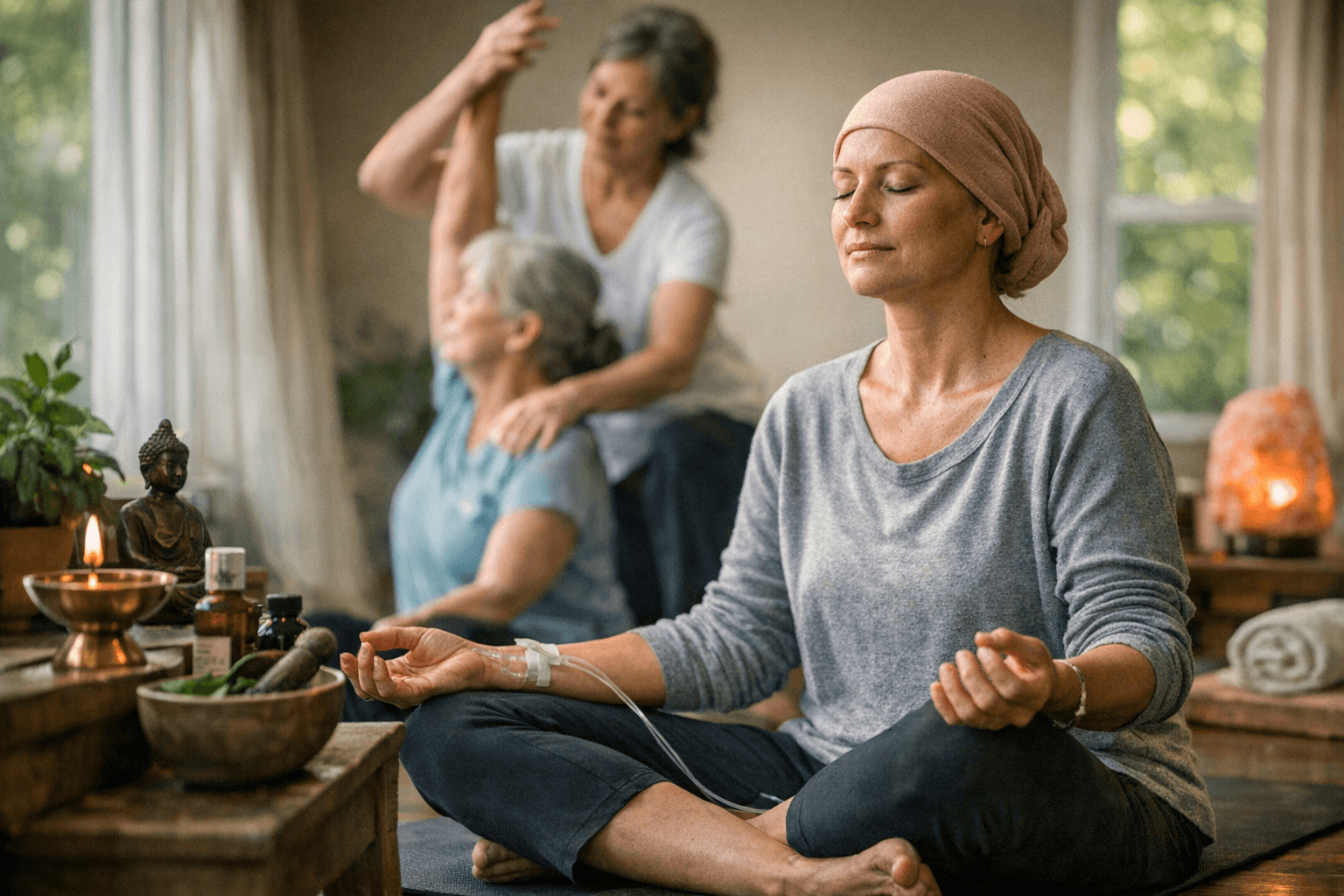
The review's findings make a compelling case for combining these two modalities. Yoga, involving asanas, pranayama, and meditation, reduces cancer-related fatigue, anxiety, and inflammation via neuroendocrine modulation. Naturopathy, emphasizing hydrotherapy, mud therapy, nutrition, and massage, complements this by targeting detoxification, pain relief, and immune support, as seen in integrative protocols for advanced cancers. Together, yoga is described as one of the most widely accepted and studied modalities in integrative oncology, and together with naturopathy, offers a promising holistic strategy to address multidimensional needs and improve quality of life in cancer rehabilitation.
Yoga interventions, generally a mix of asanas, pranayama, and meditation, have been shown to reduce cancer-related fatigue and improve mood, sleep, and overall quality of life, especially in breast and mixed-cancer groups.
The researchers were equally direct about what stands in the way of broader adoption. Successful implementation would require trained professionals with expertise in oncology-focused yoga therapy and naturopathy, along with adequate infrastructure, time allocation within clinical settings, sustainable funding, and support from insurance systems; clear referral pathways and interdisciplinary coordination are also essential, particularly in busy oncology clinics where patient load and resource constraints may limit integration of complementary care services. Patients face their own hurdles, including travel logistics, costs, symptoms, work-family pressures, and cultural skepticism, especially in rural or low-resource regions.
Clinicians hesitate without standardized protocols, herb-drug safety data, and proof of long-term outcomes and cost savings, calling for better education and cross-disciplinary coordination. Larger, mechanistically focused trials on combined yoga-naturopathy approaches are needed to improve personalization and implementation in routine cancer care.
For the yoga therapy community, the review signals a growing institutional appetite for rigorous evidence behind practices many have long considered self-evident. The question now is whether integrative oncology programs can muster the infrastructure and funding to bring these interventions out of specialist colleges like SDM and into mainstream cancer wards.
This article was produced by Prism’s automated news system from verified source data, official records, and press releases, then run through automated quality and moderation checks before publishing. The system is built and supervised by the people who set the standards it runs under. Read our full AI policy.
Did this article answer your question?