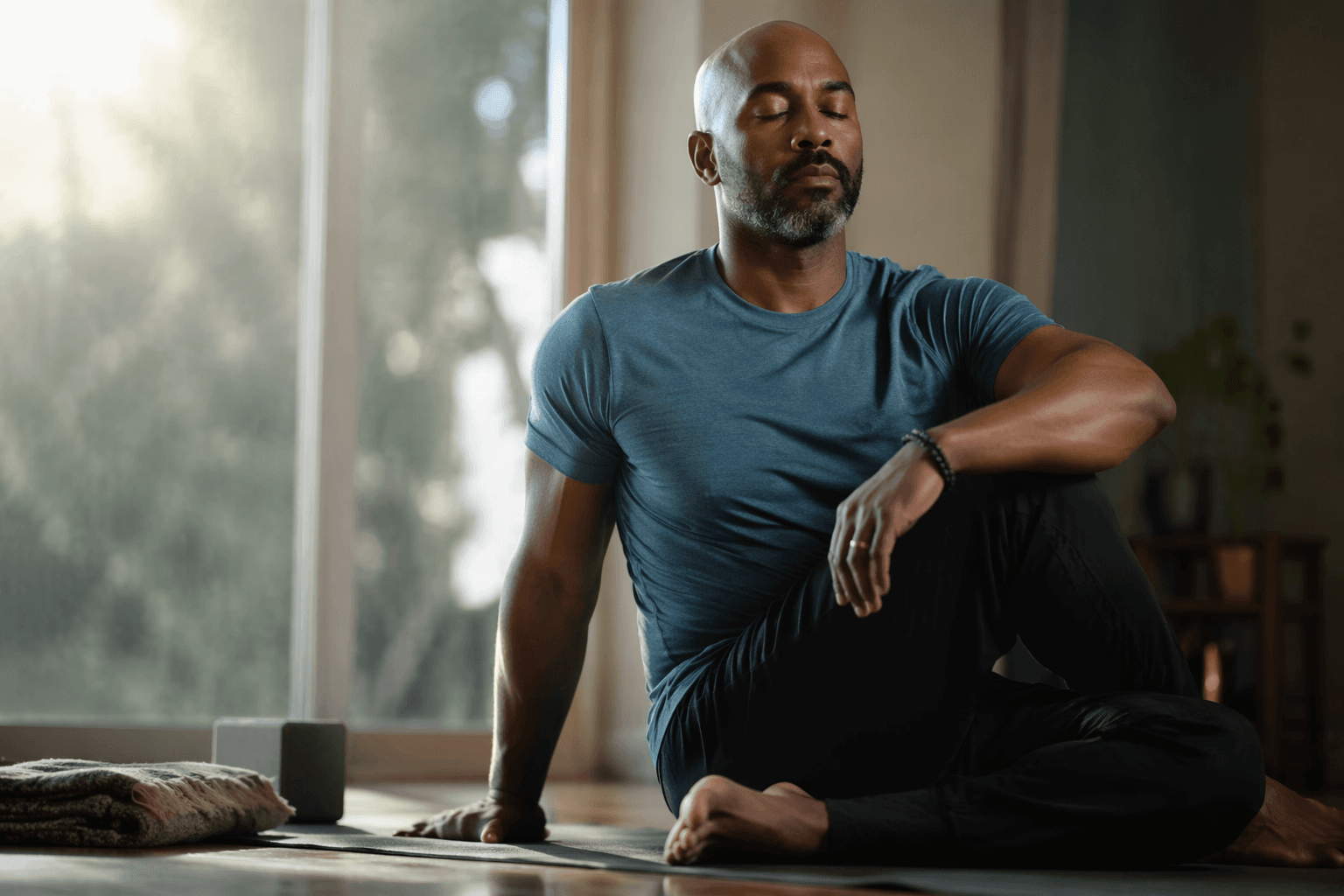
Yoga Improves Mobility and Quality of Life During Thoracic Radiotherapy
Yoga helped thoracic radiotherapy patients walk farther and feel better physically, while the caregiver-inclusive design points to a more livable cancer-care model.

Care is part of the intervention
The most interesting thing about this trial is not just that yoga helped people with thoracic cancer treatment keep moving. It is that the study treated the family caregiver as part of the story, not a footnote, and that shift may be what makes the results feel so usable in real cancer care.
For people undergoing thoracic radiotherapy for lung or esophageal cancer, the weeks of treatment can be punishing. Performance can slip, symptoms pile up, and quality of life can narrow fast. This randomized trial from The University of Texas MD Anderson Cancer Center asked whether a structured yoga program could help patients hold onto function, and whether bringing a family caregiver into the process could make that support easier to sustain.
What the randomized trial tested
The study enrolled 222 participants and randomly assigned them to either a 15-session yoga program or a dose-matched education and support intervention. That comparison matters, because it means the yoga group was not simply getting extra attention. Both groups were followed through a demanding stretch of care, with assessments at baseline, on the last day of radiotherapy, and then 1, 2, and 3 months later.
The trial was built by a multidisciplinary team led by Kathrin Milbury and Lorenzo Cohen, with collaborators spanning thoracic radiation oncology, palliative and integrative medicine, pulmonary medicine, biostatistics, and health disparities research. That mix fits the question the study is trying to answer: not whether yoga feels nice in the abstract, but whether it can function as a practical supportive-care tool inside a busy cancer treatment setting.
The primary endpoint was the 6-minute walk test, a straightforward way to measure functional capacity. Secondary outcomes included validated quality-of-life measures for both patients and caregivers, which keeps the focus on daily life rather than on movement alone.
What changed for patients
The clearest signal was physical. Across follow-up, patients in the yoga group walked farther than those in the education and support group, with least-squared means of 469 meters versus 441 meters, a difference that reached statistical significance. In cancer care, that kind of gap is meaningful because it reflects more than exercise tolerance. It suggests that people are preserving the ability to get through ordinary tasks when treatment is already trying to take that away.
Patients in the yoga arm also reported better physical quality of life, 44.7 versus 41.6, again with statistical significance. That is the kind of result patients can feel in day-to-day life, whether the win is standing longer in the kitchen, climbing stairs with less dread, or simply feeling less physically worn down by the treatment cycle.
The trial was more restrained on mental health. Yoga did not improve mental quality-of-life scores compared with education and support, which is an important detail because it keeps the finding grounded. The program appears to help the body more reliably than the mind, at least in this setting and over this timeframe.

Two exploratory outcomes also leaned in yoga’s favor. Sleep improved, with a P value of .01, and coping efficacy improved, with a P value of .02. Those are the kinds of downstream gains that matter in radiotherapy, where nights can be restless and the emotional grind can be as exhausting as the appointment schedule.
Why the caregiver matters so much
The most shareable part of this study may be its quietest conclusion: involving a family caregiver may improve intervention adherence. That is a big deal, because adherence is where many promising supportive-care ideas run into real life. A program can look elegant on paper and still fall apart when a patient is tired, a schedule gets messy, or no one at home has the bandwidth to help keep it going.
Caregivers in thoracic cancer care often carry the invisible logistics that keep treatment moving, from transportation to encouragement to the simple daily work of staying present. By making the caregiver part of the yoga intervention, the study acknowledges that resilience in cancer care is rarely a solo act. The person beside the patient may be the reason a practice survives the hardest weeks.
That is also what makes the trial feel different from generic wellness advice. It is not asking cancer patients to somehow self-optimise in the middle of radiotherapy. It is testing whether a shared practice can fit into an already stressful household and support both the person in treatment and the person carrying the emotional load.
How this builds on earlier MD Anderson work
This larger randomized trial did not appear out of nowhere. It builds on an earlier pilot study from the same center that enrolled 26 patient-caregiver dyads and met feasibility criteria. In that pilot, the yoga arm showed significant improvements for patients in 6-minute walk distance, physical function, and social function, with possible benefits for caregivers in vitality and role performance.
The larger trial gives that early signal more weight. With 222 participants instead of 26 dyads, and with a randomized design comparing yoga to a dose-matched support intervention, it offers stronger evidence that caregiver-supported yoga can help preserve function during thoracic radiotherapy. That matters in a population already at high risk for performance decline, symptom burden, and poor quality of life.
It also points toward a future that is less dependent on in-person access. A related line of study is testing an unsupervised, app-based yoga program for patients undergoing thoracic radiotherapy and their caregivers, with an eye toward usability, feasibility, and acceptability. If that model holds up, it could make integrative support easier to reach for families who cannot reliably travel for classes or appointments.
What this trial ultimately offers is a very practical idea with real emotional reach: in thoracic cancer care, yoga is not only about flexibility or calm. It may be a way to protect walking ability, improve physical quality of life, and give patients and caregivers a shared structure for getting through treatment together.
This article was produced by Prism’s automated news system from verified source data, official records, and press releases, then run through automated quality and moderation checks before publishing. The system is built and supervised by the people who set the standards it runs under. Read our full AI policy.
Did this article answer your question?