Yoga nidra is not just sleep, understanding the practice
Yoga nidra is not a nap. It is a guided, wakeful rest practice with sankalpa, body rotation, and breath awareness, and research has tested even 11-minute sessions.
Swami Satyananda Saraswati’s *Yoga Nidra*, first published on October 1, 1976, framed the practice around awareness rather than unconsciousness. In a 2011 article titled *Origins of Yoga Nidra*, his words are preserved: “relaxation is not the same as sleep.” People often meet yoga nidra under the nickname “yogic sleep,” but that label misses the point.
What yoga nidra actually is
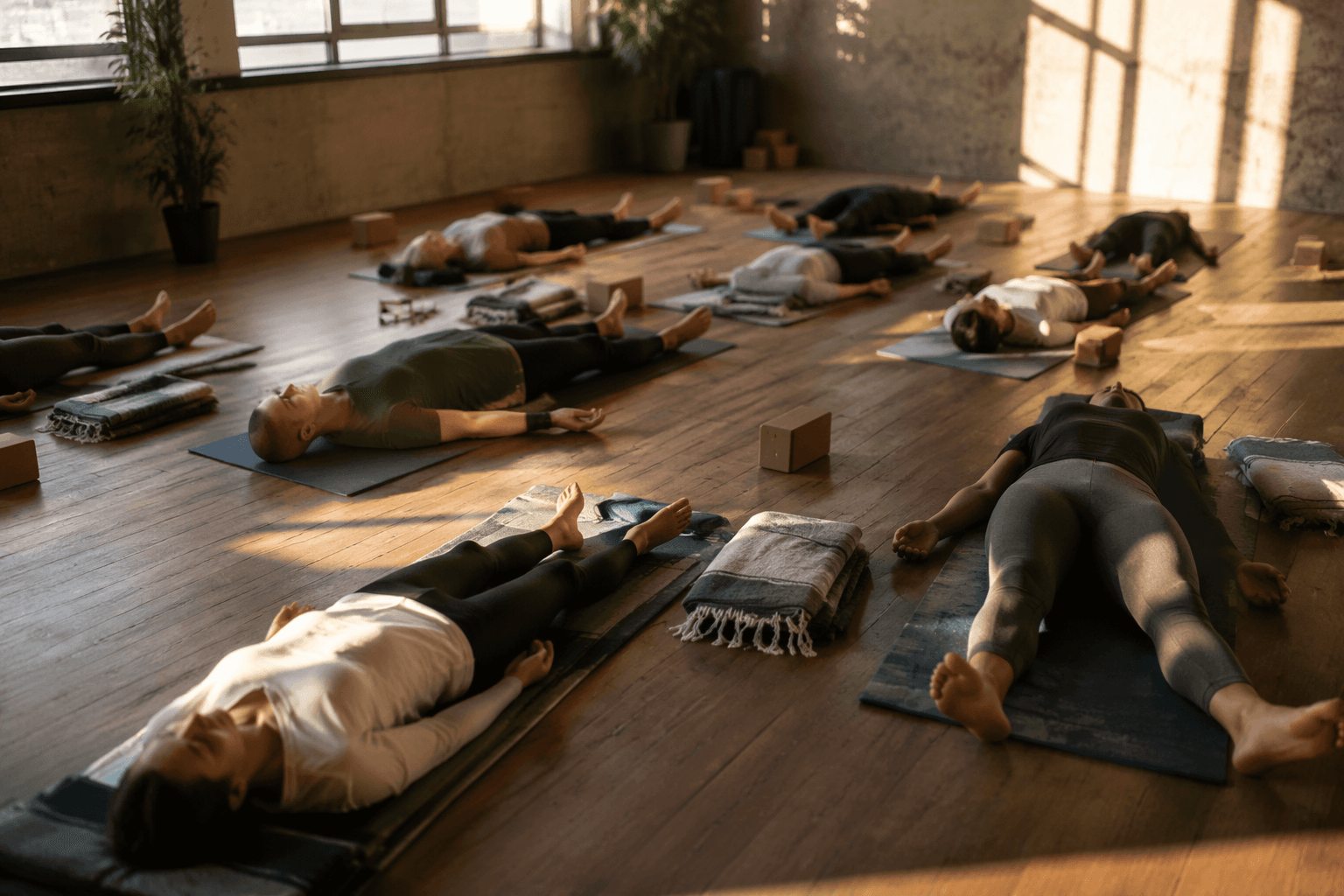
In practice, yoga nidra is a guided form of deep rest that usually happens lying down, with the body as still as possible and the mind following a structured script. The aim is not to zone out, but to stay aware while the body relaxes, which is why so many teachers place it near pratyahara, the inward withdrawal of the senses in Patanjali’s eight-limb system. It feels different from a vinyasa flow or a power class because the work is internal, not athletic.
A full session is not just soothing music and a voice telling you to breathe. The sequence usually includes settling in, stating a sankalpa, moving attention through the body, noticing the breath, and then closing in guided rest.
Why sankalpa matters
Sankalpa is one of the most useful concepts in the practice, and one of the easiest to flatten into self-help language. It is not simply a goal statement, but an intention framed to align with deeper values, often stated in the present tense as a kind of vow. In a yoga nidra session, sankalpa gives the rest period an inner direction without turning it into a productivity exercise.
How a session unfolds
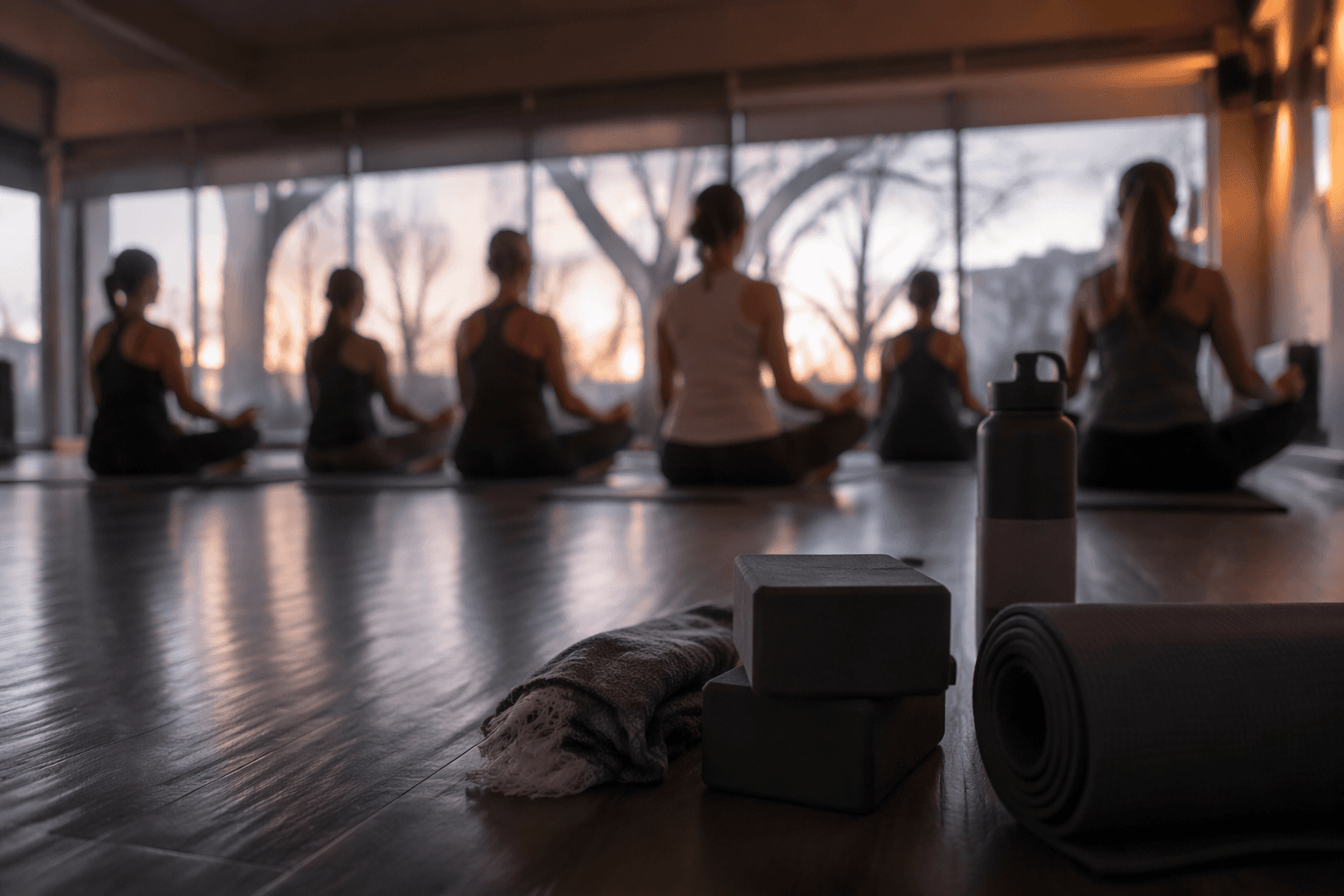
Most recordings and classes begin by asking you to get comfortable with very little effort. A mat or blanket is usually enough, and no special flexibility is required, which is part of the practice’s appeal for beginners and for anyone who does not want a movement-heavy class. From there, the teacher typically guides a rotation of awareness through the body, then shifts to breath awareness and other focused prompts.
Some modern protocols add imagery, including versions that mention the “golden egg,” while others lean more heavily on body scanning and the language of sankalpa. The details vary, but the recognizable spine of the practice stays the same: intention, body rotation, breath, and rest. If a track skips those pieces entirely, it is probably offering relaxation, not yoga nidra in its fuller sense.
What the research has looked at
A 2020 open-access paper in *Current Psychology*, *Effectiveness of a short Yoga Nidra meditation on stress, sleep, and well-being in a large and diverse sample*, went online on September 8, 2020 and tested an 11-minute guided practice designed for people with only a short time for breaks. The Springer article page shows 67k accesses, 47 citations, an Altmetric score of 162, and 24 mentions.
By 2022, the review literature was treating yoga nidra as a serious clinical topic. *Therapeutic Effects of Yoga Nidra: A Review* appeared in the *International Journal of Health Sciences and Research*, and *The Origin and Clinical Relevance of Yoga Nidra* appears in PMC as a peer-reviewed biomedical article. Europe PMC includes randomized controlled trials, including *Yoga nidra practice shows improvement in sleep in patients with chronic insomnia* and another trial on *Om chanting and Yoga Nidra in hypertensive subjects*.
Who may benefit, and who may not
Yoga nidra tends to suit people who want structured rest without physical strain. If you are new to yoga, the low-effort format makes it approachable, and the practice can be especially useful when you want something more contemplative than a stretch class and less demanding than seated meditation. The 11-minute protocol from *Current Psychology* shows that it can also fit into a short break.
It is not the right fit if you are looking for movement, sweat, or a cardio hit. It is also not the same thing as sleep itself, so it should not be treated as a substitute for actually sleeping when your body needs sleep. And if you want a recording that just lulls you into unconsciousness, that is a different product from yoga nidra, even if it is sold under the same umbrella of relaxation.
How to choose a credible class or recording
The easiest way to vet a class is to listen for the sequence. A credible session will usually name the key parts, settling in, sankalpa, body rotation, breath awareness, and closure, rather than jumping straight into vague calm. It should also make clear that yoga nidra is distinct from ordinary meditation, not just a softer version of it.
Length matters too. Some sessions are intentionally brief enough for a work break, while consumer recordings may run 20 to 45 minutes or longer, so the best choice depends on whether you want a short reset or a deeper guided rest. If a teacher can explain why the practice uses present-tense intention, why awareness stays online, and why relaxation is not the same as sleep, you are probably in the right place.
This article was produced by Prism’s automated news system from verified source data, official records, and press releases, then run through automated quality and moderation checks before publishing. The system is built and supervised by the people who set the standards it runs under. Read our full AI policy.
Did this article answer your question?