Yoga’s ancient roots stretch far beyond modern studio poses
Yoga is far bigger than studio stretches: its classical path joins ethics, breath, concentration, and meditation, with asana only one of eight limbs.
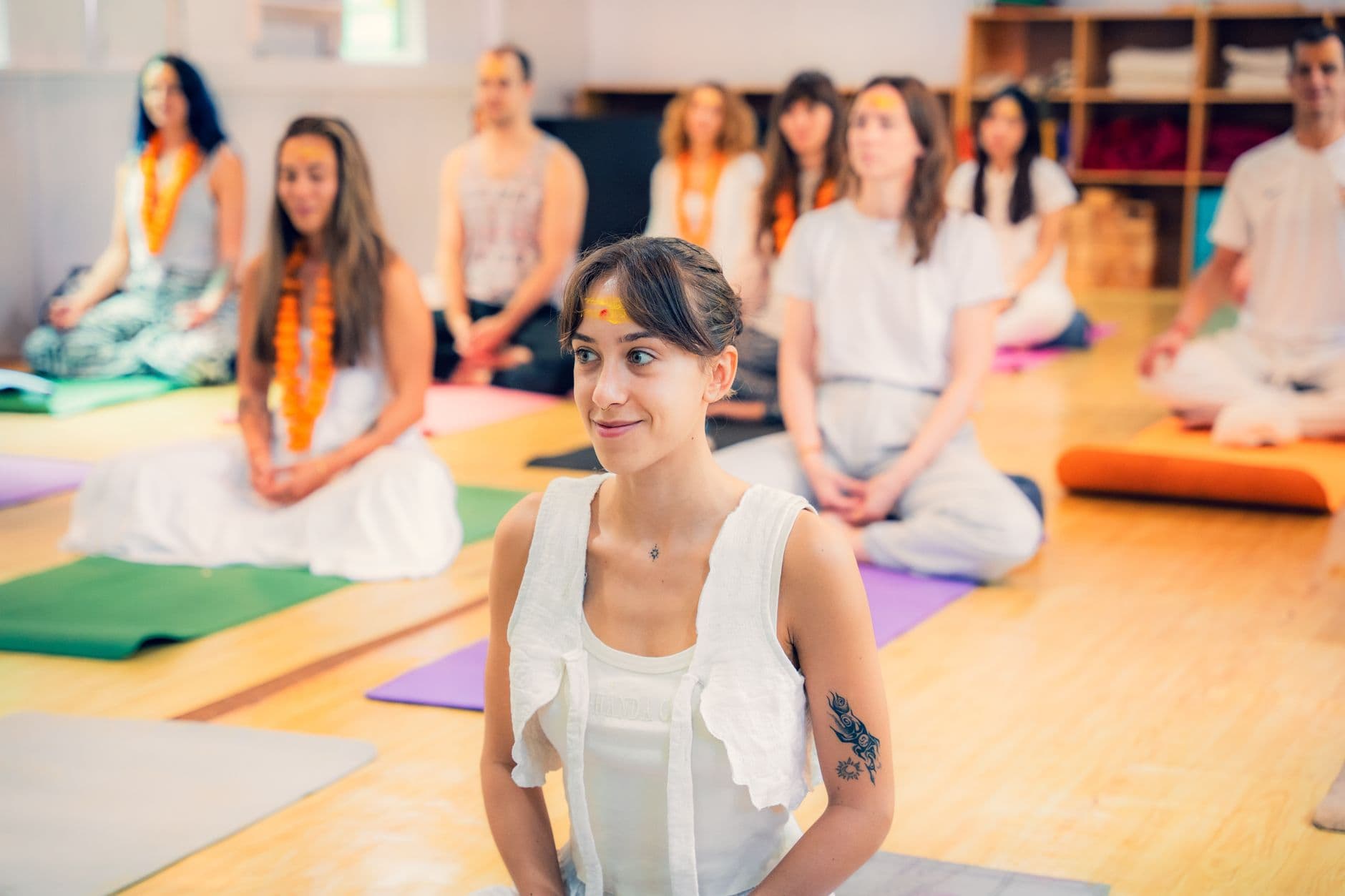
Yoga looks modern when it is reduced to a mat, a playlist, and a sequence of poses, but the tradition is much broader than flexibility work. Classical yoga sits inside Indian philosophy, reaches back into early Indian spiritual history, and asks for much more than a deep hamstring stretch.
What yoga is before it becomes a workout
Yoga is one of the six systems, or darshanas, of Indian philosophy. Britannica identifies the Yoga Sutras of Patanjali as its basic text and places Patanjali around the 2nd century BCE or the 5th century CE, which is a reminder that classical yoga was already systematized long before it became a studio brand.
The roots run deeper still. The Internet Encyclopedia of Philosophy notes that yogi-like ascetics appear in very early Indian traditions, while related practices show up in the Upanishads. It also points to archaeological evidence suggesting yogic postures may have been practiced on the subcontinent for well over 4,000 years. In other words, the physical poses are not the starting point of the story, and they are certainly not the whole story.
That matters because many modern classes treat yoga as if it were synonymous with asana, the posture practice. Classical yoga treats asana as one limb inside a much larger discipline that includes conduct, breath, attention, and meditation. If you only know the mat, you are meeting one part of a system that was designed to reshape the whole person.
The eight limbs, translated into everyday practice
The eight-limb framework, or ashtanga-yoga, divides practice into outer and inner limbs. Oregon State University’s contemplative studies program describes five outer limbs, which connect to bodily practice, the senses, and social interaction, and three inner limbs, which move toward concentration and wisdom. Oxford Reference lists the outer limbs as yama, niyama, asana, pranayama, and pratyahara, with the inner limbs as dharana, dhyana, and samadhi.
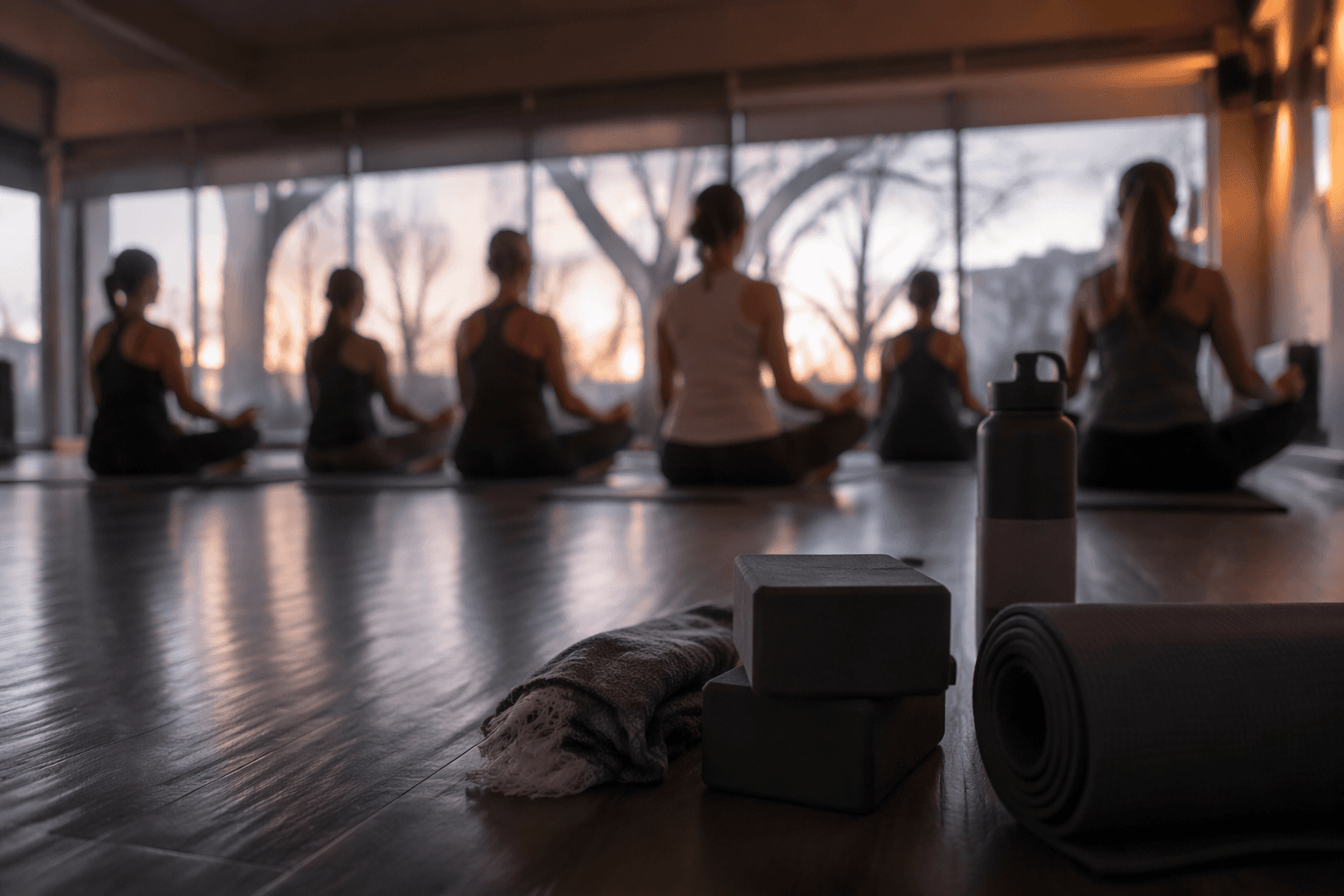
The first two limbs, yama and niyama, are where the stereotype of yoga as stretching starts to fall apart. These are not poses at all. They are ethics, restraint, and self-discipline, including principles such as non-harm, truthfulness, cleanliness, contentment, study, and devotion. In studio terms, that means moving with care instead of forcing a shape, respecting other people’s space, arriving prepared, and treating practice as more than a performance.
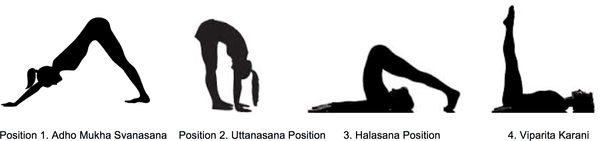
Asana, the limb most people recognize, is the physical seat or posture practice. It matters, but in the classical system it is one layer rather than the destination. A class focused only on lines, balance, or sweat is still useful, but it leaves out the larger discipline that frames why the body is being trained in the first place.
Pranayama turns attention to breath. In practical terms, that means learning to regulate the breath instead of letting it run the session. You can feel that on the mat during transitions, in a long exhale through a difficult hold, or off the mat when you slow your breathing before a hard conversation or a crowded commute.
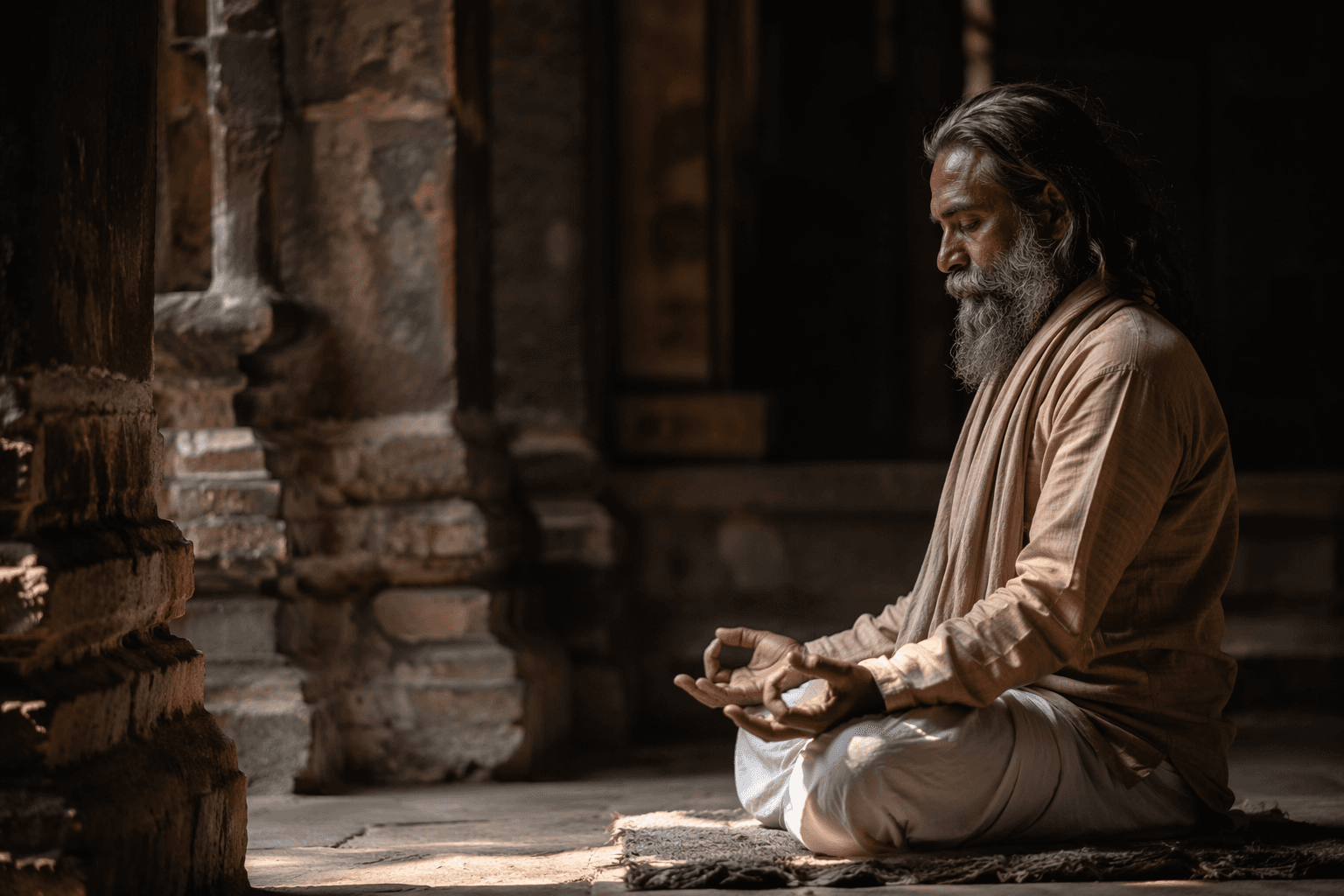
Pratyahara shifts the senses inward. This is the point where yoga stops being mainly about what is happening around you and becomes a practice of less distraction and more inward attention. In modern life, that can look like putting away the phone before class, letting the room go quiet during savasana, and noticing how quickly the mind reaches outward when the body is still.
Dharana, the next limb, is concentration. This is the training of single-pointed attention, whether you hold it on the breath, a mantra, a posture, or a still point in the room. Dhyana deepens that focus into meditation, where attention is sustained rather than repeatedly reset. Samadhi is the final limb in the classical sequence, the state of deep absorption that the tradition treats as the culmination of the path.
Seen this way, the eight limbs form a practical map. The outer limbs shape how you behave, move, and respond. The inner limbs shape how you focus, settle, and ultimately understand your own mind. That is a very different project from taking a weekly stretch class.
How yoga traveled into the modern West
Yoga’s modern visibility in the West grew in the early 20th century. Britannica connects that spread to figures such as Paramahansa Yogananda, who founded the Self-Realization Fellowship in the United States in 1920. The fellowship was chartered in 1935 and is headquartered in Los Angeles, and Britannica notes that Yogananda was one of the first Indian spiritual teachers to reside permanently in the West.
That history helps explain the split many practitioners feel today. On one side is the commercial studio world, where yoga has become a major business and cultural category. A Harvard-related summary citing a market study put the number of U.S. practitioners at more than 20 million, or nearly 9 percent of the population, inside a $10 billion commercial industry. On the other side is the older philosophical system, where the body is one entry point into ethics, breath, concentration, and liberation.
The modern industry is not a distortion of yoga so much as a narrowing of it. The business of classes, apparel, and mats has made yoga visible, but visibility is not the same thing as completeness. The classical framework asks something more demanding and, for many practitioners, more interesting: how you move through a class, how you speak to yourself, how you regulate your breath, and how you carry attention once you leave the studio.
That is the real myth to bust. Yoga did not begin and end with poses, and it still does not. If your practice starts on the mat, the eight limbs show where it can go next: into restraint, discipline, breath, attention, and a steadier way of living when class is over.
This article was produced by Prism’s automated news system from verified source data, official records, and press releases, then run through automated quality and moderation checks before publishing. The system is built and supervised by the people who set the standards it runs under. Read our full AI policy.
Did this article answer your question?