פרסומות במקרר חכם: המחיר הגבוה והתסכול במטבח הביתי
A premium Samsung fridge can now flash ads on its idle screen, turning a $2,000 kitchen upgrade into a daily fight over control and privacy.
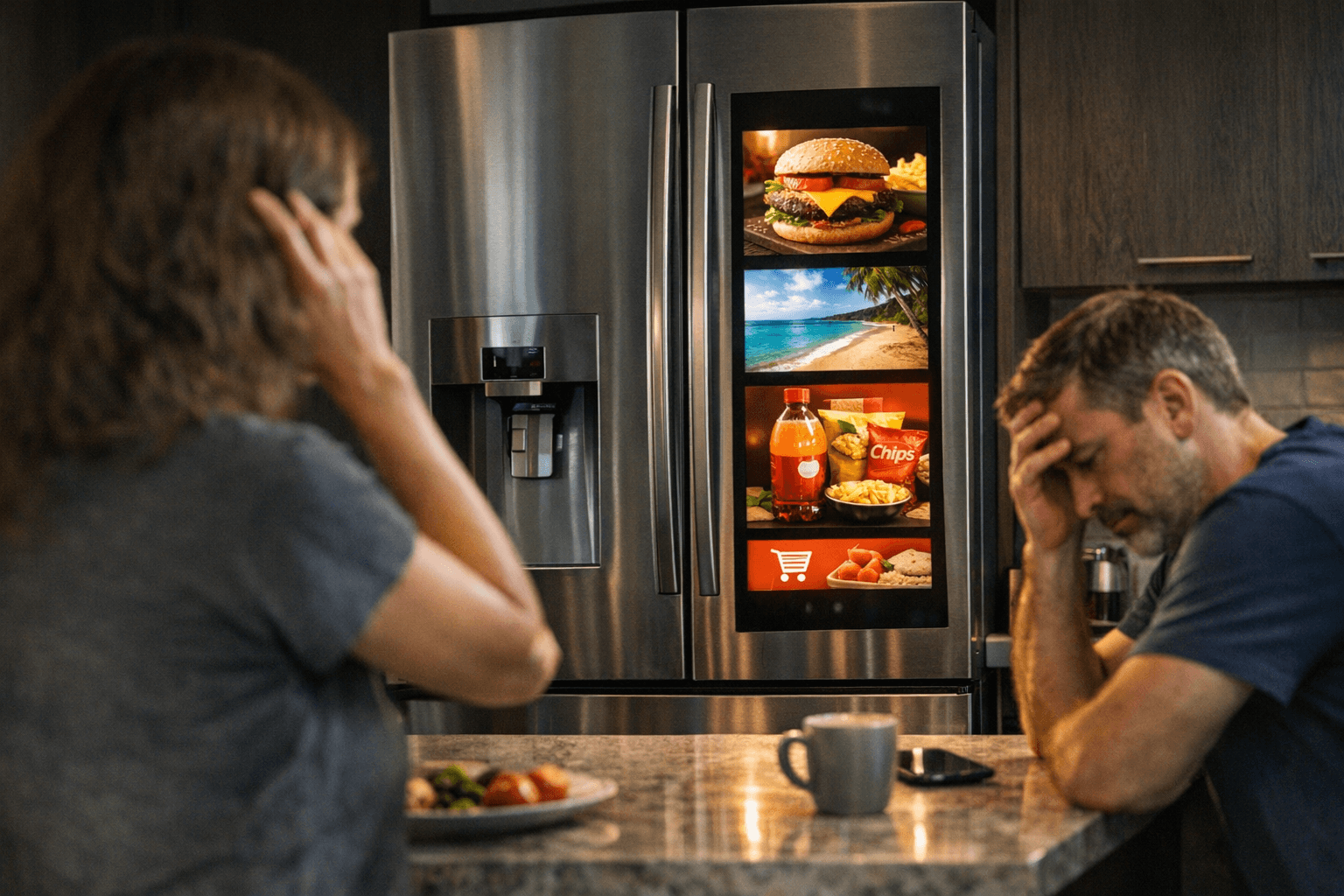
The sharpest insult is not that a refrigerator shows ads. It is that a buyer can pay thousands for a connected kitchen hub and still end up with a screen that behaves like rented space. For households that bought Family Hub for convenience, the new problem is simple: a premium appliance now interrupts daily life.
Samsung’s Family Hub line was built around the promise of a smarter kitchen, with family organization, smart-home control, entertainment, and Samsung TV Plus all folded into one display. The line dates back to 2016, and some models come with 21.5-inch or 32-inch touchscreens. That is exactly why the ad issue hits so hard: this is not a bargain appliance, but a flagship product with a flagship price.
What the ads actually do in the kitchen
Ads on the idle Cover Screen
The ads appear on the refrigerator’s Cover Screen when the display is idle. In practice, that means the fridge can sit in the middle of the kitchen and still serve promotional tiles without anyone touching it. For a device that is supposed to feel useful, calm, and invisible most of the time, that is a big shift in how the product behaves.
Samsung started a U.S. pilot in September 2025 on select Family Hub models through an over-the-air software update. The company limited the test to certain models and tied future plans to the pilot’s results. That detail matters because it shows how quickly a connected appliance can change after the sale, without any hardware swap and without the owner buying anything new.
A software update can change the product after purchase
That is the real consumer issue here. A refrigerator used to be judged on cooling performance, layout, energy use, and durability. Now the software stack can alter the experience long after delivery, and the change can land in the most visible part of the appliance.
Some owners reported seeing promotional tiles after a recent update, which turned a kitchen display into something closer to a retail channel. Even if the ads are limited to a pilot, the message is clear: once the fridge is connected, the screen is no longer fully under the buyer’s control. For a premium product, that is a rough trade.
Why premium buyers feel burned
You paid for control, not interruption
Family Hub is marketed as the command center of the kitchen. It helps manage calendars, control other smart-home devices, stream content, and surface Samsung TV Plus, so the screen is designed to be looked at often. That is why promotional content feels more intrusive here than on a cheap gadget tucked away in a corner.
The price makes the irritation worse. Family Hub models have been listed in the United States for roughly $1,800 to $3,500, and one 26.7 cu. ft. side-by-side model with a 21.5-inch touch screen has been listed at $1,999.99. When a fridge costs that much, buyers expect the experience to be cleaner than a mid-tier phone packed with ads.
The gap between the promise and the reality
Samsung’s own messaging built the opposite expectation. In April 2024, Jeong Seung Moon said the company had no plans to bring ads to its smart-home displays. By September 2025, the company had already moved into a pilot for promotions and curated ads on selected fridges.
That reversal is what turns a product complaint into a trust problem. The Family Hub concept was sold as a family-friendly, connected kitchen surface, not as ad inventory. Once the company crosses that line, every future software update starts to look like a potential billable opportunity, not just a feature upgrade.
What to check before paying for a smart fridge
Ask the seller these questions before you sign
Before buying a premium smart fridge, ask whether the exact model can show promotions on the Cover Screen, whether there is a permanent way to turn them off, and whether any disable option survives future over-the-air updates. Also ask whether the screen behavior changes when the fridge is offline, and whether the feature is tied to a specific hardware revision or likely to spread across the line.
Those questions are not nitpicking. They tell you whether you are buying a kitchen appliance or a connected platform that can be reprogrammed later. If the answer is vague, treat that as a warning sign, because the most expensive part of the purchase may be the part you cannot fully control.
Check the screen size and the software promise
The screen size matters more than people think. A 21.5-inch panel and a 32-inch panel are not just different in scale, they change how visible the device is in the room and how central it becomes to daily routines. The larger the display, the more obvious the advertising surface becomes when the screen is awake, idle, or waiting for input.
The software promise matters just as much. A connected fridge is not frozen in time the day it arrives, and buyers need to know exactly what future updates can bring. In this category, the danger is not only the first setup. It is the update that arrives later and changes the experience when nobody is paying attention.
What this means for Israeli buyers
Premium appliances are already a serious purchase here
For Israeli households, this story lands in a market where premium appliances are already expensive once taxes, shipping, and retail markup are added. A fridge in this class is not a casual upgrade; it is a major household purchase, whether it ends up in Tel Aviv, Jerusalem, Haifa, or a new development farther from the center.
That makes the ad issue a local consumer question, not just an American tech annoyance. If a family is paying premium money for a smart fridge, the first expectation is simple: the screen should help the kitchen run better, not turn it into a commercial surface. Privacy, control, and the ability to disable unwanted content become part of the value proposition, not an optional extra.
The real test is daily use, not showroom polish
A smart fridge can look impressive on the sales floor and still feel irritating after the first week at home. The moment the screen starts surfacing ads during ordinary kitchen use, the appliance stops feeling like a neutral tool and starts feeling like a platform that is trying to monetize attention.
That is the gap consumers should focus on before buying. A premium kitchen device should save time, reduce friction, and stay out of the way when it is not needed. If it cannot do that, the buyer is paying a luxury price for a daily annoyance.
שאלות נפוצות
Can every Family Hub fridge show ads?
No. Samsung limited the pilot to certain Family Hub models in the United States. But buyers should not assume that a premium smart fridge will stay ad-free forever once it is connected and receiving software updates.
Where do the ads appear?
They appear on the Cover Screen when the display is idle. That placement matters because the screen is part of the kitchen environment, so the ads show up in the room’s line of sight even when nobody is actively using the fridge.
Can the ads be turned off permanently?
That is the key question to ask before purchase. If the only workaround is awkward or temporary, the fridge is not giving you full control over the interface, and that is a serious drawback for a device in this price range.
What should I ask before buying a smart fridge?
Ask whether promotions can appear on the screen, whether there is a permanent opt-out, what future updates can change, which screen size you are getting, and whether the connected features are worth the risk of a more commercial interface. If the answers are unclear, the safer choice is usually the less flashy one.
יודעים משהו שפספסנו? יש לכם תיקון או מידע נוסף?
שלחו טיפ