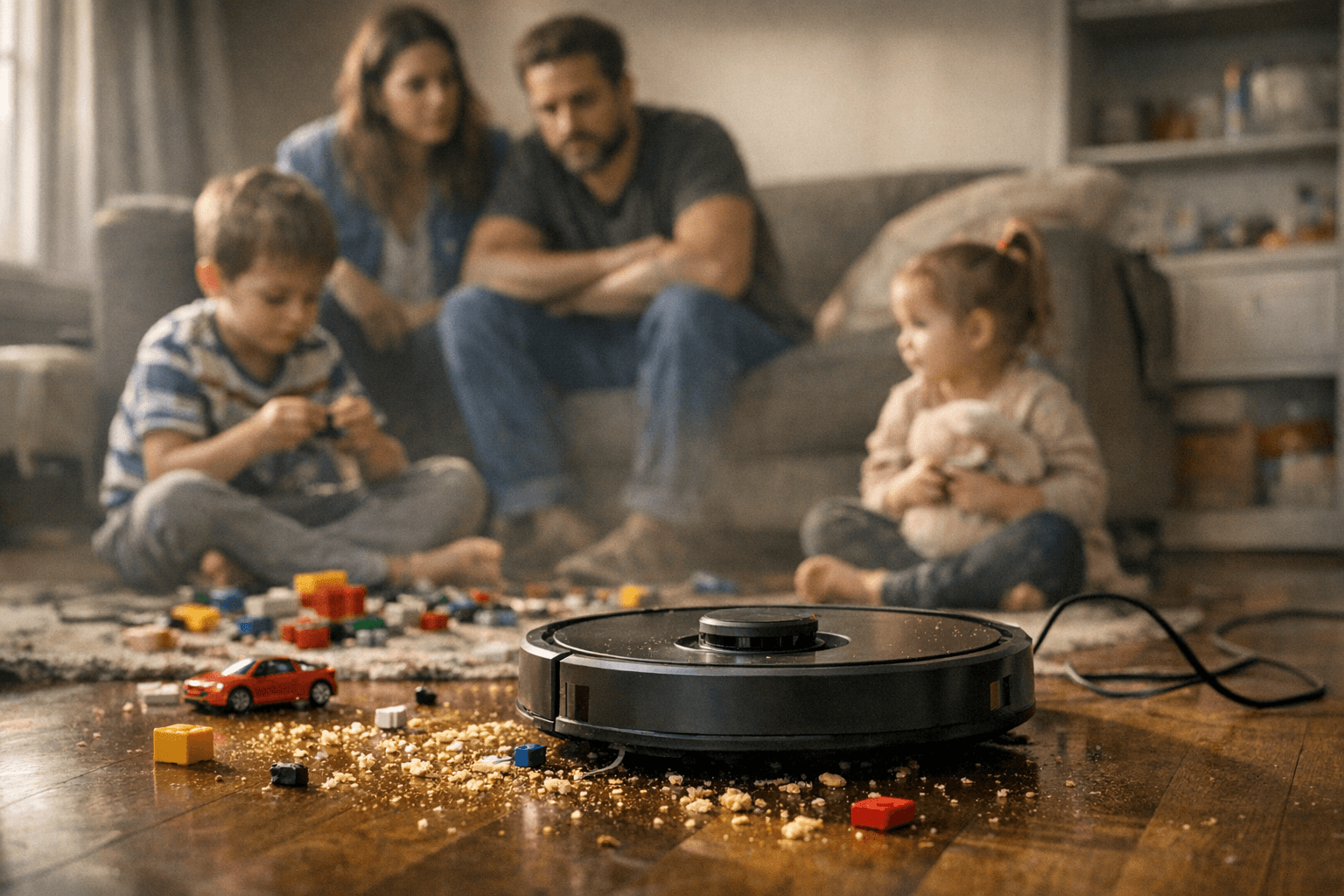
שואב רובוטי דק במיוחד: 90 מ״מ, בינה מלאכותית וחציית מכשולים גבוהה
Xiaomi’s new 90mm robot vacuum is less about raw suction and more about finally solving the real mess: low furniture, thresholds, cables and the blind spots most robots still miss.
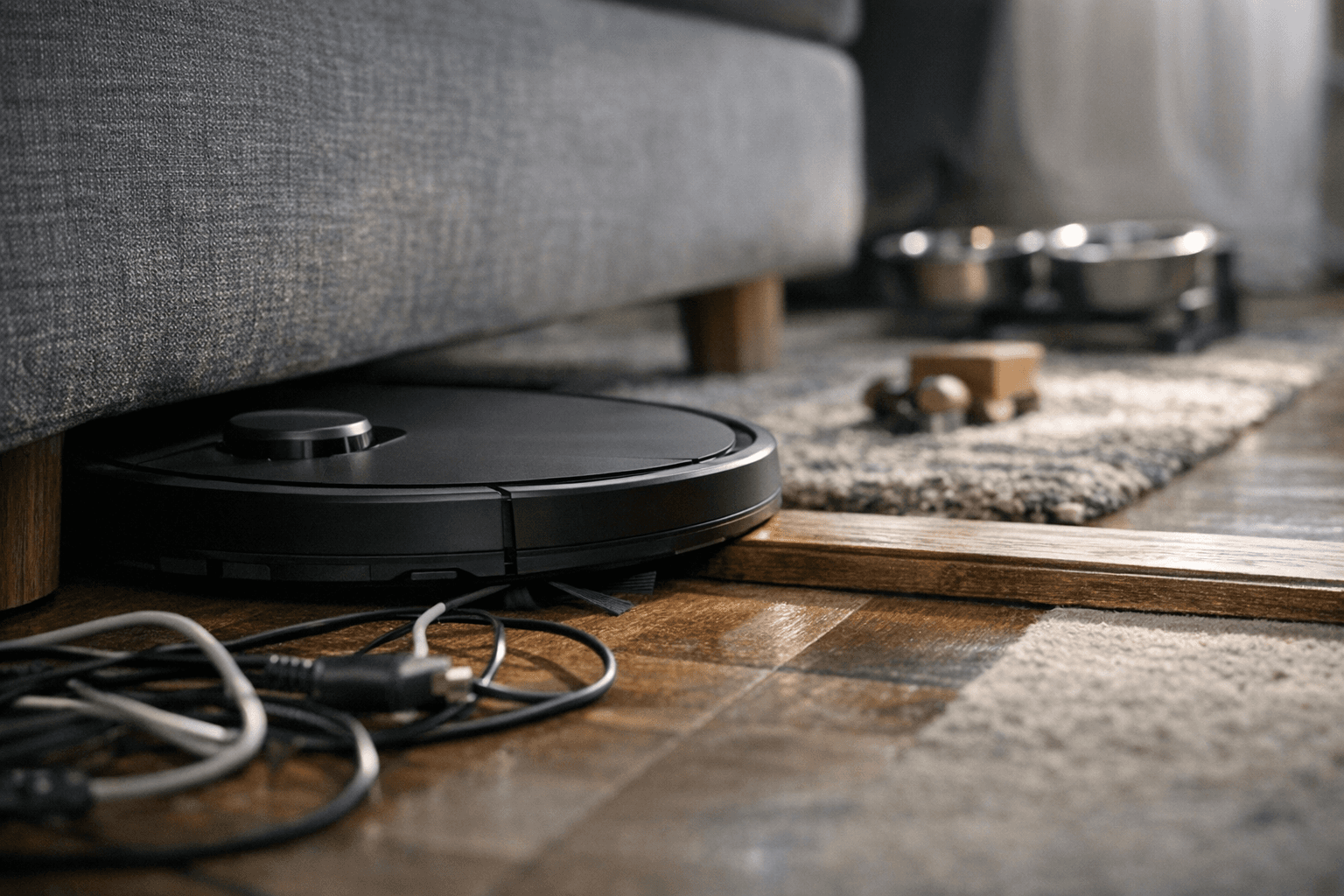
The latest Xiaomi robot vacuum is built around a sharper idea than another round of bigger numbers. At 90mm tall, with dual AI cameras, auto-water options and a 40mm obstacle-clearing claim, it is trying to prove that a robot vacuum becomes genuinely useful only when it can move like it belongs in a real home, not a spec sheet. For Israeli apartments, where sofa gaps are tight, balcony thresholds are common and cables live everywhere, that is the right battlefield.
Xiaomi’s Mijia Robot Vacuum and Mop 6 Max, launched in China in March 2026, pushes the same logic even harder. It combines 35,000Pa suction, AI recognition of 280 objects and 47 dirt types, and bionic robotic legs that can cross obstacles up to 6cm. That is not a small step up from the usual “better suction” marketing. It is Xiaomi saying the next competition is not just about picking up dust, but about getting to the dust in the first place.
What 90mm really changes in a robot vacuum
Can a 90mm body get under the furniture that matters?
Yes, and that is the point. Ninety millimeters is 9cm, which matters under beds, sideboards and low sofas where dust collects for months and most robots simply give up. Xiaomi already played this game with the Robot Vacuum 5, which uses a dToF Smart Retractable Radar and can lower itself to fit under areas as low as 9.5cm.
That detail sounds tiny until you live with the furniture layout of a normal city apartment. In Tel Aviv, Ramat Gan or Jerusalem, the vacuum has to deal with low media cabinets, chair rails and the kind of awkward leg design buyers pick for looks, not cleaning access. A slimmer body is not a luxury feature; it decides whether the robot actually cleans the hidden dirt or just circles the open floor like a very expensive toy.
Why obstacle crossing matters more than another suction jump
Suction numbers sell boxes, but thresholds, rug edges and cable nests decide whether the robot can finish the job. Xiaomi’s new model claims 40mm obstacle clearance, while the 6 Max goes further with bionic legs and 6cm crossing capability. That is a meaningful difference for homes with raised room transitions, thick mats and the random clutter that builds up around family life.
This is also where the conversation shifts from “power” to “autonomy.” If the robot can climb over a threshold, cross a cable bridge and keep its route without being rescued, the cleaning cycle becomes less manual and less annoying. If it cannot, 28,000Pa or 35,000Pa is just a louder number.
AI cameras are only useful if they reduce human babysitting
Does dual-camera AI actually improve cleaning?
It can, if it does the unglamorous work. Xiaomi’s 6 Max uses AI to identify 280 objects and 47 types of dirt, which gives the robot a better shot at seeing cords, furniture legs, shoes and scattered debris before it gets stuck or tangled. Dual cameras matter here because the robot is not just mapping rooms; it is trying to classify what is on the floor and adjust its behavior in real time.
That is the real upgrade buyers should care about. A robot vacuum that sees more objects can be more aggressive around trash and more careful around cables, pet mess and soft obstacles. In practice, that means fewer rescue missions and fewer angry moments when the machine eats a charger and dies under the couch.
What “AI” should mean in a robot vacuum, not just in a brochure
In this category, AI is useful only when it changes navigation, obstacle avoidance and coverage. Xiaomi’s Robot Vacuum 5 already uses S-Cross obstacle avoidance, while the 6 Max adds a broader object and dirt recognition layer on top of the usual mapping tools. That combination is more credible than a naked AI label because it ties vision to movement.
Buyers should still be skeptical of the hype. AI does not make a robot vacuum smarter in every room, and it does not erase the limitations of height, lighting or floor clutter. But when the robot has cameras, retractable radar and obstacle logic working together, the machine is finally doing what older models only promised: avoiding the mess instead of merely reacting to it.
How Xiaomi is building a product family, not a one-off gadget
The Mijia line now covers premium and midrange use cases
This launch sits inside a broader Xiaomi push in China, where the Mijia ecosystem keeps expanding with premium and midrange robot vacuums sold through the company’s own channels. That matters because it shows the company is building a ladder of products, not betting everything on one flagship model.
The global lineup tells the same story. Xiaomi’s vacuum-cleaner page already includes Robot Vacuum 5, Robot Vacuum 5 Pro, Robot Vacuum H40, Robot Vacuum S40 and Robot Vacuum X20 Max, which gives the category a real family structure. For buyers, that usually means one thing: Xiaomi expects enough demand to segment by price, feature set and home layout.
How the main models compare
| Model | Suction | Navigation / clearance | Standout trait |
|---|---|---|---|
| Mijia Robot Vacuum and Mop 6 Max | 35,000Pa | Bionic legs, up to 6cm obstacle crossing | AI recognition of 280 objects and 47 dirt types |
| Robot Vacuum 5 | Not stated in the notes | dToF Smart Retractable Radar, fits under 9.5cm, S-Cross obstacle avoidance | Slim body for low furniture |
| Robot Vacuum H40 | 10,000Pa | LDS smart navigation system | Multidimensional anti-tangle cleaning |
| Robot Vacuum 5 Pro | Not detailed here | Part of Xiaomi’s global vacuum lineup | Higher-end sibling in the same family |
| Robot Vacuum S40 | Not detailed here | Part of Xiaomi’s global vacuum lineup | Mainstream global option |
| Robot Vacuum X20 Max | Not detailed here | Part of Xiaomi’s global vacuum lineup | Larger global model tier |
The table makes the strategy clear. Xiaomi is not chasing only one metric. It is splitting the problem into low clearance, anti-tangle cleaning, smart navigation and higher obstacle crossing, then assigning each model a different job.
Who should care, and who should not
This is the right upgrade for cluttered homes
The 6 Max and the new slim 90mm model make sense for homes where floors are not perfectly clear. Families with kids, pet hair, cable clutter and raised thresholds will get more real value from better obstacle handling than from a few extra kilopascals of suction. That is especially true in Israeli homes with compact living rooms and furniture packed close to walls.
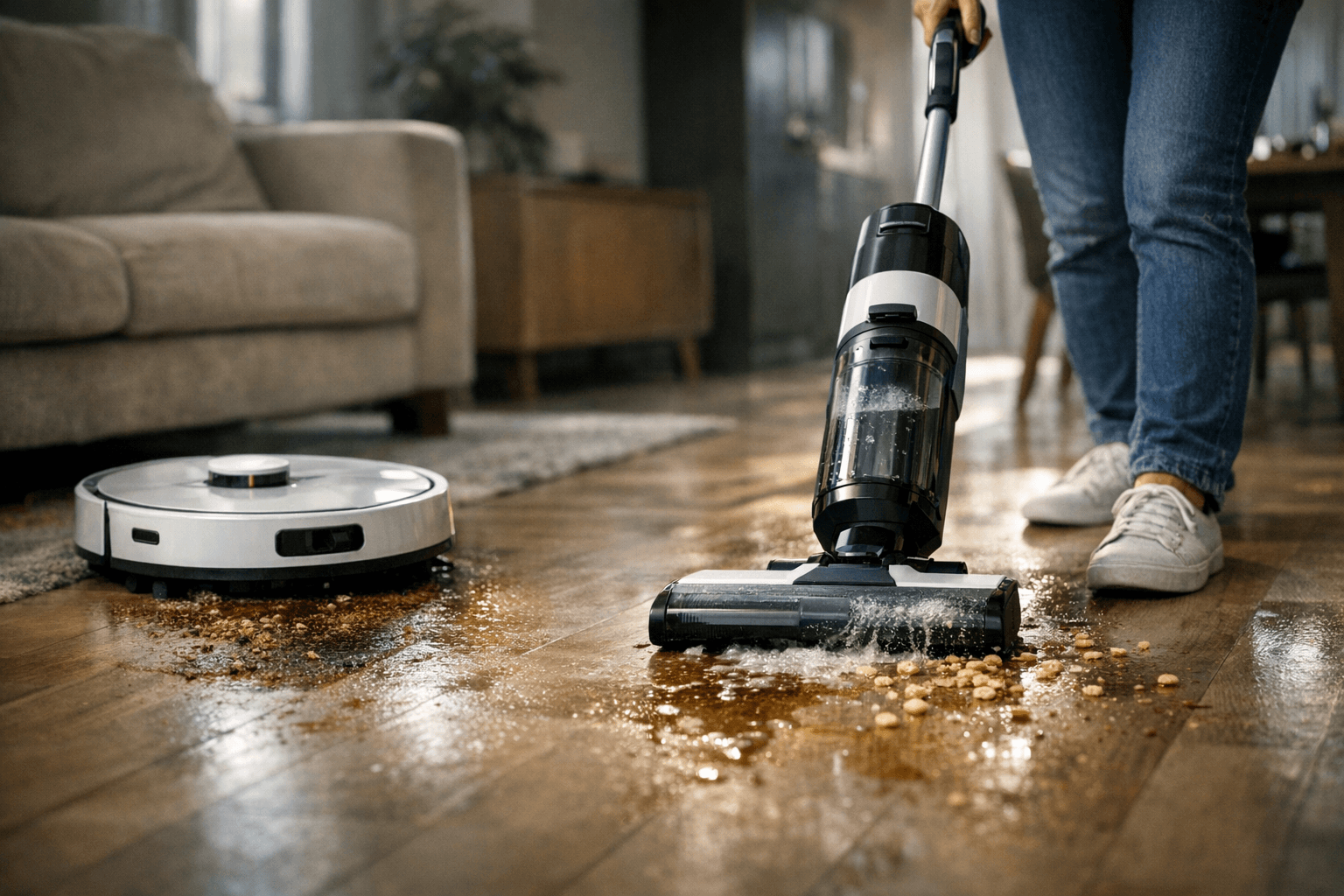
The automatic water options also matter. Xiaomi is selling a water tank version and a water supply and drainage version in China, which splits the market between buyers who want a simpler setup and buyers who want a more fixed, hands-off station. The second model makes sense only if the home can support the installation, while the first is easier for apartments that need flexibility.
This is overkill if the home is simple
If the floor plan is open, the furniture is raised high and the rooms are already easy to reach, the jump from one premium robot to another may not justify the money. A 10,000Pa H40 with anti-tangle cleaning and LDS navigation may already do the job for a much simpler home, especially if the main problem is everyday dust rather than obstacle-heavy cleaning.
That is the honest test of this category now. Once robot vacuums can clear 40mm or even 6cm obstacles, the question is no longer whether they are impressive. The question is whether they solve the specific mess in your home better than a cheaper model that already covers the open floor.
What this means for the next wave of robot vacuums
Is this real progress or just a spec race?
It is both, but not equally. The spec race is real, because 35,000Pa, 6cm crossing and dual-camera AI are easy to market and easy to compare. But the underlying progress is also real, because the machines are finally moving toward the actual pain points of home cleaning: low furniture, thresholds, cables, clutter and missed corners.
For Israeli buyers, that is the part that matters. A robot vacuum that can duck under a sofa, climb a threshold and avoid getting stuck in a cable zone is not just more advanced. It is less annoying, which is the highest compliment this category can get.
שאלות נפוצות
Is 90mm height really a big deal?
Yes. A 90mm body can reach under a wider range of beds, sofas and cabinets, which is where much of the hidden dust collects. In a real apartment, that often matters more than a small jump in suction.
Is 35,000Pa better than 28,000Pa?
Not automatically. Higher suction helps on carpets and heavier debris, but obstacle crossing, navigation and low-clearance access often decide whether the robot cleans the whole home or gets stuck halfway through.
What is the practical advantage of dual AI cameras?
They help the robot recognize more objects and more dirt types, so it can avoid obstacles and adapt its route more intelligently. That reduces tangles, missed spots and rescue calls.
Who should choose the water supply and drainage version?
Buyers who want a more hands-off setup and have a fixed installation point should consider it. If the apartment layout is temporary, rented or simple, the water tank version is the easier choice.
יודעים משהו שפספסנו? יש לכם תיקון או מידע נוסף?
שלחו טיפ