AGS Highlights Birthstone Jewelry as a Personal Mother’s Day Gift
Birthstone jewelry makes Mother’s Day feel personal, from one-stone keepsakes to multigenerational family stacks that can be worn every day.
Anna Jarvis created Mother’s Day as a deeply personal observance in Philadelphia, but the gift that best preserves that original spirit may be the one that maps a family in stones. This year’s holiday falls on Sunday, May 10, 2026, and birthstone jewelry offers something flowers and cards cannot: a piece that can be read as a family tree, then worn long after the day is over.
Why birthstones feel more meaningful than a generic gift
The appeal is not just sentiment. The American Gem Society has put birthstone and color jewelry on its list of ways to make a Mother’s Day gift feel more personal, alongside initials, zodiacs, and lockets. That matters because birthstones bring both symbolism and structure. The Gemological Institute of America describes them as a colorful introduction to gemstones that resonates across gender, age, nationality, and religion, while Jewelers of America traces the official U.S. birthstone list to 1912, when it was established by the American National Retail Jewelers Association.
That mix of folklore and standardization gives birthstone jewelry a rare flexibility. The old meanings make it intimate. The modern list makes it shoppable. In other words, you can choose a stone that feels rooted in family lore without wandering into vague sentimentality.
The strongest personalization formulas
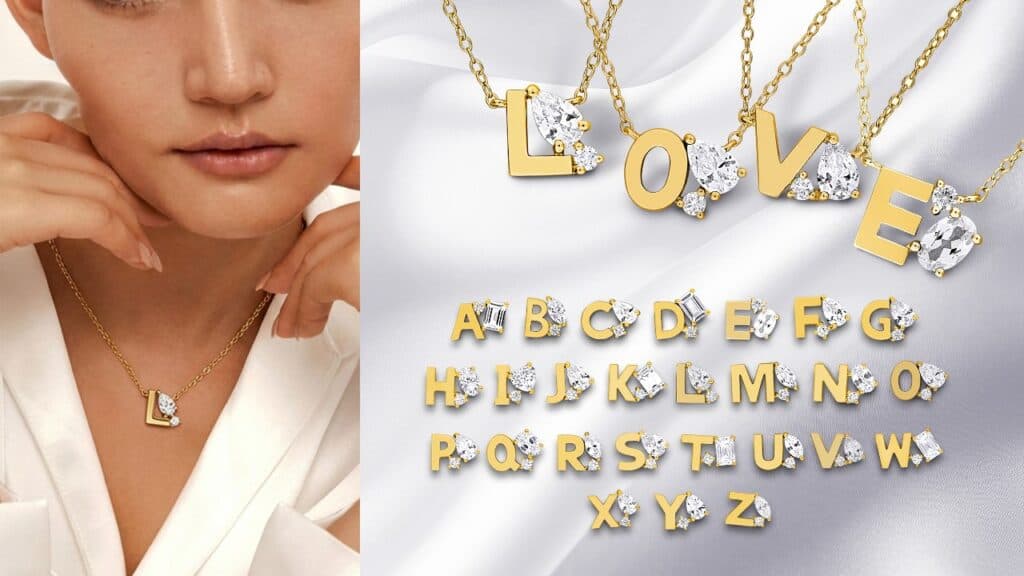
The easiest place to start is with one stone per child. A pendant with three calibrated stones, one for each child, reads cleanly and wears well, especially in a bar, oval, or petite cluster setting. It is also the least likely to feel cluttered, which is important when the gift is meant to be worn every day, not kept for special occasions.
A second option is parent-child stacking. Stuller’s 2026 Mother’s Day trend guide points to stackable rings, charm systems, and birthstone settings because shoppers keep looking for gifts that can expand over time. That makes a lot of sense for a growing family: one slim gold band for a first child, then another added later, or a charm bracelet that gains a new stone with each milestone.
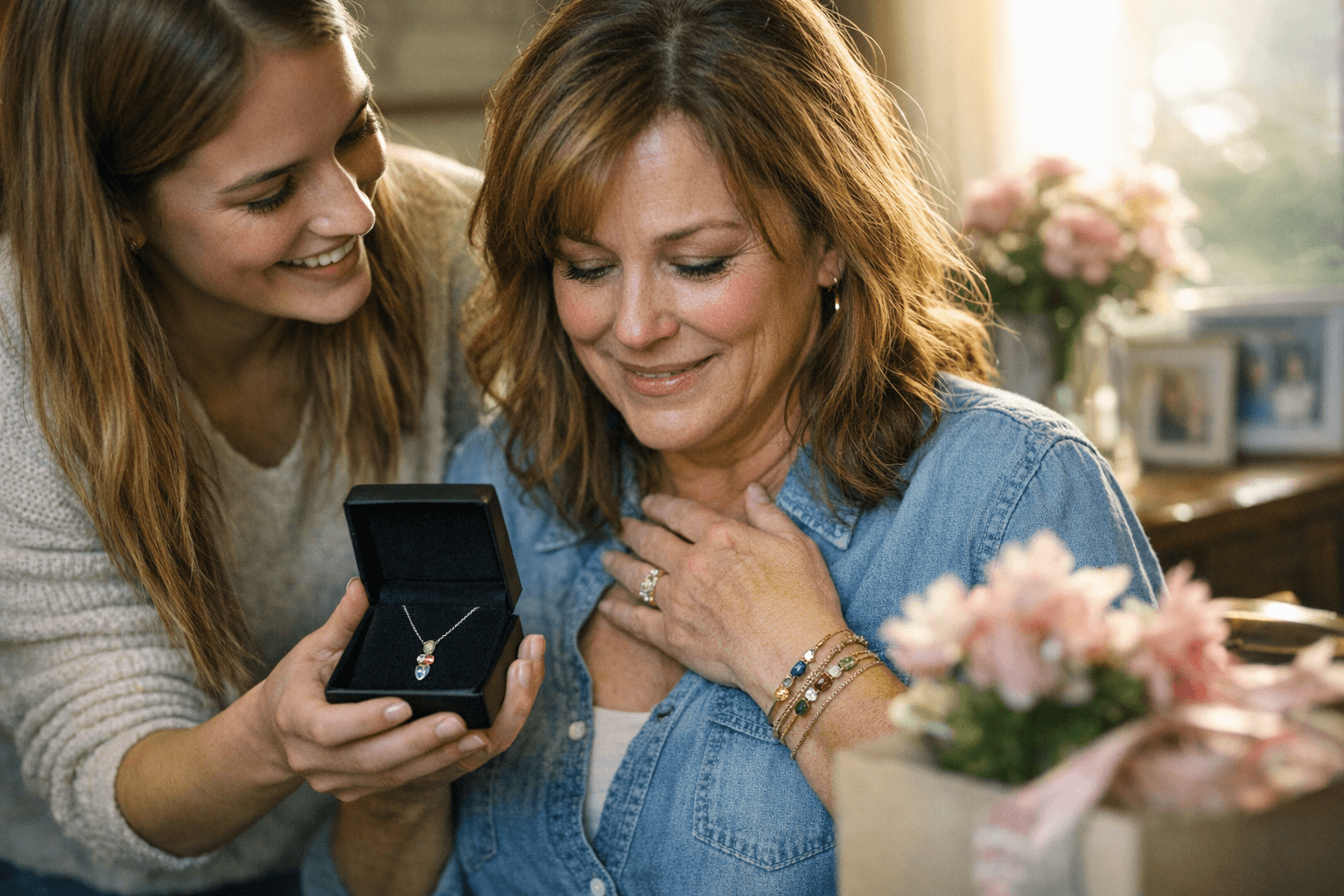
For a more heirloom-minded gift, multigenerational pieces carry the most emotional weight. Think a family necklace that includes a grandmother’s stone at the center, with children’s stones arranged around it, or a ring that pairs a mother’s birthstone with her own mother’s and child’s. Those designs turn a gift into a record of lineage, which is exactly why they feel more meaningful than a standalone solitaire.
What to look for when you are buying
The most compelling birthstone jewelry is not just personal, it is specific. Ask what metal is being used, whether the stones are natural, lab-grown, or treated, and whether the setting can handle daily wear. A bezel setting offers more protection than an open prong setting, especially for softer stones that will be worn on a ring or bracelet.
Provenance matters too. If a seller says a piece is ethical, sustainable, or responsibly made, ask what that actually means. Recycled gold, clearly disclosed stone treatments, and transparent origin information are better signs than vague language. For higher-value pieces, ask for documentation that lists the gemstone species, any enhancements, and the metal karat. If the piece includes diamonds, an independent grading report adds another layer of confidence.
AGS is worth noting here because it has positioned itself as a consumer-protection-focused trade association since 1934. That does not replace your own questions, but it does remind you to favor sellers who explain the piece as carefully as they market it.
How to think about price points without losing the point
Birthstone jewelry scales well, which is part of its appeal. At the entry level, a sterling silver pendant with one small birthstone gives you the idea without a heavy spend. In the middle range, 14k gold opens the door to stackable rings, two- or three-stone necklaces, and charm bracelets that feel more substantial on the body. At the high end, solid gold or platinum commissions, especially with engraved backs or custom layouts for multiple family members, start to feel like future heirlooms rather than seasonal gifts.
That range is useful because it keeps the gift from becoming either too precious to wear or too casual to keep. A modest piece can still be emotionally exact if the stone arrangement is right. A larger budget does not matter nearly as much as the clarity of the story.
Why retailers keep coming back to this category
Major retailers are leaning hard into personalized birthstone jewelry for Mother’s Day, including family birthstone necklaces and rings. That is not just a merchandising trick. It reflects a real shift toward gifts that can be customized without feeling gimmicky, and it explains why birthstones remain one of the most reliable jewelry categories for the holiday.
Stuller’s trend direction shows the same pattern, with personalization centered on birthstone settings, charm systems, and stackable rings. The strongest versions are the ones that balance sentiment with wearability. A family necklace that can be layered, a ring stack that can grow, or a charm bracelet that records a child’s birth month all make the gift feel lived-in rather than merely decorative.
Mother’s Day began as an act of remembrance and became an official U.S. holiday in 1914, after Anna Jarvis’s campaign and a proclamation from Woodrow Wilson. Birthstone jewelry still honors that original purpose best when it tells the truth about the family it represents. The right piece does not just mark the day, it turns the day into something that can be worn, added to, and handed down.
Know something we missed? Have a correction or additional information?
Submit a Tip