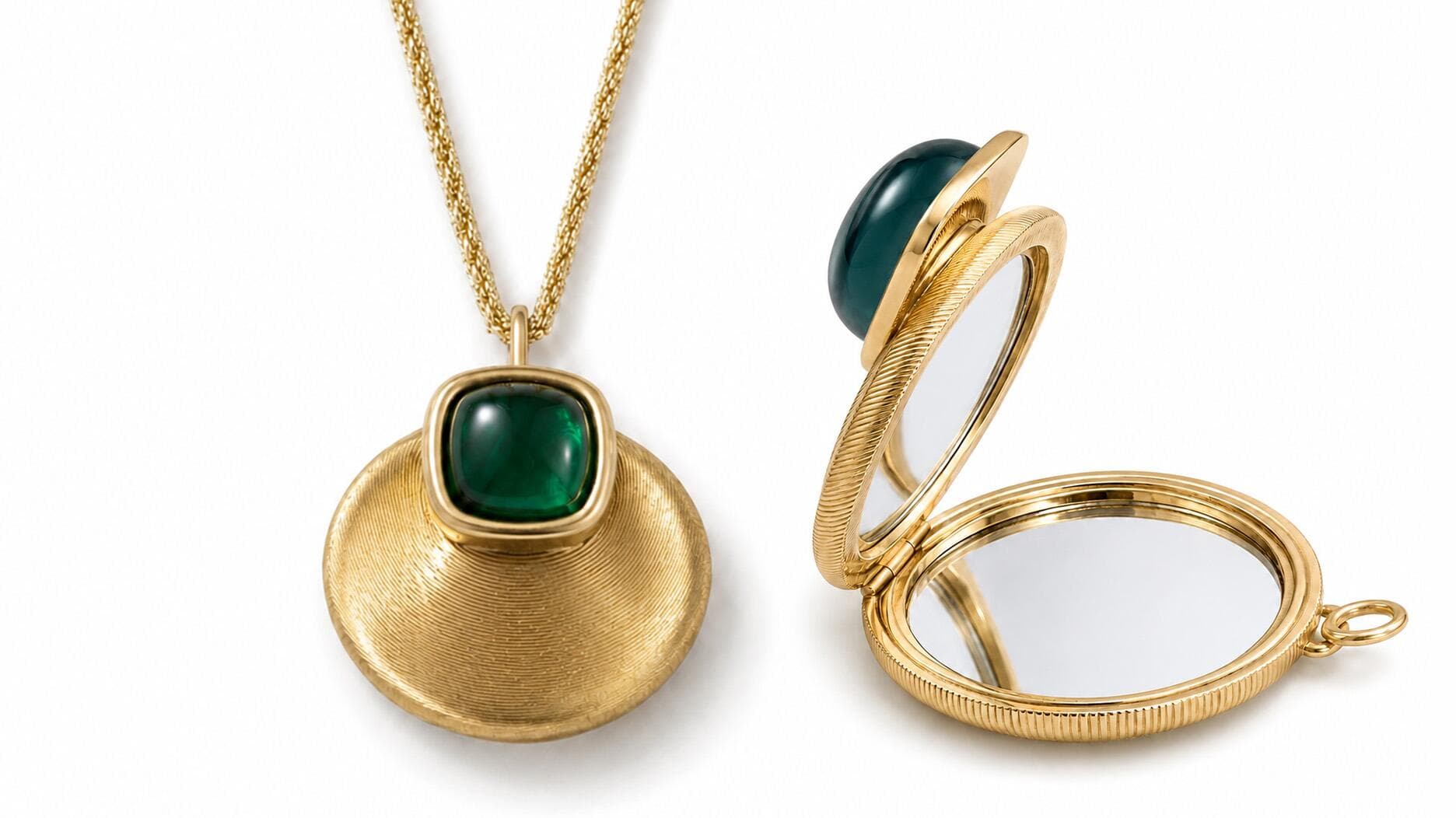
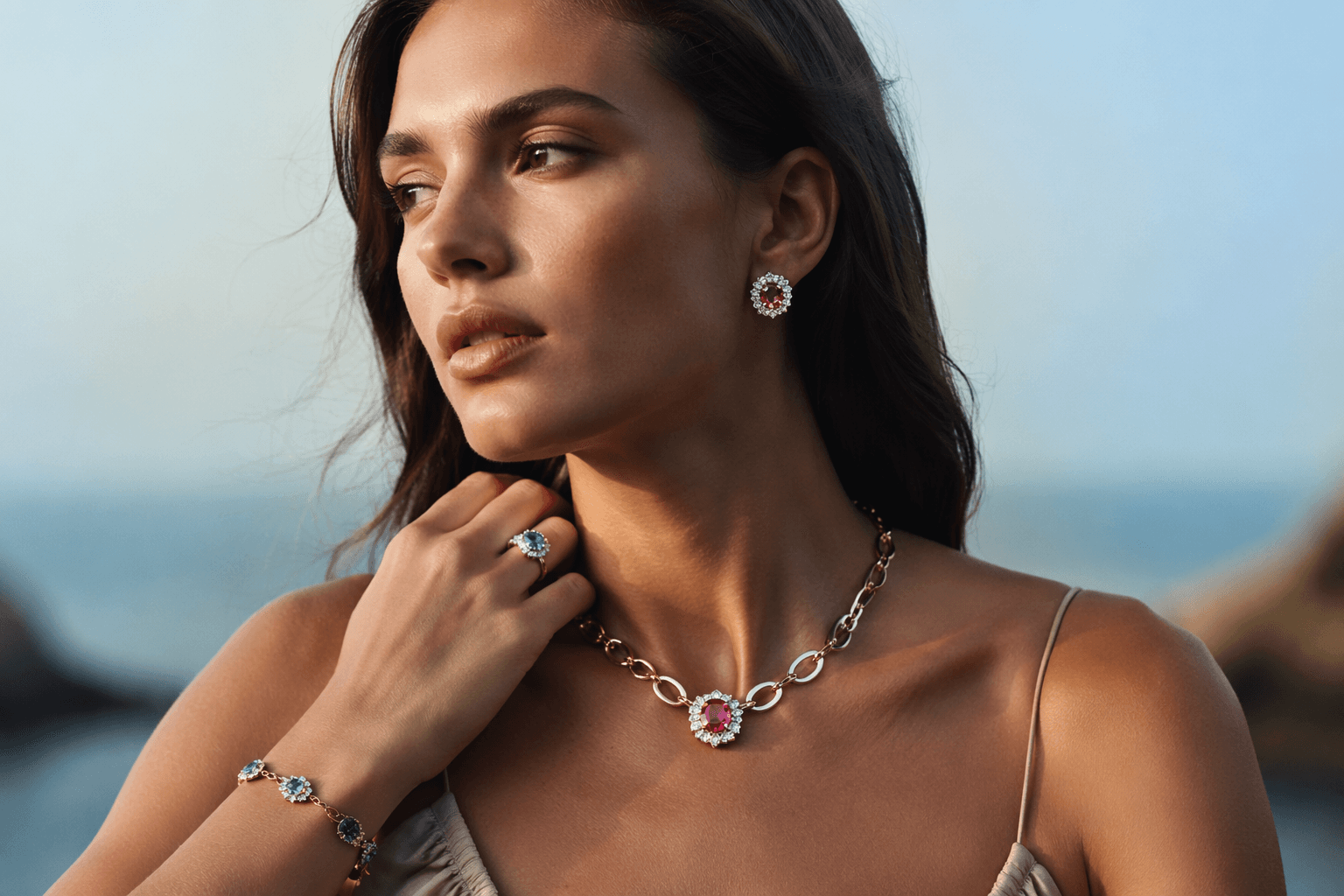
Emerald, May’s birthstone, shines with history, symbolism, and rich green color
Emerald is May’s stone of renewal and power, but its real value lives in color: the richest green, the right cut, and the honest beauty of jardin.
Meaning in green
Emerald has never been a shy gemstone. For May, it carries the emotional charge of renewal, love, and wisdom, the kind of symbolism that makes it feel less like a decoration than a statement about life itself. Its green also connects it to spring, which is part of why the stone has retained such effortless glamour across centuries.
That symbolism matters because emerald jewelry is often bought for more than beauty alone. It is the birthstone for May and also the gem for the 20th and 35th wedding anniversaries, so it frequently marks occasions with real personal weight. The official U.S. birthstone list dates to 1912, when the American National Retail Jewelers Association, now Jewelers of America, standardized the modern calendar of gems. Emerald’s place on that list has only sharpened its association with continuity, love, and renewal.
Why emerald’s color is so distinctive
The Gemological Institute of America classifies emerald as the green to bluish green variety of beryl, and that description explains much of its appeal. The finest stones are not simply green, but intensely saturated, with a depth of color that seems to hold light instead of reflecting it away. That saturated green is what gives an emerald its emotional authority and its market power.
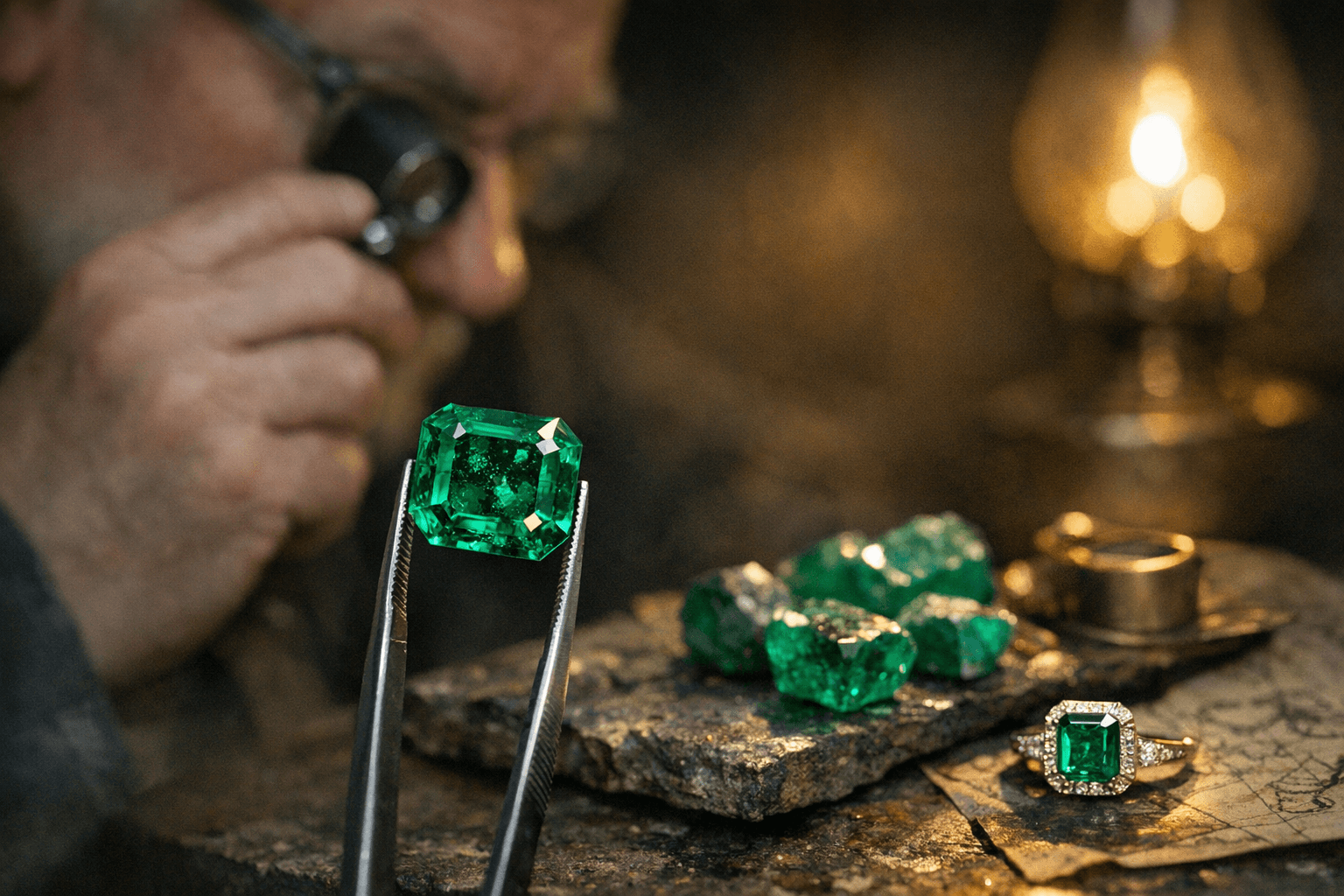
Its color comes from trace elements including chromium, vanadium, and iron, and those ingredients help create the range that collectors study so closely. Emerald can sit at a boundary where the line between an emerald and a less-expensive green beryl becomes subjective, depending on how green the stone appears. That distinction matters because it is often the difference between an exceptional jewel and a more accessible one, even when the setting and design look similar at first glance.
How to read quality without mistaking perfection for value
A fine emerald should be judged first by color, then by everything else. Rich, highly saturated green remains the premium benchmark, but the most desirable stones often show a subtle bluish cast rather than a flat or yellow-leaning tone. Stones that look greener and less saturated may be easier on the budget, yet they usually give up some of the visual intensity that makes emerald so coveted.
Clarity in emerald is a different conversation from clarity in diamond. Visible inclusions are common and are often called jardin, the French word for garden, a reminder that emeralds are expected to carry internal life. A stone that looks completely free of inclusions can be rare, but rarity alone is not the whole story; an emerald that balances color, cut, and visible character can be far more compelling than one that merely appears clean. In May birthstone pieces, that trade-off is often what determines whether the price feels justified.
What the cut is doing for the stone
The classic emerald cut is so closely associated with the gem because cutters use it to manage color. Its broad, open facets help preserve the stone’s richness while giving the eye a clear window into the gem’s body color. That is not just a stylistic tradition, it is a practical response to how emerald behaves.
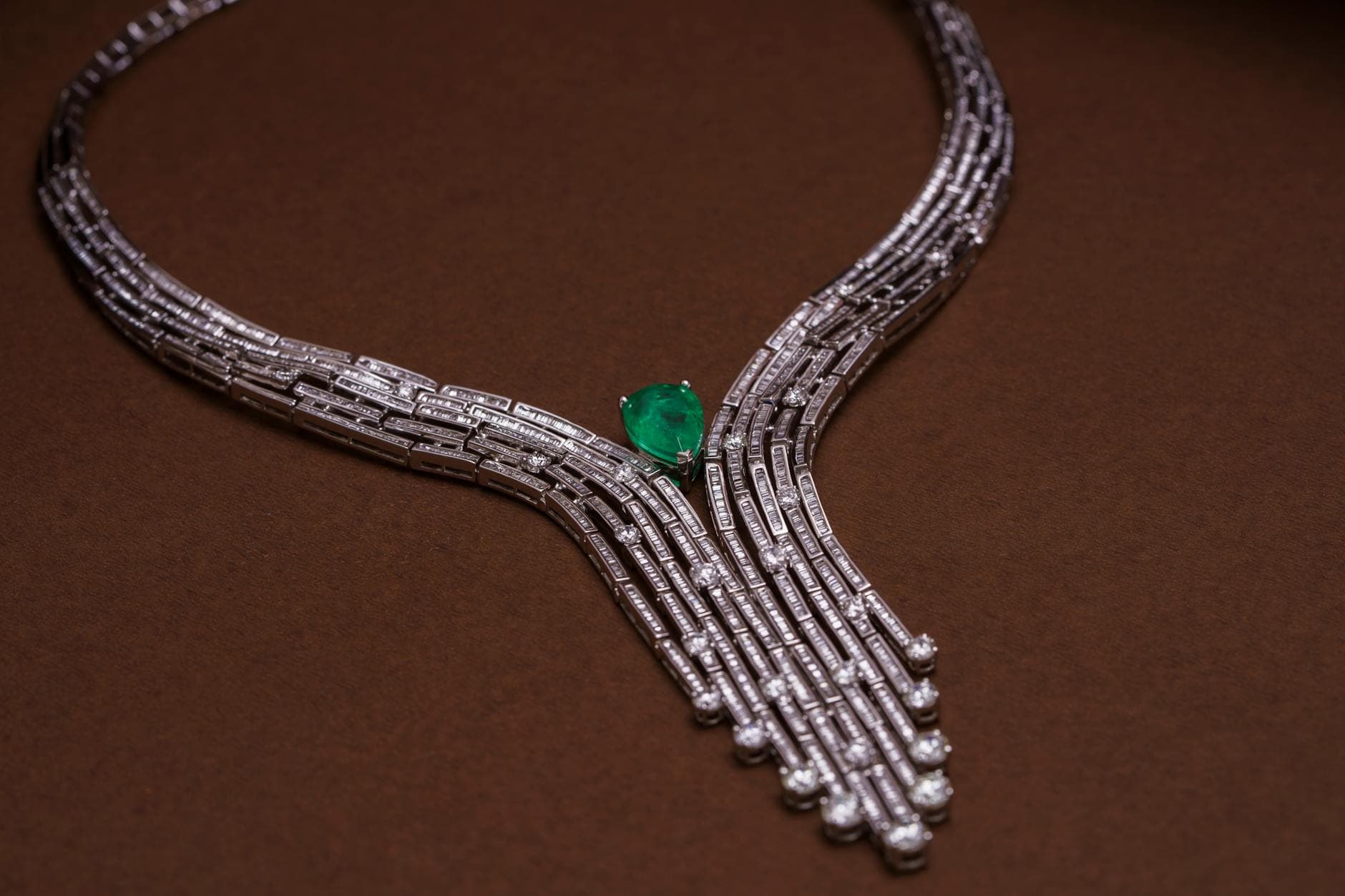
Because emeralds so often contain jardin, the cut also makes aesthetic sense. Long step facets can highlight color without forcing the gem to pretend it is something it is not. A well-cut emerald should look deliberate and composed, with a shape that flatters the stone’s inner architecture rather than fighting it.
A history of power, from pharaohs to colonial treasure
Emerald’s mystique began long before modern birthstone guides. Cleopatra was famously passionate about emeralds, and Roman writer Pliny the Elder admired the gem’s intense green. Those early associations with power and beauty still cling to the stone, which has long been linked in legend to truth-telling, protection from evil spells, eloquence, and even healing.
The gem’s geographical story is just as dramatic. Emeralds were mined in ancient Egypt and later became especially important in Colombia, where the most famous mine is Muzo and Coscuez is another notable source. After the Spanish conquest, South American emeralds found near Bogotá became especially prized, and the colonial era produced treasures such as the Crown of the Andes, one of the most famous emerald objects in the Western Hemisphere.
The lore around emerald is also tied to the broader history of conquest and empire, including stories involving Atahualpa and Francisco Pizarro. That is part of why the gem still feels so charged: it has always been a stone of courts, spoils, and rituals of power, not merely a pretty green accessory.
What makes a May birthstone piece worth the money
The best emerald jewelry earns its price through judgment, not just size. A stone with vivid green saturation, a pleasing green-to-bluish green balance, and a cut that enhances color will usually outshine a larger gem that looks washed out. Since emeralds are commonly included, a buyer should expect some jardin and treat it as part of the stone’s identity rather than an automatic flaw.
A few practical markers separate the memorable from the merely adequate:
- Color should be the first consideration, with strong saturation carrying the most weight.
- The stone should look decisively green, not pale or dull, and not so blue that it loses emerald’s natural heat.
- Visible jardin is normal, but the inclusions should not overwhelm the face-up beauty of the gem.
- A well-chosen emerald cut can deepen the stone’s color and make even a modest gem feel composed.
- Stones that fall closer to green beryl are generally more accessible, which can make them useful for buyers who want the emerald look without the highest price tier.
For May, emerald is especially satisfying because it joins sentiment and connoisseurship so neatly. It carries the old associations of spring, royalty, and luxury, but it also asks to be understood on its own terms: as a stone whose value lives in color, whose inclusions are part of its charm, and whose history stretches from Egypt to Colombia. That combination of symbolism and substance is why emerald still feels like one of jewelry’s most persuasive arguments.
This article was produced by Prism’s automated news system from verified source data, official records, and press releases, then run through automated quality and moderation checks before publishing. The system is built and supervised by the people who set the standards it runs under. Read our full AI policy.
Did this article answer your question?