June’s Three Birthstones, Pearl, Alexandrite, and Moonstone Explained
Three June stones mean three distinct buys: pearl for classic luster, moonstone for shimmer, and alexandrite for rare color drama.
Why June gets three birthstones
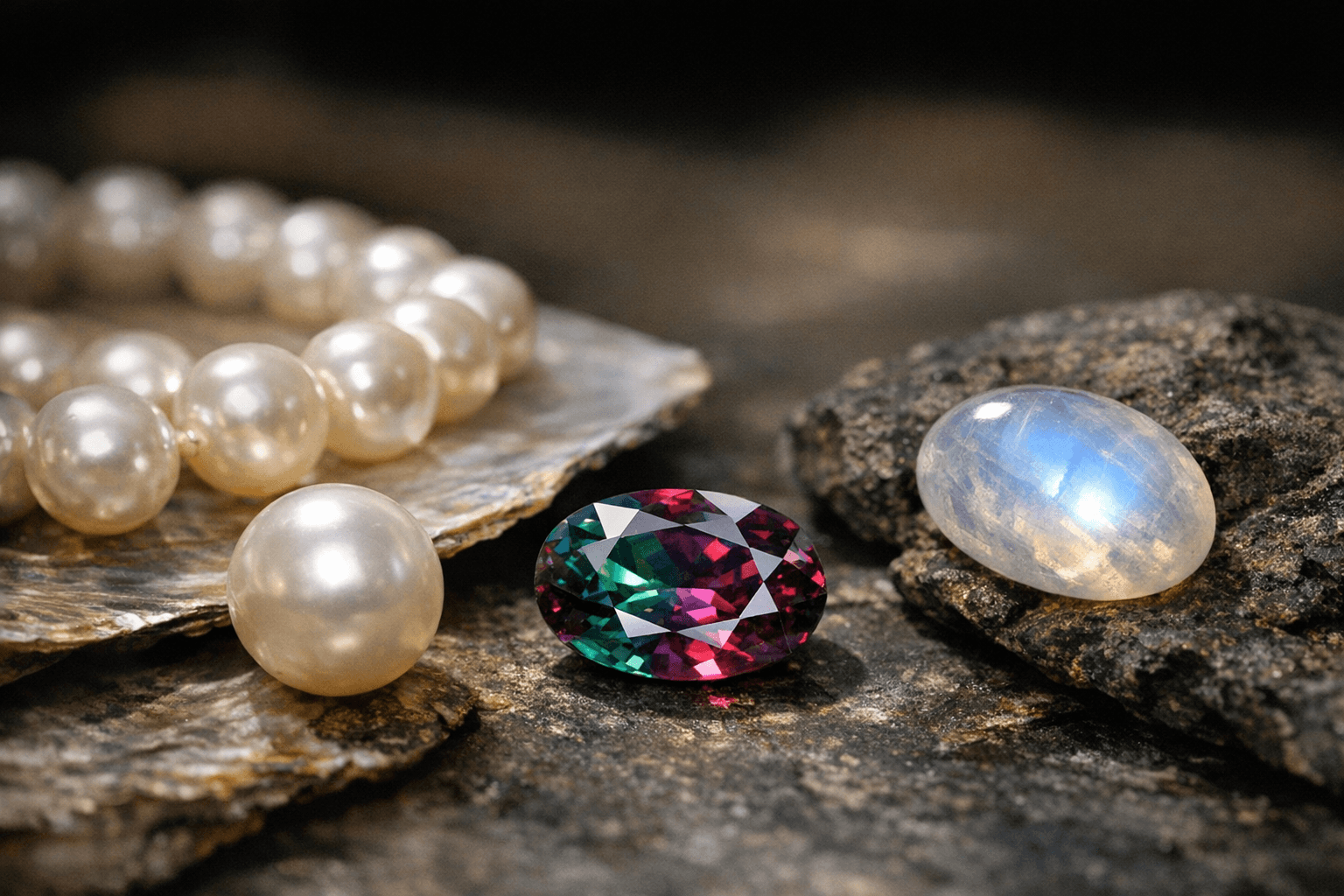
June stands apart because it does not force a single style story. The Gemological Institute of America names pearl, alexandrite, and moonstone as June’s birthstones, and the American Gem Society notes that June is one of only two months with three official choices. That matters for shoppers: the trio spans a broad range of looks, durability, and budgets, from the soft glow of pearl to the color shift of alexandrite.
The official U.S. birthstone list dates back to 1912, when it was established by the American National Retail Jewelers Association, now Jewelers of America. That history helps explain why June feels unusually flexible, because it was never meant to be a one-note month. Pearl remains the traditional choice, but the modern June buyer can choose based on personality, not just calendar date.
Pearl, the most traditional June stone
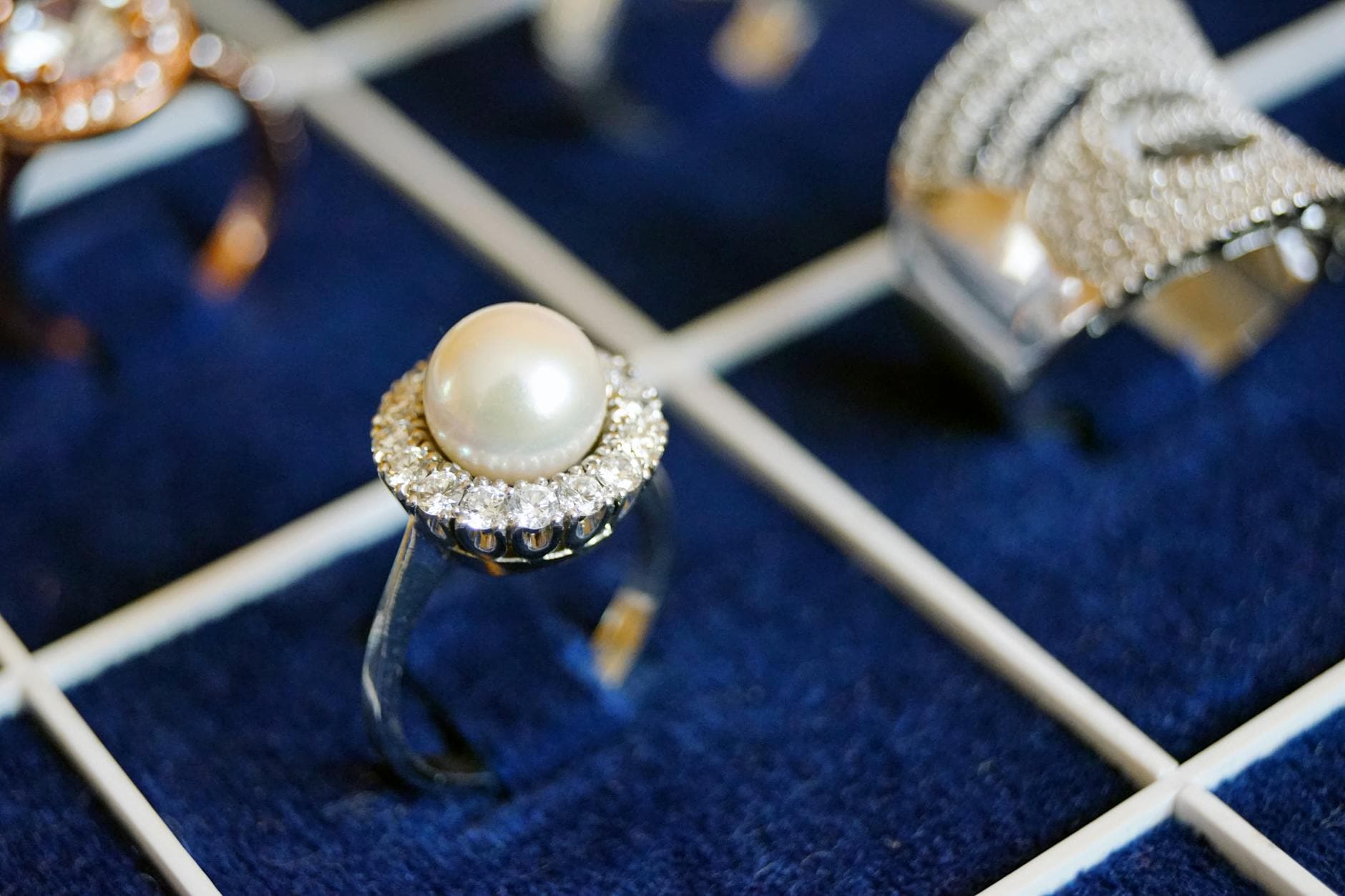
Pearl is the only birthstone made by living creatures, which gives it a provenance story unlike any other gem. The Gemological Institute of America explains that natural pearls form around a microscopic irritant inside certain mollusks, while cultured pearls begin when a bead or tissue is deliberately inserted and then coated in nacre. That distinction matters for anyone who cares about craft and transparency, because a pearl is not just a stone, it is a record of a growing process.
Its symbolism is long and rich. Pearls have been associated with purity, emotional balance, elegance, wealth, and status, and they appear in Chinese writing as early as 2206 BC. The pearl’s social cachet was sealed again in 1917, when Pierre Cartier famously traded a double strand of natural pearls for a mansion on Fifth Avenue in New York City. It is also the birthstone for June and the gem for the third and thirtieth anniversaries, which keeps it anchored in the language of milestone gifts.
For jewelry, pearl is the most classic and the most adaptable to formal dressing. It is also the least forgiving of rough wear, so it rewards careful handling, clean storage, and settings that protect it from abrasion. If you want a gift that feels polished, ceremonial, and deeply rooted in jewelry history, pearl is the June stone that speaks most clearly.
Alexandrite, the rarest and most dramatic choice
Alexandrite is the showpiece of the June trio. It is the rare color-change variety of chrysoberyl, first discovered in Russia’s Ural Mountains in 1830 and named for Czar Alexander II. Its best-known trait is the shift from bluish green in daylight to purplish red in incandescent light, a change caused by chromium and a 580nm absorption band.
That color behavior is the whole appeal. Fine alexandrite is exceptionally rare and valuable, and the American Gem Society says the original Russian deposits set the quality standard. Most alexandrite today comes from Sri Lanka, Brazil, and East Africa, which means the buyer is usually shopping for a modern stone with a legendary pedigree rather than an abundant one.
Alexandrite also has a strong practical identity as a luxury buy. It is the gem for the 55th wedding anniversary, and it carries a natural collector’s aura because the right stone can look almost like two different gems in one. For a gift, that makes it ideal when the point is rarity, not simplicity. For a personal purchase, it is the June birthstone that best rewards close inspection, because the strength of the color change and the quality of the cutting decide whether the stone feels merely unusual or genuinely extraordinary.
Moonstone, the romantic glow
Moonstone is the most atmospheric of the three. It is a feldspar gem known for adularescence, the floating glow that seems to billow beneath the surface, and the Gemological Institute of America explains that the effect comes from light scattering between microscopic layers of orthoclase and albite. The result is less a hard flash than a soft internal shimmer, which gives moonstone a distinct personality in jewelry.
Its name carries its own literary history. The Roman natural historian Pliny coined the term after describing a shimmery appearance that seemed to change with the moon, and the Romans and Greeks linked the gem to lunar deities. Moonstone later found fashion homes in Art Nouveau jewelry from about 1890 to 1910, in Arts and Crafts silverwork in the late 19th century, with hippies in the 1960s, and again in New Age design in the 1990s. Florida adopted moonstone as its official state gemstone in 1970 to commemorate Apollo 11 and the state’s space launches, a fitting nod for a gem that already looks a little lunar.
Moonstone tends to be the most accessible of the three in price and the easiest way to get a luminous June jewel without entering rare-stone territory. Its glow is subtler than alexandrite’s color change, but more distinctive than pearl’s steady sheen. In practice, it suits anyone who wants a softer, more poetic look, especially in settings that let the surface light travel freely across the stone.
How to choose the right June birthstone
If you want the most traditional and broadly wearable gift, pearl remains the safest choice. If you want a stone with clear provenance, anniversary history, and the strongest link to classic jewelry culture, pearl is hard to beat. If you want symbolism that feels elegant rather than flashy, pearl’s language of purity and emotional balance still resonates.
If you want rarity and a visible wow factor, alexandrite is the one that turns a birthstone into a conversation piece. It is the most expensive and least accessible of the three, but it also delivers the most theatrical return, especially when the color change is strong. Ask to see it in different lighting, because alexandrite is only truly itself when daylight and incandescent light do their work.
If you want a graceful, more attainable gem with a soft glow, moonstone is the best fit. It is ideal for someone who likes jewelry that feels dreamy rather than formal, and its lunar associations give it a quiet romance that still reads as special. In parts of Germany and Scandinavia, it remains especially favored as the June birthstone, which says something about its enduring appeal.
- Choose pearl for heritage, bridal polish, and classic gift-giving.
- Choose alexandrite for rarity, collector value, and dramatic color change.
- Choose moonstone for a luminous look, softer pricing, and a modern-bohemian feel.
A simple way to narrow the choice is this:
June’s three birthstones work because they answer different desires. Pearl offers history, alexandrite offers spectacle, and moonstone offers glow, and the best jewelry buy is the one whose story matches the way you want it to live on the body.
This article was produced by Prism’s automated news system from verified source data, official records, and press releases, then run through automated quality and moderation checks before publishing. The system is built and supervised by the people who set the standards it runs under. Read our full AI policy.
Did this article answer your question?