Emerald Birthstone Jewelry, From Cleopatra to Cartier's High-Jewelry Icons
Emerald now reads as power and renewal, from Cleopatra VII to Cartier’s 23.55-carat Imperio necklace, while sapphire, ruby, and diamond each signal a different kind of self.
What emerald says now
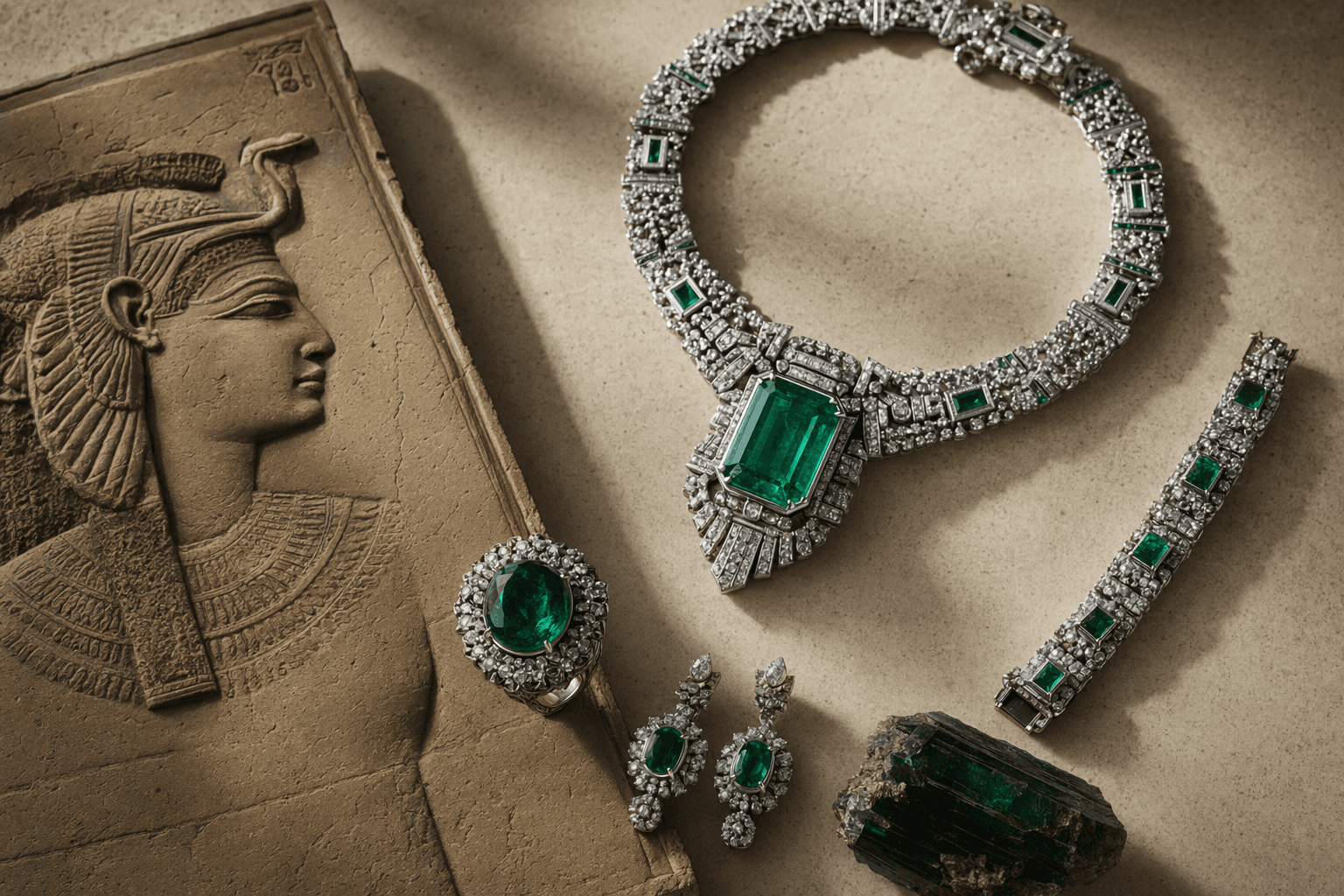
Emerald has never been a quiet stone. It carries the first green of May, but also the weight of empires, court intrigue, and heirloom-level desire. GIA ties emerald to spring rebirth and renewal, yet the stone’s aura comes just as much from Cleopatra VII, the Rockefeller Emerald, and Cartier’s high-jewelry treatment of Colombian material that is rare enough to feel almost mythic.
Emerald’s power is historical, not just decorative
The Met says emeralds first appeared in jewelry in the late fourth century B.C., and those early Roman and Byzantine examples already point to the stone’s role as elite adornment. GIA adds that emeralds have shaped human history, trade, and empires, which is part of why the green still reads as more than a color story. When a gemstone has been desired for millennia, it stops feeling seasonal and starts feeling like a statement.
Cleopatra VII gives that statement its most famous face. Her rule over Egypt has long been linked to luxury and political spectacle, and emerald belongs to that world of cultivated power. The Rockefeller Emerald carries the same gravity in a more modern register: Christie’s describes it as a historically important Colombian emerald that once belonged to Abby Aldrich Rockefeller, was later remounted by Raymond Yard after her death in 1948, and was offered at auction in 2017 with an estimate of $4 million to $6 million. That is not just a jewel, it is a family archive made visible.
Why emerald still feels like the birthstone of renewal
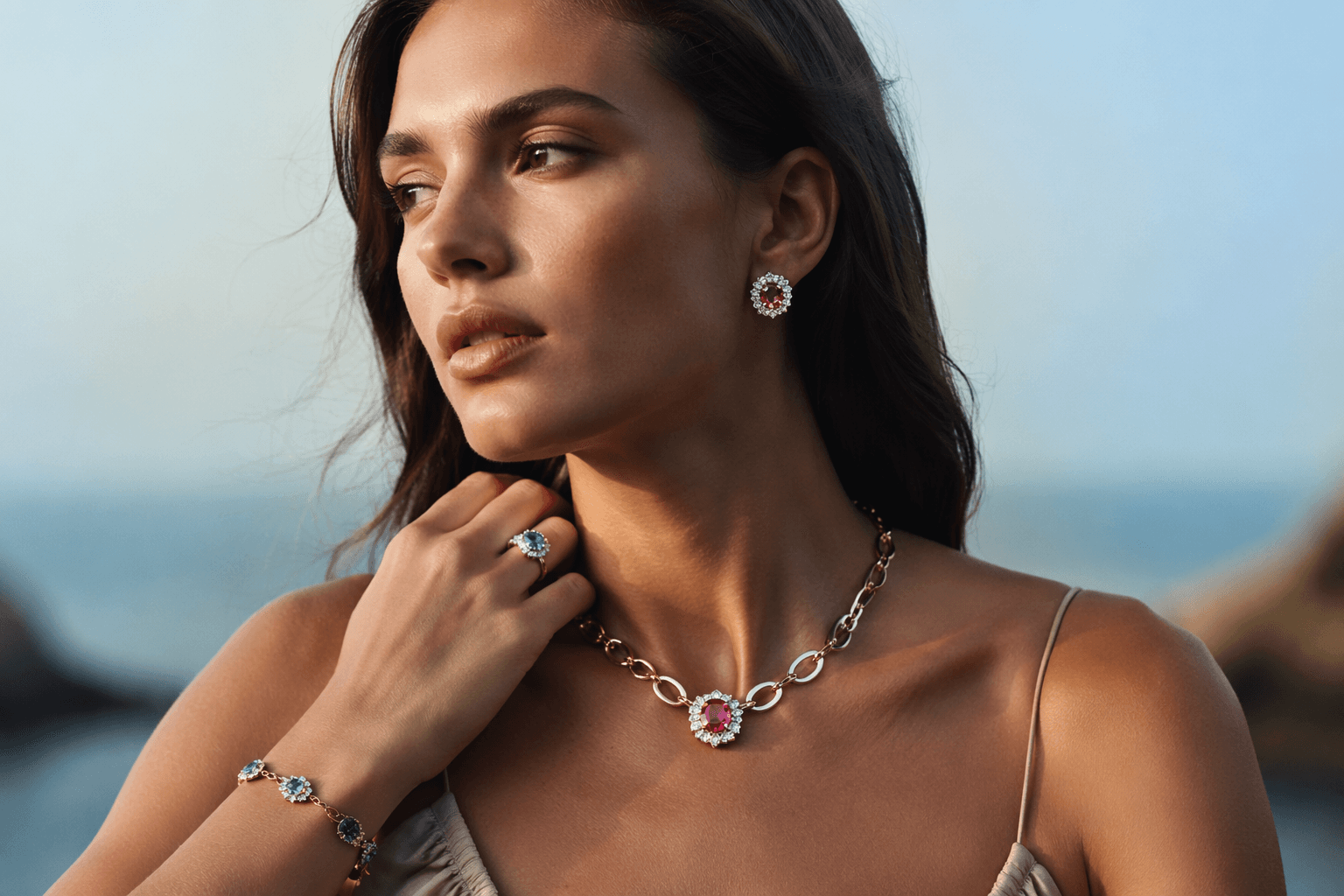
GIA names emerald the May birthstone and connects it to spring rebirth and renewal, which is exactly why it feels so current on the wrist, at the throat, or in a ring that catches light without trying too hard. It is also the gemstone for 20th- and 35th-wedding anniversaries, making it one of the few stones that can move elegantly between milestone gifting and personal birthstone wear. That versatility helps emerald escape the trap of being too formal for everyday use.
The best emerald jewelry today understands that tension. It can feel deeply old-world and unmistakably modern at once, especially when the cut is crisp and the setting is architectural. In a market crowded with vague claims about rarity, emerald’s appeal is still best grounded in specifics: color, origin, and the extraordinary geological conditions needed to produce the stone in the first place.
Cartier turns emerald into movement
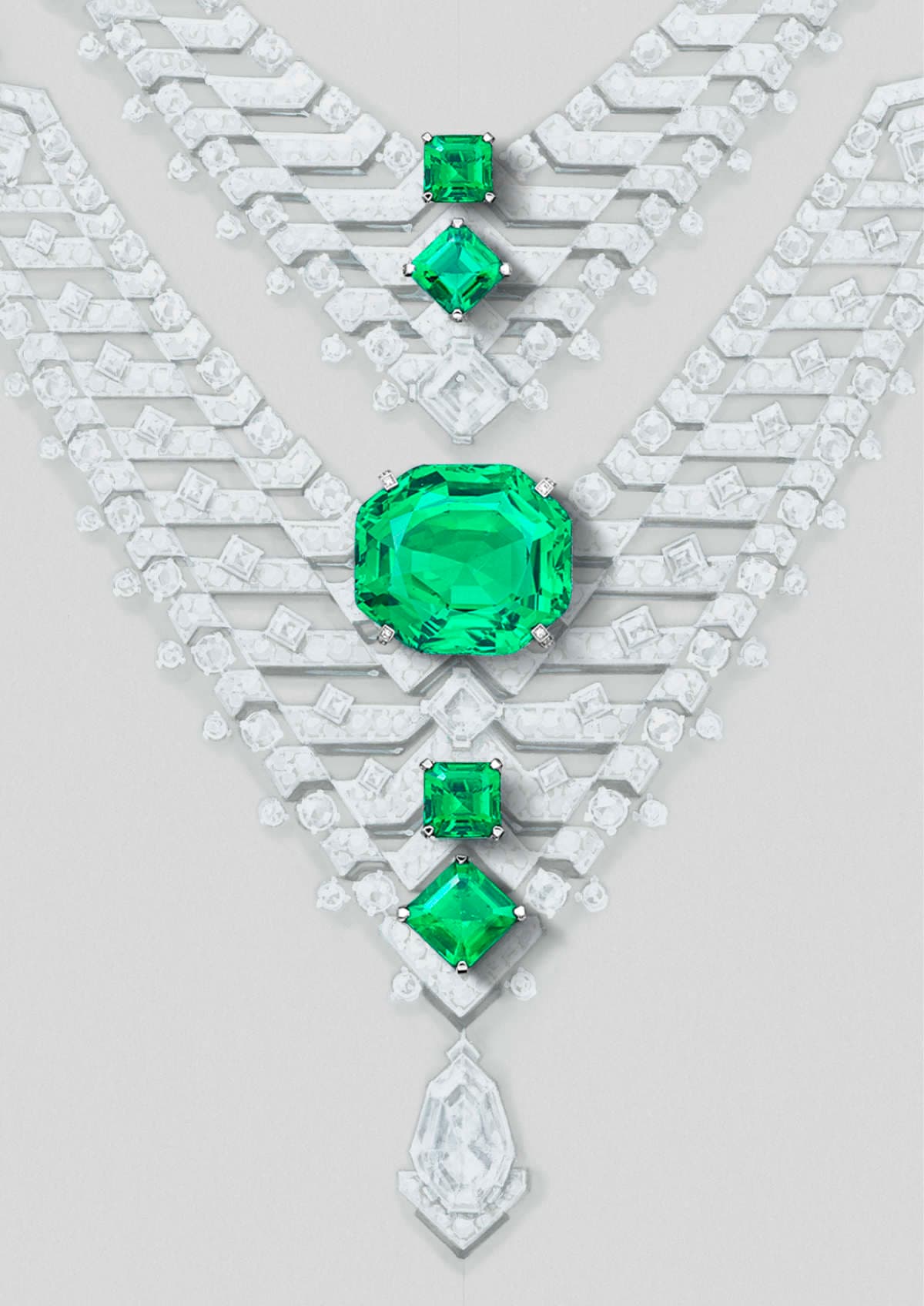
Cartier’s high-jewelry collections show how a house can use emerald not only as a gem but as a structural idea. The Synesthesie necklace, the Victorienne set, the Gharial necklace, and the Imperio necklace all position emerald as the center of a visual language built on elegance and transformation. Cartier says the Imperio necklace centers on a 23.55-carat Colombian emerald and can be worn in 29 different ways, which is exactly the kind of technical detail that separates high jewelry from simple gem-setting.
That adaptability matters. A jewel that shifts from one wearing mode to another gives emerald a contemporary edge, especially when so much luxury messaging relies on static grandeur. Cartier also says it regularly produces work accompanying each new high-jewelry collection as part of its heritage mission, and that matters because the brand is not just selling a stone. It is preserving a way of telling stories through materials, setting, and lineage.
How emerald compares with the other birthstone heavyweights
If emerald is renewal, sapphire is devotion. GIA says sapphire has been cherished for thousands of years and is associated with royalty, romance, fidelity, and the soul. September’s birthstone is often imagined as blue, but sapphire’s rainbow range makes it far more flexible than the classic image suggests. That breadth gives it a cooler, more disciplined elegance than emerald’s lushness, which is why sapphire often reads as the choice for someone who wants symbolism without overt drama.
Ruby pushes in the opposite direction. GIA says ruby was called the king of precious stones in ancient India, and the stone still carries passion, love, and success, along with a place in the 40th wedding anniversary tradition. Medieval Europeans believed rubies could bring health, wisdom, wealth, and success in love, and that layered history explains why ruby remains one of the most emotionally charged gemstones in jewelry. Where emerald suggests cultivated power, ruby suggests heat.
Diamond, by contrast, is the clearest statement of all. GIA identifies it as the April birthstone and describes it as a symbol of clarity and strength. That is why diamond remains the default language of engagement and high jewelry alike: it does not lean on color for meaning, it leans on light. In a line-up with emerald, sapphire, and ruby, diamond is the most distilled, the most universal, and the most easily read from across a room.
How to choose the stone that fits your identity
If you are drawn to jewelry with a sense of history and a vivid point of view, emerald is the stone that says you know exactly what you want. It suits May birthdays, anniversary gifts, and anyone who wants jewelry that feels cinematic without being predictable. The color works especially well when the setting lets the stone stay luminous rather than overworked.
If your style leans polished and serene, sapphire fits a cooler, more deliberate wardrobe. It is the stone for September and for moments that call for steadiness, romance, or a sense of ritual. If you want something emotionally charged and visibly bold, ruby does the most with the least explanation, which is why it remains such a powerful gift for love and major milestones. Diamond, finally, is for the person who wants a clean read on strength and clarity, with no need for ornament to prove the point.
The birthstone story now is about meaning, not just month names
The reason these stones keep returning to fashion is that each one carries a different kind of identity. Emerald is the green of rebirth, Cleopatra’s authority, and Cartier’s sculptural brilliance. Sapphire brings romance and fidelity, ruby brings fire and legacy, and diamond offers clarity that never needs translation. In high jewelry, those meanings are no longer abstract lore, they are the difference between a pretty stone and a jewel that feels like a personal emblem.
This article was produced by Prism’s automated news system from verified source data, official records, and press releases, then run through automated quality and moderation checks before publishing. The system is built and supervised by the people who set the standards it runs under. Read our full AI policy.
Did this article answer your question?