Gemstone Jewelry Trends 2026: Top Stones & Styles Forecast
Ancient gem lore and a $4.3B market collide in 2026's most personal trend: birthstones reimagined as parti sapphire stacks, toi-et-moi pairings, and provenance-led heirlooms.
The idea of wearing a stone tied to your birth month is older than most buyers suspect. The Breastplate of Aaron, described in the Book of Exodus, held twelve gemstones arranged in four rows, each representing one of the twelve tribes of Israel. First-century historian Flavius Josephus was among the first to draw a direct line between those twelve stones and the twelve months of the year, planting the seed of a tradition that would take almost two thousand years to fully formalize. It finally did so at a trade association meeting in 1912, when the American National Retail Jewelers Association (the organization now known as Jewelers of America) published the first standardized birthstone list. The goal was practical: a shared vocabulary that let any buyer walk into any counter in the country and ask for their stone with confidence.
That list has been updated twice since. Tanzanite joined as a December option in 2002. Then, in 2016, the American Gem Society and Jewelers of America added spinel to August, making it the first new birthstone addition in fourteen years. The significance of that addition is partly gemological: spinel had been misidentified as ruby for centuries, and the 170-carat "Black Prince's Ruby" set in the British Imperial State Crown is, in fact, a spinel. Getting the record straight, and giving August a second stone, was long overdue.
A $4.3 Billion Market With a Direction
The colored gemstone market is not sentimental about these origins, but it is growing. Valued at USD 4.3 billion globally in 2024, it is projected to reach USD 6.4 billion by 2030 at a compound annual growth rate of approximately 6.8%, driven by demand in bridal and fine jewelry. Within that growth, 2026 has a clear aesthetic direction: the oceanic, blue-green palette that the design world has been calling "mermaid core."
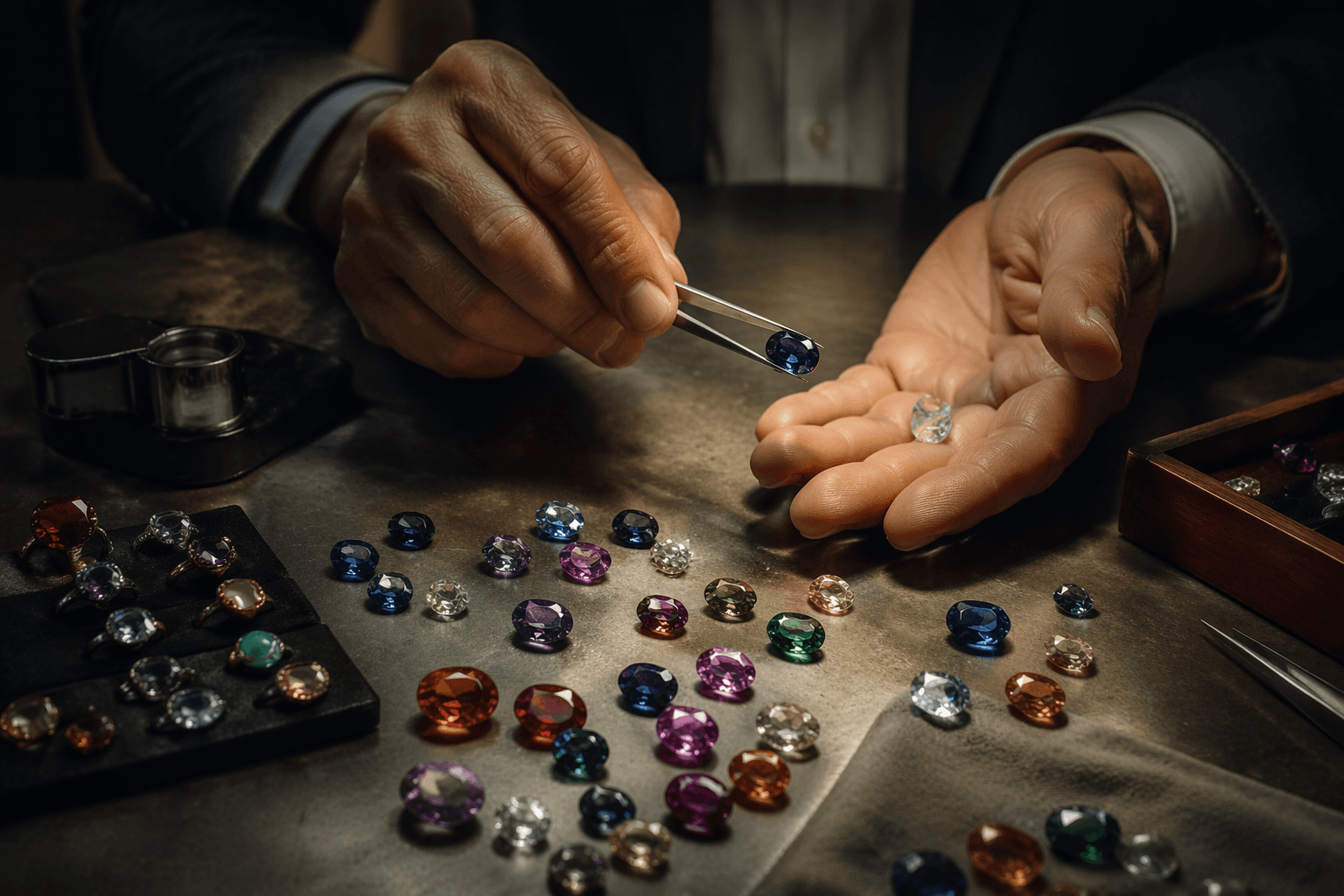
At the center of this trend are parti sapphires, stones that display two or more distinct colors simultaneously within a single gem. One stone might grade teal at the crown and shift to warm yellow-green at the pavilion; another carries deep blue alongside violet. Parti sapphires have been valued quietly by collectors for years, mined primarily in Australia as well as Sri Lanka and Madagascar, but they are now entering mainstream fine jewelry retail as buyers pull away from the uniformity of single-color stones. For September birthstone wearers, a teal parti sapphire in a hexagonal or kite cut, set in brushed yellow gold, threads the needle between trend-forward and genuinely personal.
Three Underrated Stones Worth the Research
Several gemstones are drawing disproportionate interest this year, either as primary birthstone options or as pairing stones for multi-stone designs.
Spinel, August's newer co-birthstone, is earning serious collector attention. Found in Myanmar, Sri Lanka, and Vietnam, it comes in saturated reds, electric blues, and neon pinks that most peridot cannot rival. Its history of being confused with ruby is not a liability; it is a provenance story. A well-cut blue-gray or vivid red spinel in an oxidized silver setting is one of 2026's most compelling under-the-radar buys.
Tsavorite garnet arrived in the gem world in 1967, when British geologist Campbell Bridges discovered a vivid green grossular garnet near Kenya's Tsavo National Park along the Kenya-Tanzania border. Tiffany & Co. later helped bring it to market under the name tsavorite. The stone rivals the finest Colombian emeralds in color depth, and unlike most commercial emeralds, it typically requires no treatments or fracture-filling. For January birthstone wearers who find traditional red garnet predictable, a tsavorite in an oval or cushion cut paired with champagne or rose gold offers a fresh reading of the month with none of the compromise.
Padparadscha sapphire is the rarest stone in this group. Its name comes from the Sinhalese word for "lotus blossom," a direct reference to its defining color: a precise, delicate overlap of pink and orange. Sourced primarily from Sri Lanka, with secondary deposits in Madagascar and Tanzania, a genuine padparadscha must walk a narrow path between pink sapphire and orange sapphire without fully becoming either. Gemologists still debate its precise boundaries. For September buyers with a serious budget, nothing in 2026's trend cycle competes with owning one.
The Settings and Silhouettes Defining the Year
The styling shifts for 2026 are not arbitrary. They reflect how buyers are actually using birthstone jewelry: as wearable biography, worn daily rather than saved for occasions.
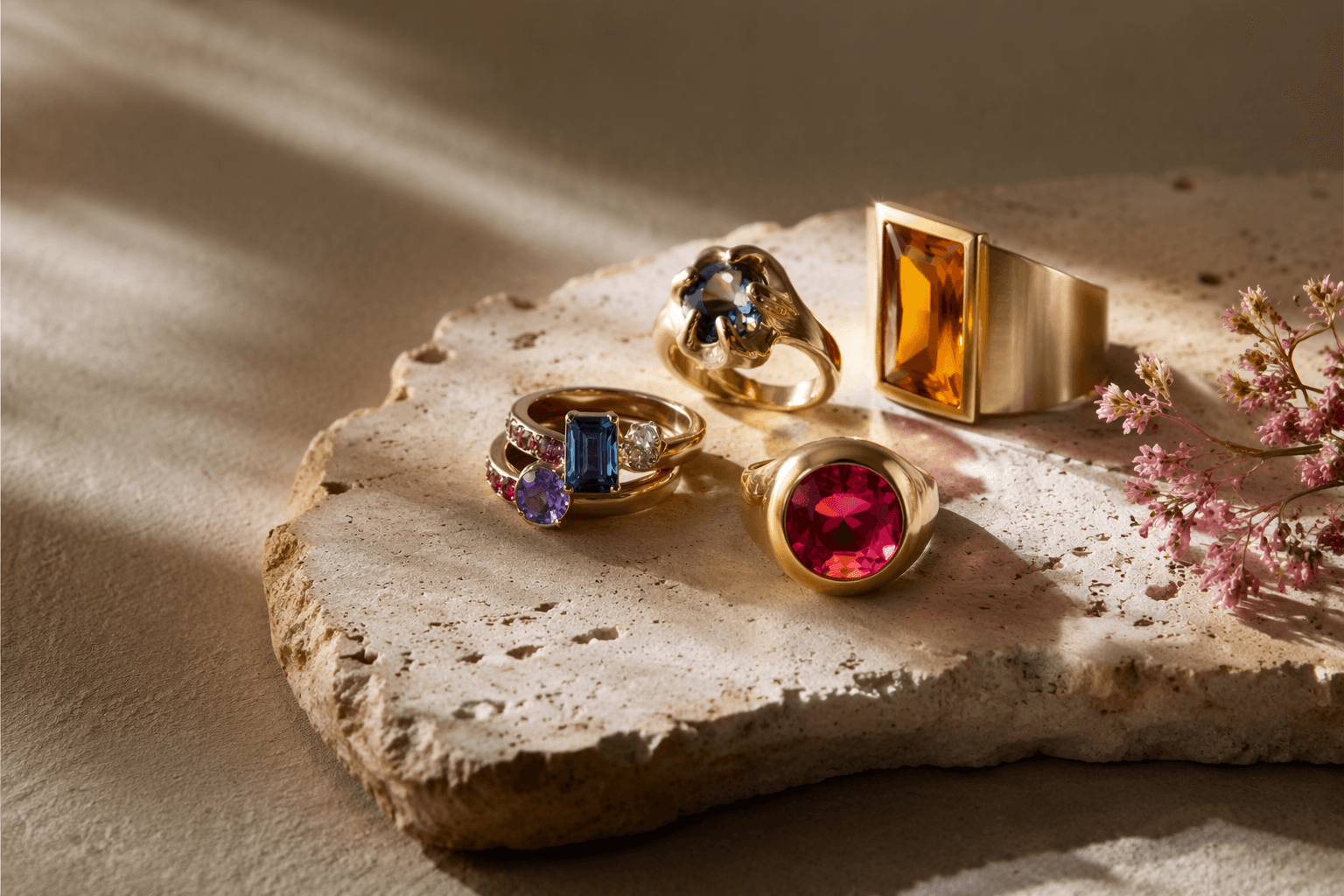
The toi-et-moi ring places two stones side by side in a single setting. Its name is French for "you and me," and its most famous early example was Napoleon Bonaparte's 1796 engagement ring to Joséphine de Beauharnais: two pear-shaped stones, a sapphire and a diamond, set together in the signature format. The design has surfaced and receded for two centuries before a celebrity-driven resurgence pushed it firmly back into retail prominence. The birthstone application gives it the deepest possible meaning: your stone alongside a partner's, a child's, or a parent's, in a setting that is, structurally, about the relationship between two specific things.
Bezel settings are the practical counterweight to the toi-et-moi's romanticism. By wrapping metal completely around the stone's girdle, a bezel protects edges, eliminates snag risk, and creates a low-profile silhouette that stacks without bulk. Mixed-metal bezels (yellow gold surrounding a stone on a white gold band, for instance) read as intentional design rather than default. For buyers building a birthstone stack, a bezel-set center stone flanked by flush-set accent stones in complementary colors creates visual rhythm without visual noise.
Multi-stone family necklaces remain a top-performing category in birthstone retail, and the 2026 upgrade is in the pairing logic: rather than stringing birthstones of the same weight and cut, designers are now recommending complementary accent stones alongside the primary gems. A September sapphire paired with a tsavorite garnet accent, or an October opal set beside a pink tourmaline, adds depth to what might otherwise read as a simple charm chain.
Lab-Grown and Vintage: Two Markets, Both Growing
Two purchasing philosophies are accelerating in parallel, each serving distinct buyers without canceling the other out.
Among buyers under 35, the preference for lab-grown gemstones has crossed a decisive threshold. Survey data shows that over 70% of millennial buyers now prefer lab-grown stones over mined alternatives, a figure that holds at 72% among Gen Z participants in separate research. Lab-grown sapphires, rubies, and emeralds are chemically and optically identical to their mined counterparts; the GIA grades them with the same rigor. The practical upside is straightforward: a lab-grown padparadscha or vivid blue sapphire at the same quality grade as a mined stone costs a fraction of the per-carat price, making size and quality more accessible.
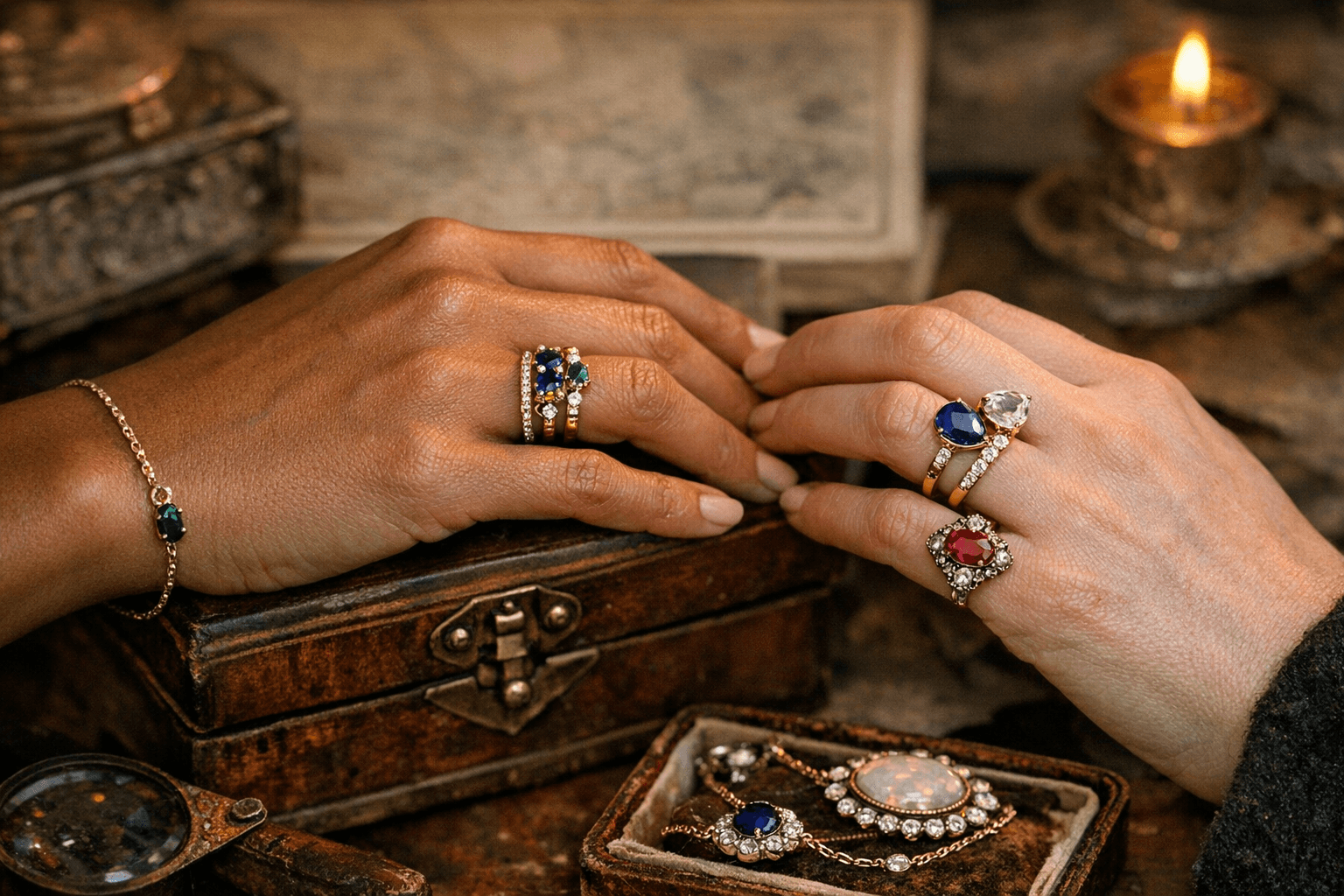
For buyers drawn in the opposite direction, vintage and estate pieces offer something no new production can provide: a documented history. Estate and antique jewelry retail reached $4.4 billion globally in 2023, according to market research firm Kentley Insights, and the vintage ring segment alone was valued at $3.29 billion in 2024. Global Research Intellect projects that figure rising to $5.23 billion by 2031, with North America currently leading and Asia-Pacific accelerating. A Georgian chrysoprase brooch or a Victorian almandine garnet parure carries a chain of custody that is, itself, a sustainability argument.
Your 2026 Birthstone Style Guide: Quick Reference
| Month | Birthstone | 2026 Trend-Forward Style | Metal Pairing | Buy for Longevity |
|---|---|---|---|---|
| January | Garnet (red or tsavorite) | Oval tsavorite, bezel-set, stacked | Rose or champagne gold | Yes: tsavorite is a rising collector stone |
| February | Amethyst | Deep purple emerald cut, mixed-metal bezel | Yellow gold | Yes: step cuts age gracefully |
| March | Aquamarine | Long oval or emerald cut, toi-et-moi with sapphire | White gold or platinum | Seasonal; peaks in this oceanic cycle |
| April | Diamond | Vintage rose-cut, bezel solitaire | Yellow gold (antique-inspired) | Yes: rose-cut silhouettes are perennial |
| May | Emerald | Cabochon, burnish-set in a signet | 18k yellow gold | Yes: cabochon is a classic format |
| June | Pearl or Alexandrite | Baroque pearl layered with fine chain; alexandrite toi-et-moi | Mixed metals | Yes: baroque pearls endure |
| July | Ruby | Oval, high bezel, red spinel accent | Yellow gold | Yes: classic silhouette |
| August | Peridot or Spinel | Spinel in vivid pink or blue, cushion cut | Oxidized silver or white gold | Yes: spinel recognition is building |
| September | Sapphire | Teal parti sapphire, kite or hexagonal cut; padparadscha for collectors | Brushed yellow gold | Yes: parti is a growing collector category |
| October | Opal or Tourmaline | Freeform opal cabochon, asymmetric setting; watermelon tourmaline slice | Rose gold | Setting-dependent; freeform is trend-adjacent |
| November | Topaz or Citrine | Imperial topaz in deep orange-red, bezel-set | Yellow gold | Yes: imperial topaz outperforms generic citrine |
| December | Tanzanite or Blue Topaz | Tanzanite cushion cut, toi-et-moi with white sapphire | Platinum or white gold | Yes: tanzanite value strengthens with supply scarcity |
What Stays and What Passes
Not every 2026 direction deserves the same investment. The mermaid core palette has a visible ceiling: teal parti sapphires and aquamarine asymmetric pairings are genuinely beautiful, but buyers should understand they are catching a trend wave rather than setting an anchor. Novelty cuts in short supply follow the same logic.
Four directions in this cycle carry structural staying power:
- Bezel settings are not a trend. They appear in ancient Egyptian jewelry and have held their place through every style era since. A solid 18k bezel outlasts what surrounds it.
- Toi-et-moi pairings have a 230-year documented history of returning because the concept is emotionally durable. Two birthstones in this setting will accumulate meaning over time, not lose it.
- Tsavorite garnet and spinel remain under-recognized relative to their quality. Current pricing still rewards buyers who act with knowledge; that window will not stay open indefinitely.
- Vintage and estate birthstone pieces have already passed the longevity test. A stone that has survived a century carries proof of durability that no new production can replicate.
The birthstone tradition has traveled from the Breastplate of Aaron through a Kansas City trade association meeting in 1912 to a USD 4.3 billion market for reasons that are not complicated. It makes jewelry about a specific person rather than a general taste. The 2026 styling moment gives that instinct more precision, more material intelligence, and more design range than it has had in decades. The question is which investments will still feel right ten years from now, and the answer, as always, lives in the stone itself.
This article was produced by Prism’s automated news system from verified source data, official records, and press releases, then run through automated quality and moderation checks before publishing. The system is built and supervised by the people who set the standards it runs under. Read our full AI policy.
Know something we missed? Have a correction or additional information?
Submit a Tip