GIA guide explains how to grade June birthstone pearls
Pearls look simple, but GIA grades them by seven traits, with luster, nacre, and surface quality deciding whether a strand feels luminous or merely shiny.
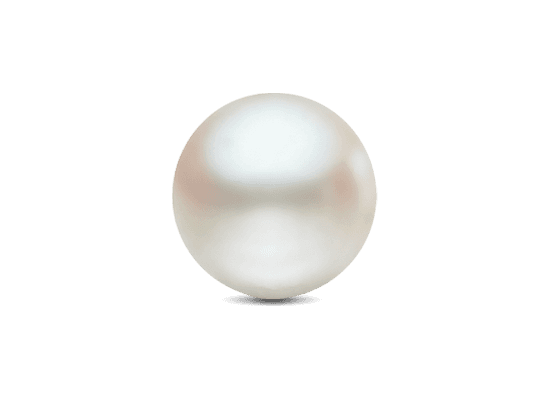
Two pearl strands can look nearly identical across a display case and still differ sharply in beauty, durability, and price. Buyers can judge June birthstone jewelry by seven traits: size, shape, color, luster, surface quality, nacre quality, and matching when more than one pearl appears in a piece.
How GIA reads a pearl
The first thing to consider is not sentiment but structure. A pearl is an organic gem formed in certain mollusks, and cultured pearls begin when a bead or piece of tissue is deliberately inserted, then coated with nacre as the mollusk responds. The outer layers matter because nacre quality is part of the grade, not a footnote.
Luster is the trait most shoppers notice first, even if they do not name it. A good pearl should look alive in the light, with a bright, crisp reflection and a sense of depth rather than a flat, sleepy glow. Surface quality is the next check, because pits, bumps, wrinkles, and other blemishes can interrupt that sheen and weaken the sense of refinement that pearl jewelry is meant to deliver.
Size and shape still matter, but they should not distract from the traits you can actually see up close. A larger pearl may command a higher price, yet a pearl with weak luster or obvious surface flaws can still look less impressive than a smaller, cleaner one. When you are comparing pieces, the question is not simply how big the pearl is, but how complete and balanced its appearance feels.
What to inspect in the case
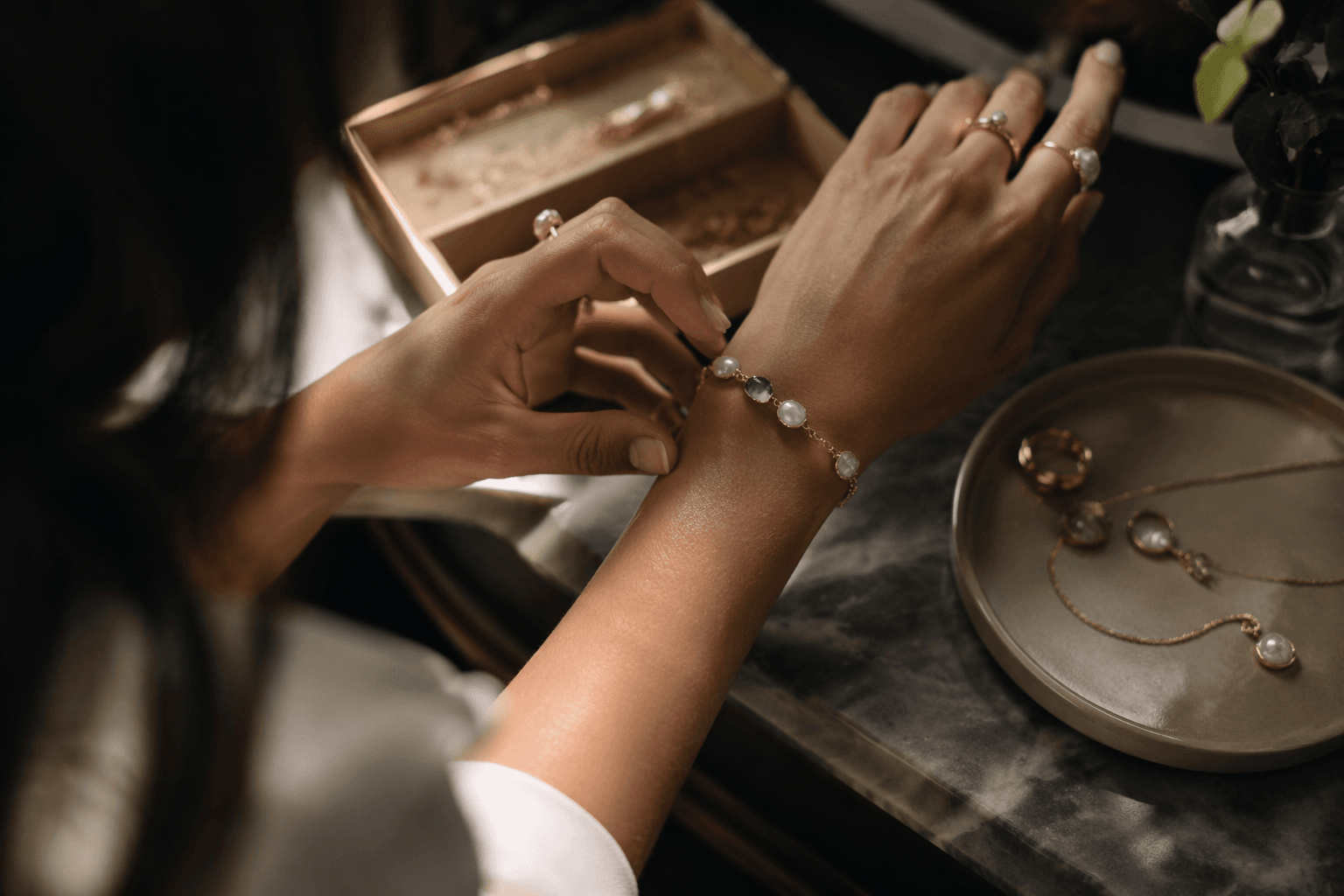
When pearl jewelry contains several stones, matching becomes part of the value equation. In a strand, bracelet, or pair of earrings, the pearls should agree in size, color, shape, and luster closely enough that the piece reads as one unified design. Inconsistency is easy to miss in a quick glance, which is why strand-by-strand comparison matters.
A sharp shopping checklist looks like this:
- Luster: favor a bright, mirror-like glow with depth.
- Surface quality: look for the fewest visible marks and disturbances.
- Nacre quality: prefer pearls that look rich and layered rather than thin or chalky.
- Matching: in multi-pearl jewelry, check that the pearls feel coordinated in tone, size, and sheen.
- Shape: decide whether you want the symmetry of classic round pearls or a more irregular look, then make sure the shape suits the design instead of reading as accidental.
Nacre shapes both beauty and long-term wear. Pearls with better nacre quality usually show fuller luster and a more satisfying glow, while weak nacre can leave the surface looking thin or lifeless. For anyone buying online, detailed photography and plain-language descriptions are essential; vague claims about “high quality” are not enough on their own.
Why June has three birthstones
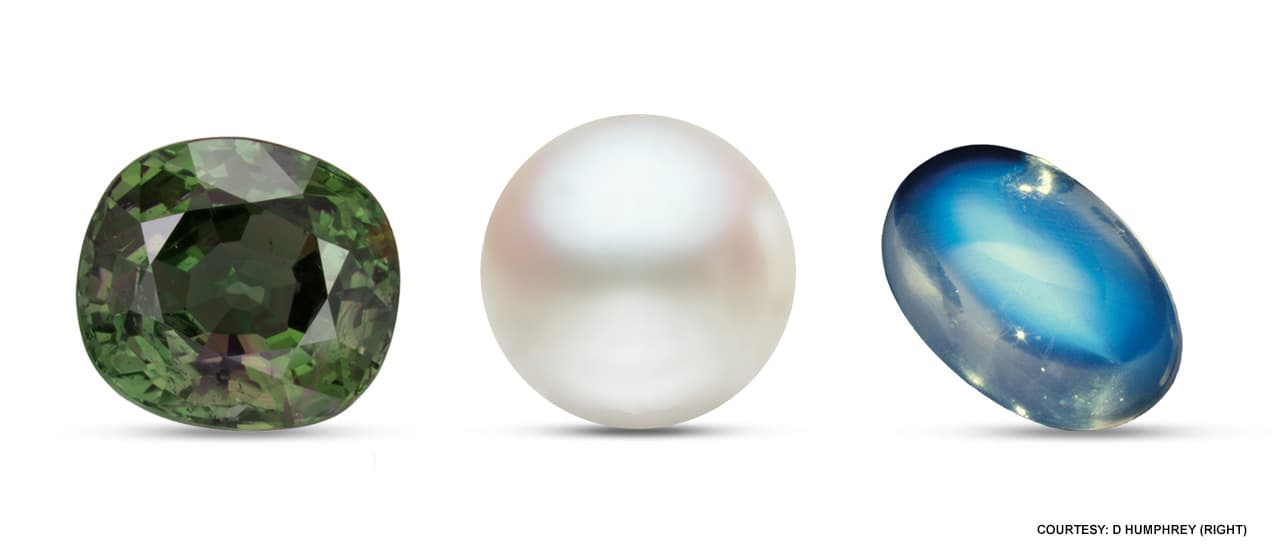
Pearl is one of June’s three birthstones, alongside alexandrite and moonstone, making June one of only three months, with August and December, that has three birthstones. Pearl also carries anniversary meaning as the birthstone for the third and thirtieth anniversaries.
The modern birthstone list was standardized in 1912 by the American National Association of Jewelers, now Jewelers of America.
From China to the modern market
Pearl culturing did not begin in a laboratory age. The first steps took place hundreds of years ago in China, and Japanese pioneers later produced whole cultured pearls around the beginning of the 20th century. By the 1920s, cultured pearls had become commercially important as natural pearl production declined.
The broad market now includes Akoya, South Sea, Tahitian, and freshwater pearls, each with different price expectations and visual signatures, so a buyer should always ask what type is being offered before comparing one pearl to another.
How type affects price and expectation
South Sea pearls sit near the top of the market because they are among the largest and most valuable pearl varieties. Their appeal is not only size but presence; they tend to read as substantial, elegant, and formally luxurious. Freshwater pearls, by contrast, are generally the most abundant and affordable, which makes them the entry point for many first-time buyers and a practical choice when you want scale without the highest price tier.
A freshwater strand and a South Sea strand may both look beautiful at first glance, but they do not carry the same rarity or market weight. The right purchase depends on whether you want maximum size, the deepest luster, the cleanest surface, or the best balance between cost and visual impact.
The buyer’s final test
The strongest pearl purchases are the ones where the stone’s origin, type, and visual grade all line up. If a seller tells you a piece is cultured, that should mean it was formed after deliberate insertion of a bead or tissue, with nacre doing the work of building the pearl. If the piece is presented as a premium strand, the evidence should be visible in the luster, the surface, the nacre, and the consistency from pearl to pearl.
This article was produced by Prism’s automated news system from verified source data, official records, and press releases, then run through automated quality and moderation checks before publishing. The system is built and supervised by the people who set the standards it runs under. Read our full AI policy.
Know something we missed? Have a correction or additional information?
Submit a Tip