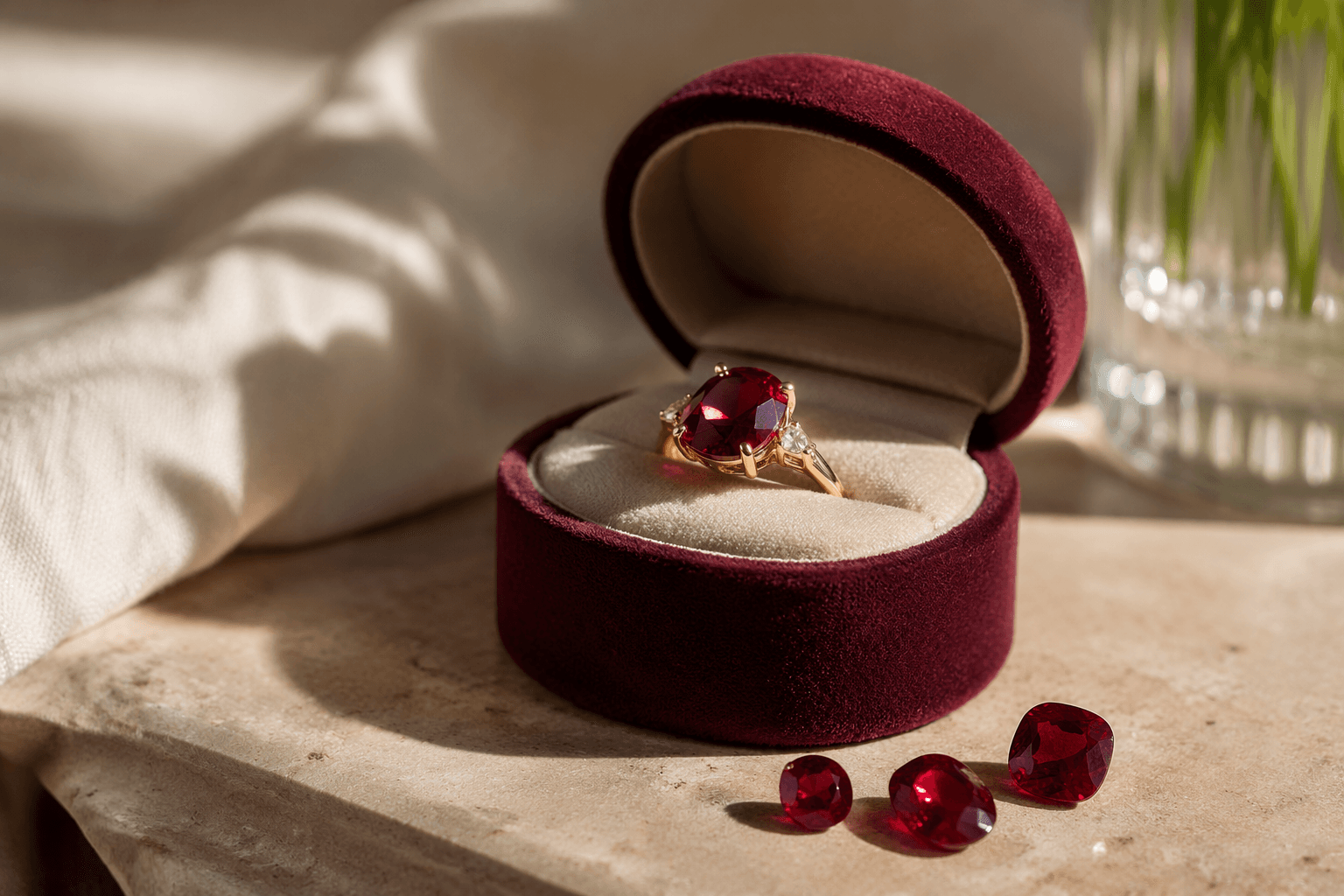
GIA warns moonstone is best suited to pendants and earrings
Moonstone shines brightest in pendants and earrings, where its soft glow is protected from knocks. Rings can work, but only with careful wear and the right setting.
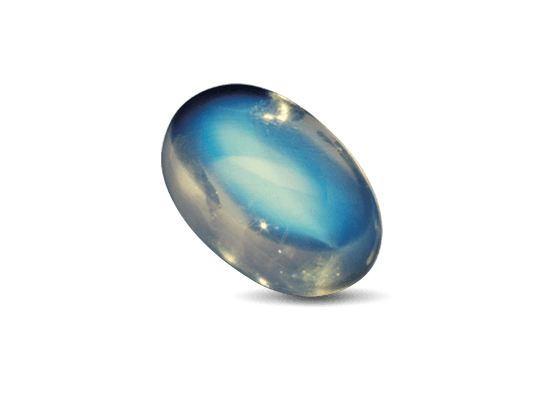
Moonstone often makes the most sense in pendants, earrings, and pins rather than rings. Its famous glow can look ethereal in the hand, yet the stone’s structure makes it vulnerable to impact, heat, and rough daily wear.
Why moonstone asks for the right setting
Moonstone is a variety of the feldspar-group mineral orthoclase, and its beauty comes from adularescence, the optical effect created when light scatters between microscopic alternating layers of orthoclase and albite. The finest material is colorless to nearly transparent with a vivid blue sheen, a look that has made moonstone a favorite for shoppers who want something softer and more luminous than a faceted blue gem.
That same structure is what limits its versatility. Moonstone has two cleavage directions, which means it can break more easily along internal planes of weakness. Rings are more likely to receive knocks and bumps during normal wear, so moonstone does better in jewelry that stays out of the line of fire. If you want moonstone for an everyday ring, a low-profile setting that shields the stone helps, but the gem still asks for more caution than sapphire, spinel, or even many other birthstone choices.
What durability really means for a shopper
Moonstone measures about 6.0 to 6.5 on the Mohs hardness scale, which places it in a middle range that sounds sturdier than it actually is in jewelry. Hardness is only part of the story. Moonstone also has poor toughness, so a gem can be scratched, chipped, or broken even when its hardness seems acceptable on paper.
Temperature matters too. High heat or sudden temperature change can cause breaks for anyone who wears jewelry near a stove, in hot baths, or during repairs and cleaning. That makes moonstone a poor candidate for settings where the stone is constantly exposed, knocked against hard surfaces, or expected to behave like a durable diamond substitute.
Where moonstone works best
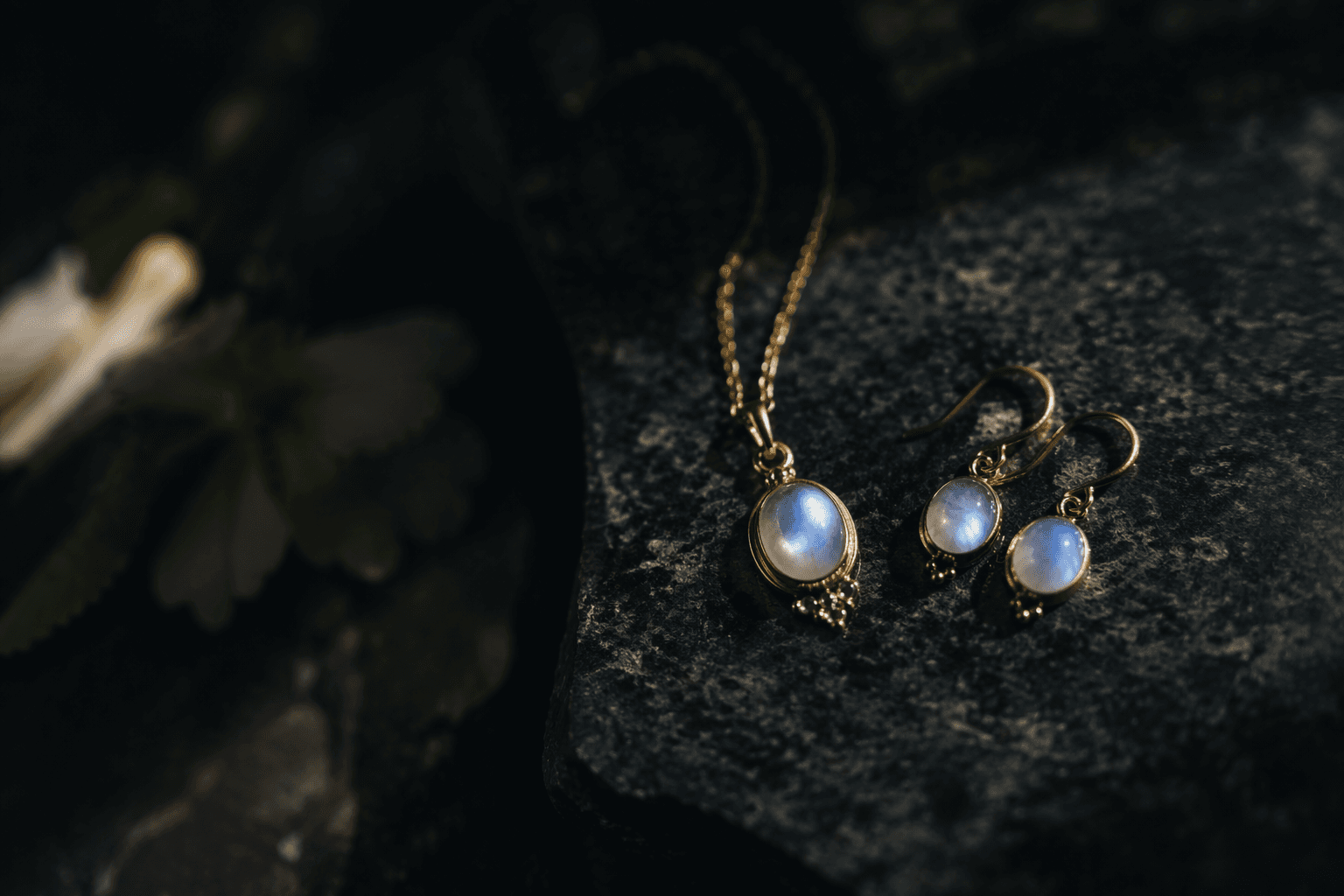
Pendants are moonstone’s safest home because they keep the gem away from the rough contact points that rings face every day. Earrings also suit the stone well, especially in designs that let the gem move and catch light without much impact. Pins can work for the same reason: they are usually worn with more intention than constant friction.
Rings are the category to treat with the most skepticism. If a ring is meant for occasional wear, moonstone can be lovely in a bezel or other protective setting that reduces the chance of a corner strike. If the ring is meant for daily wear, work, travel, or frequent hand use, the risk of damage is higher.
How to read quality beyond the glow
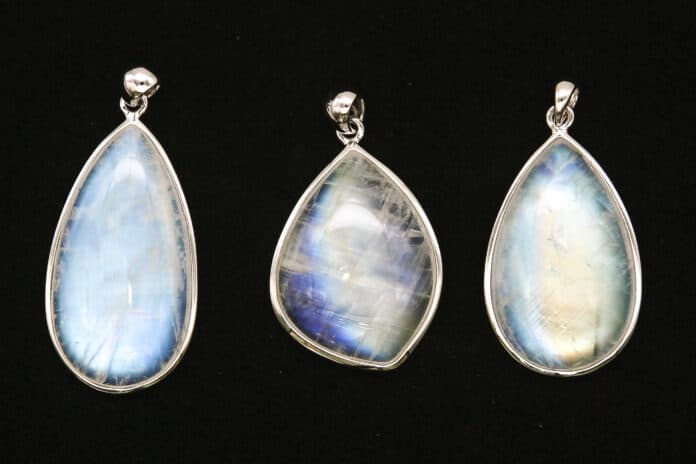
The best moonstones are judged first by what they do with light: colorless, semitransparent to nearly transparent material that is free of visible inclusions and shows vivid blue adularescence. In practice, that means the glow should look lively and clean rather than muddy or sleepy. If the sheen is weak, or if the stone looks overly cloudy, the visual drama that makes moonstone special is diminished.
Moonstone often appears in design-driven pieces rather than heavy, gem-first investments. In a well-made pendant or earring, the effect can feel deliberate and modern. In a crowded ring design, the setting can overwhelm the light effect or expose the gem to too much wear.
How to care for it without damaging it
Moonstone needs gentle treatment. GIA recommends warm soapy water as the only cleaning method for moonstone. Ultrasonic cleaners and steam cleaners are not recommended, and those are common shortcuts for sturdier gems and settings.
A safe routine is simple: use mild soap, lukewarm water, and a soft cloth, then dry the piece carefully. Avoid dramatic temperature shifts, harsh cleaners, and anything that assumes the stone can tolerate pressure or vibration. If a moonstone piece has a more delicate mounting, clean the setting just as carefully as the gem itself.
Why moonstone still feels so resonant
Its billowy glow has fascinated people for centuries, and Hindu mythology says it is made of solidified moonbeams.
GIA lists three June birthstones: moonstone, pearl, and alexandrite. Moonstone stands apart because it offers an unmistakable visual signature without the formality of a color-change gem or the fragility concerns of a pearl in some settings.
This article was produced by Prism’s automated news system from verified source data, official records, and press releases, then run through automated quality and moderation checks before publishing. The system is built and supervised by the people who set the standards it runs under. Read our full AI policy.
Did this article answer your question?