India's Diamond Industry Marks World Diamond Day with Birthstone Storytelling Push
India's diamond industry, which polishes over 90% of the world's supply, used the first-ever World Diamond Day to push birthstone storytelling as a counter to lab-grown rivals.
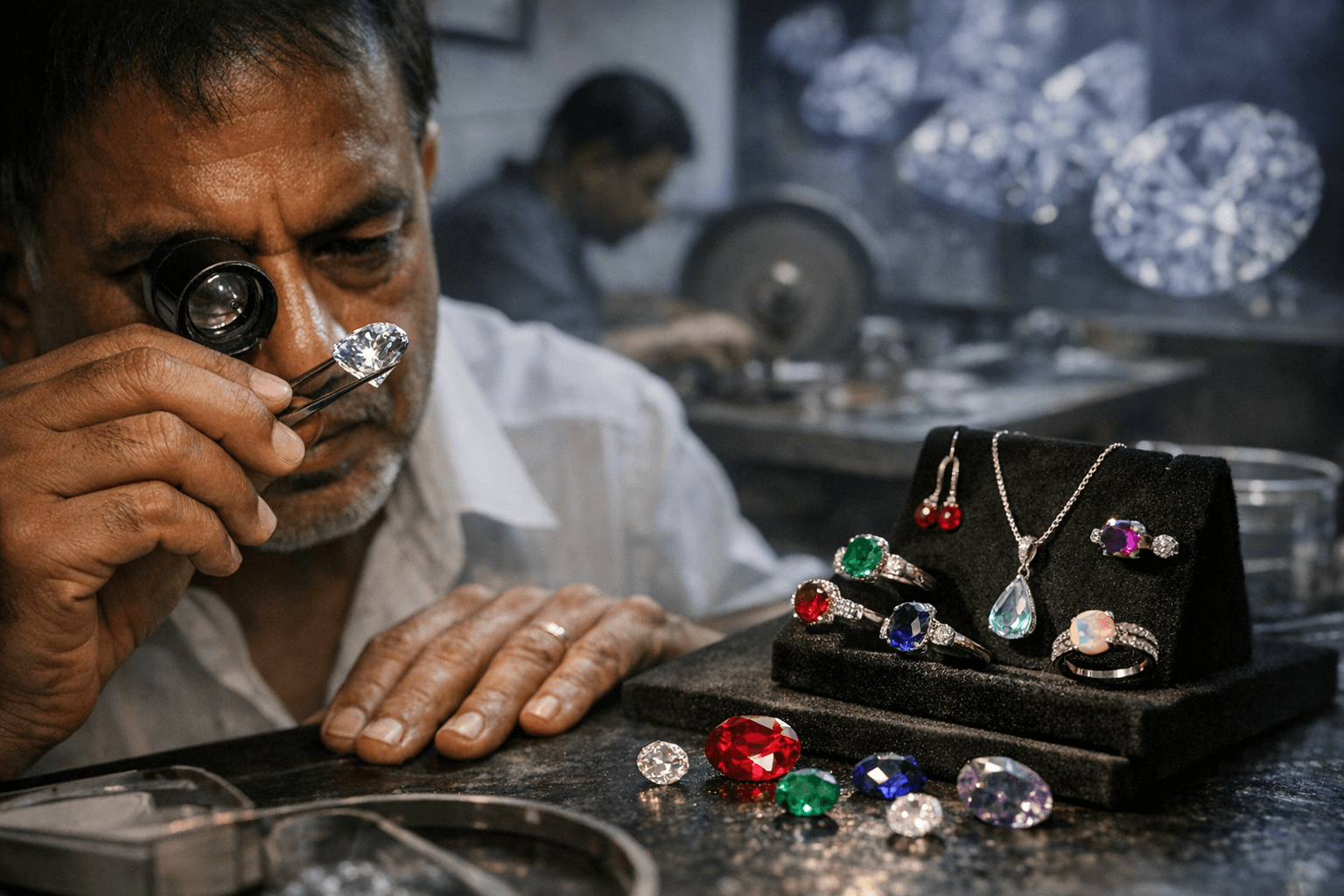
April's birthstone has never needed a designated holiday, but the Natural Diamond Council used April 8 to create one. The inaugural World Diamond Day drew India's diamond establishment into its most coordinated public storytelling effort in recent memory, with manufacturers, certifiers, and trade bodies aligning behind a single message: that a natural diamond carries a narrative no laboratory can manufacture.
The date was chosen with intention. The timing of April 8 was no coincidence: diamond is the April birthstone, while the number eight carries symbolic weight across many cultures, often representing infinity, balance, and lasting prosperity. That layered symbolism gave the Natural Diamond Council's Richa Singh, Managing Director for India and the Middle East, a framework beyond standard category marketing. Singh described natural diamonds as "the perfect custodians of our memories," positioning geological permanence as the stone's most defensible differentiator against lab-grown competition.
India took centre stage in the first World Diamond Day, with the NDC leading a nationwide activation that brought together key industry bodies and companies. The initiative saw participation from the Gem and Jewellery Export Promotion Council (GJEPC), the Gemological Institute of America (GIA), the Bharat Diamond Bourse, and the All India Gem and Jewellery Domestic Council (GJC), along with major manufacturers including Venus Jewel, SRK Exports, HK Exports, KP Sanghvi, Dharmanandan Diamonds, Finestar Jewellery and Diamonds, Shivam Jewels, and A.S. Motiwala. SGL Labs also participated, reinforcing the certification thread running through the day's messaging.
The NDC encouraged participants from across the industry, from artisans and manufacturers to retailers and consumers, to share their authentic stories. The movement came alive on social media, with participants sharing personal moments using #WorldDiamondDay and #NaturalDiamonds. The NDC supported this with a digital media portal allowing contributors to customize images with an official World Diamond Day logo, making participation visually consistent across geographies. Thought leaders including Richa Goyal Sikri, Archana Thani, Nitya Arora, and Arundhati De Sheth played a significant role in bringing authentic stories and personal perspectives from across the industry to the global stage.
The storytelling covered three distinct registers: personal milestones such as engagements and anniversaries, heirloom pieces passed across generations, and origin-to-retail journeys tracing the craft and community impact embedded in a stone's path from rough to finished piece. That last track matters for any buyer serious about provenance. India's diamond industry grew to dominate over 90 percent of the world's supply in polished diamonds, meaning the hands that shaped nearly every diamond in a global retail case are Indian. The GIA's participation is significant in this context: as the certifying body whose grading reports carry the widest international recognition, its presence on World Diamond Day connected rigorous documentation to the emotional storytelling the NDC was orchestrating.
The pressure behind the campaign is real. Lab-grown diamonds have compressed retail price points and complicated the luxury narrative for natural stones. The birthstone angle offers an answer grounded in geology rather than sentiment alone: a diamond formed over billions of years inside the earth carries an origin no reactor can replicate, and for April birthdays, that provenance has a personal hook built in. Whether retailers follow through with traceable sourcing and GIA-backed certification, or simply repeat the hashtag, will determine whether the day's storytelling holds up under scrutiny. The infrastructure is now in place; the accountability is the next chapter.
This article was produced by Prism’s automated news system from verified source data, official records, and press releases, then run through automated quality and moderation checks before publishing. The system is built and supervised by the people who set the standards it runs under. Read our full AI policy.
Did this article answer your question?