World Diamond Day Spotlights 28.88-Carat Jwaneng Stone and Natural Rarity
A 28.88-carat flawless diamond from Botswana's Jwaneng mine is headed to Sotheby's Hong Kong, perfectly timed to World Diamond Day and the case for natural rarity.
The Stone That Earns Its Name
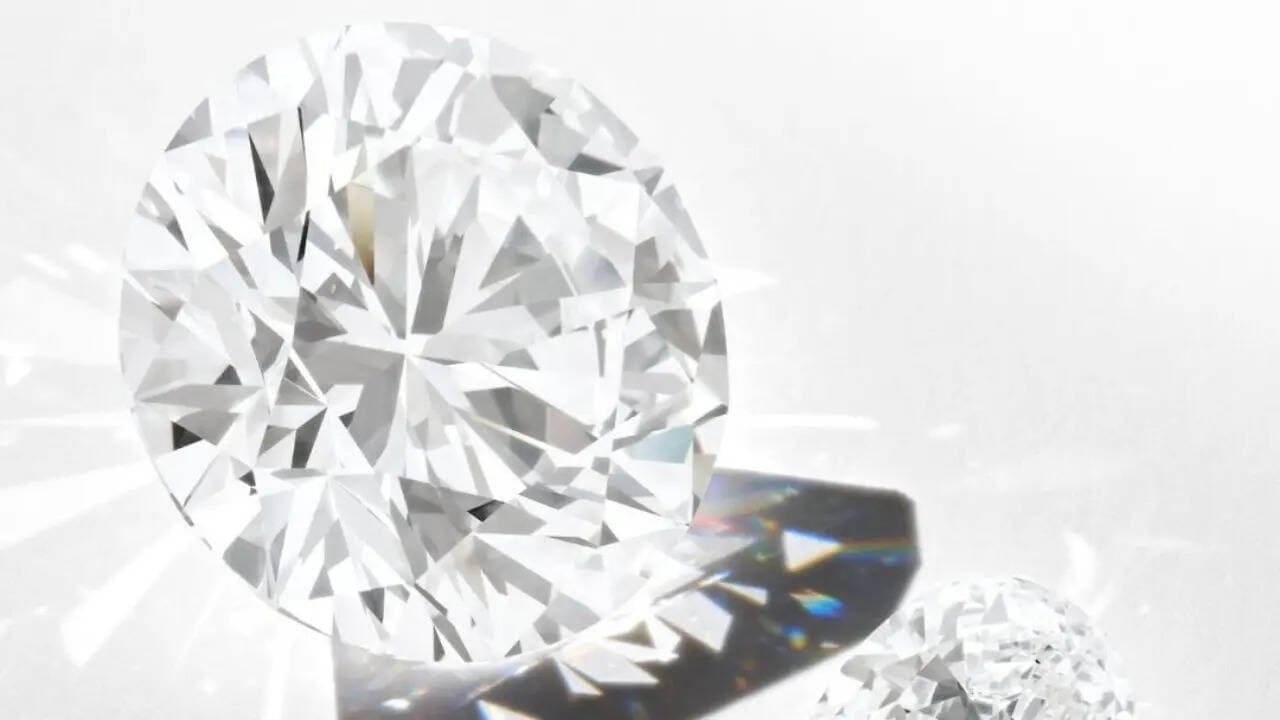
The Jwaneng mine in Botswana takes its name from the Setswana word for "a place of small stones." The irony is geological: the Jwaneng mine is one of the world's richest diamond sources, and the stone that now bears its name, the Jwaneng 28.88, is anything but small. A round brilliant-cut, D-colour, internally flawless diamond classified as Type IIa, it represents fewer than 2% of all natural diamonds ever discovered, a category recognized for exceptional chemical purity. At 28.88 carats, it is the kind of stone that makes seasoned gemologists pause.
Its journey began millions of years ago, deep within the Earth's mantle, before volcanic eruptions carried it toward the surface beneath what is now the Kalahari Desert in southern Africa. The polished stone was cut from a 114.83-carat rough recovered from the Debswana-operated Jwaneng mine, a joint venture between De Beers and the government of Botswana. Transforming a rough stone of that magnitude into a flawless round brilliant required months of study and precision planning by De Beers' master artisans: every facet placement, every angle, calibrated to unlock maximum brilliance without sacrificing a single point of purity.
World Diamond Day and the Case for Natural Origin
The Natural Diamond Council officially launched World Diamond Day on April 8, 2026, a global, social-first movement unfolding across more than 50 countries in real time. The timing is deliberate: April is the traditional birthstone month for diamonds, and the NDC chose the date to anchor a cultural moment around natural provenance, shared stories, and the meaning people attach to stones pulled from the earth. Across social media, participants are encouraged to post a photo or short video that captures what natural diamonds mean to them, whether a personal milestone, a story of origin, or a piece passed between generations, using the hashtags #WorldDiamondDay and #NaturalDiamonds.
The campaign is as much a positioning exercise as a celebration. The natural diamond industry faces sustained market pressure from lab-grown alternatives, and the NDC's inaugural World Diamond Day is the industry's most coordinated response yet: a collective, participation-driven assertion that origin matters.
The Auction: Numbers and Symbolism
The Jwaneng 28.88 is set to make its auction debut at Sotheby's High Jewellery sale in Hong Kong on April 23, 2026, where it is estimated to fetch between $2.2 million and $2.8 million. That estimate is not only a reflection of the stone's gemological credentials but also a number chosen with cultural precision. In many Asian cultures, the number eight is associated with prosperity, abundance, and good fortune, making the estimate's upper figure of $2.8 million, and the stone's carat weight of 28.88, resonate far beyond the auction room.
The Jwaneng 28.88 will go under the hammer alongside two other D-flawless lots from De Beers, including a 3.03-carat pear, as part of one of the auction house's Luxury Week events in Hong Kong. Sotheby's head of jewels, Quig Bruning, described the stone plainly: "The Jwaneng 28.88 is a perfect emblem of De Beers' unmatched legacy in diamonds. It's at once a vanishingly rare feat of nature, combined with a master class in diamond cutting and polishing. Natural diamonds truly are forever, and I cannot think of a better stone to symbolize this special collaboration."
The London Unveiling and De Beers' Centenary
The stone made its first public appearance on March 19, 2026, at Maison Assouline in London, where De Beers hosted the unveiling alongside the launch of its landmark art book, "A Diamond Is Forever: The Making of a Cultural Icon 1926-2026," celebrating a century of storytelling. The event drew a star-studded crowd, including Archie Madekwe, Nathalie Emmanuel, Poppy Ajudha, and Poppy Delevingne. It was a deliberate collision of cultural worlds: a stone formed over billions of years, a company marking 100 years of a single, enduring slogan, and an audience chosen to carry that story forward through contemporary visibility.
De Beers' "A Diamond Is Forever" has shaped the emotional language of diamond ownership for nearly eight decades. Framing the Jwaneng 28.88 within that centenary context is a pointed argument: natural diamonds are not simply commodities subject to market fluctuations, but cultural artifacts with narrative weight.
Natural vs. Lab-Grown: Where the Market Actually Stands
The Jwaneng 28.88 exists at one extreme of the diamond market. At the other end, the lab-grown segment has fundamentally restructured what buyers expect to pay. A natural 1-carat diamond now costs an average of around $4,200, while a lab-grown equivalent of the same carat weight averages $1,000 or less. Lab-grown diamonds accounted for 52% of center stones sold in 2024, up from just 12% in 2019, with prices falling 74% since 2020.
The pressure is particularly acute at smaller carat weights, where the abundance of lab-grown options directly competes with comparable natural diamonds. For the natural diamond trade, the strategic response has been clear: shift the conversation upward, toward provenance, rarity, and stones that cannot be replicated in a reactor. A Type IIa round brilliant of nearly 29 carats, cut from a specific rough pulled from a specific mine in Botswana, is precisely that argument made tangible. Natural diamonds perform strongest at the higher end of the market, where provenance, grading, and irreproducibility drive value rather than carat weight alone.
What "Rarity" Actually Means at Every Price Point
For most buyers, the Jwaneng 28.88 is an aspirational object rather than a purchase decision. But the gemological principles it embodies apply directly to buying at any scale. Type IIa classification, the color-grading hierarchy that places D at its apex, and the distinction between internally flawless and lesser clarity grades are the same standards that determine whether a one-carat engagement diamond is fairly priced or quietly overvalued.
Understanding these benchmarks matters:
- D-color is the highest possible on the GIA scale, meaning the stone is completely colorless when viewed face-up and from the side under controlled lighting. Even one grade lower, at E, represents a meaningful distinction to a trained eye.
- Type IIa classification indicates a diamond with virtually no nitrogen impurities in its crystal lattice, which typically produces exceptional optical transparency and brilliance. Finding this designation in a stone under five carats is already unusual; at 28.88 carats, it is extraordinarily rare.
- Internally flawless means no inclusions are visible under 10x magnification. Combined with D-color and Type IIa chemistry, it is the rarest confluence of characteristics in natural diamond grading.
For birthstone buyers considering a diamond piece, whether a solitaire pendant, a pavé band, or a bezel-set stud, these grades are worth understanding not because you need to replicate the Jwaneng's specifications, but because they give you a precise vocabulary for what you are being offered and what you are paying for.
April's Birthstone, Reconsidered
World Diamond Day is new, but the diamond's association with April is long-established. The Natural Diamond Council named April 8 as World Diamond Day in a nod to the month's birthstone, linking the campaign explicitly to diamonds' most personal cultural role. A birthstone piece sits at the opposite end of the market from a museum-quality stone heading to auction in Hong Kong, but both transactions are animated by the same instinct: the desire to hold something rare, specific, and imbued with meaning.
The Jwaneng 28.88 will likely set a new reference point for what a flawless D-color Type IIa stone of this magnitude can achieve at auction. But its broader significance, in the week World Diamond Day was born, is what it demonstrates about the enduring pull of a natural diamond: that no matter how precisely a reactor can replicate the physics, it cannot replicate the Kalahari.
This article was produced by Prism’s automated news system from verified source data, official records, and press releases, then run through automated quality and moderation checks before publishing. The system is built and supervised by the people who set the standards it runs under. Read our full AI policy.
Did this article answer your question?