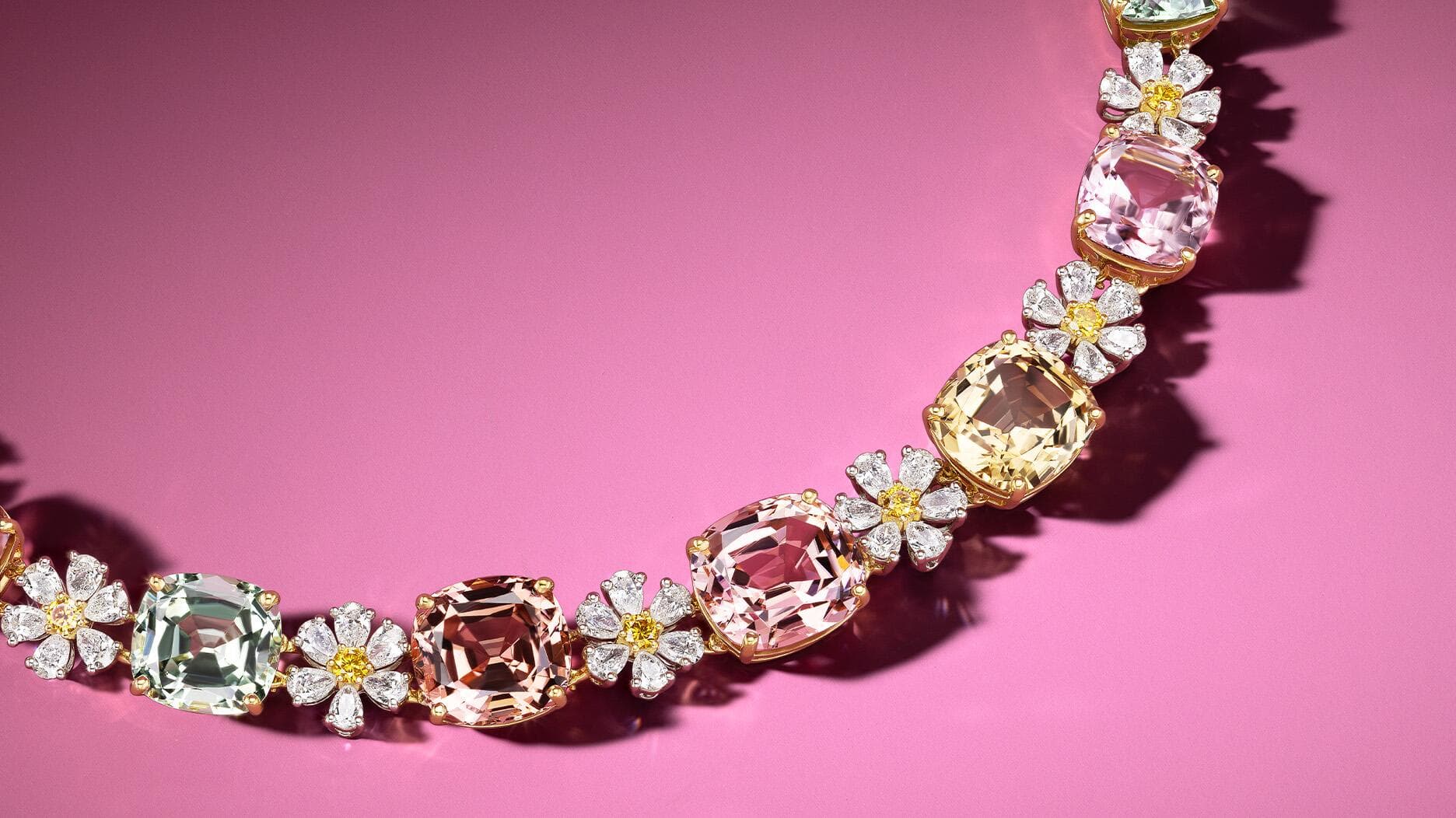
Tiffany’s Hidden Garden Blue Book blossoms with rare gemstones and heritage
Tiffany’s Hidden Garden uses rare gems and garden-inspired forms to decode birthstone color, symbolism and why provenance still drives price.
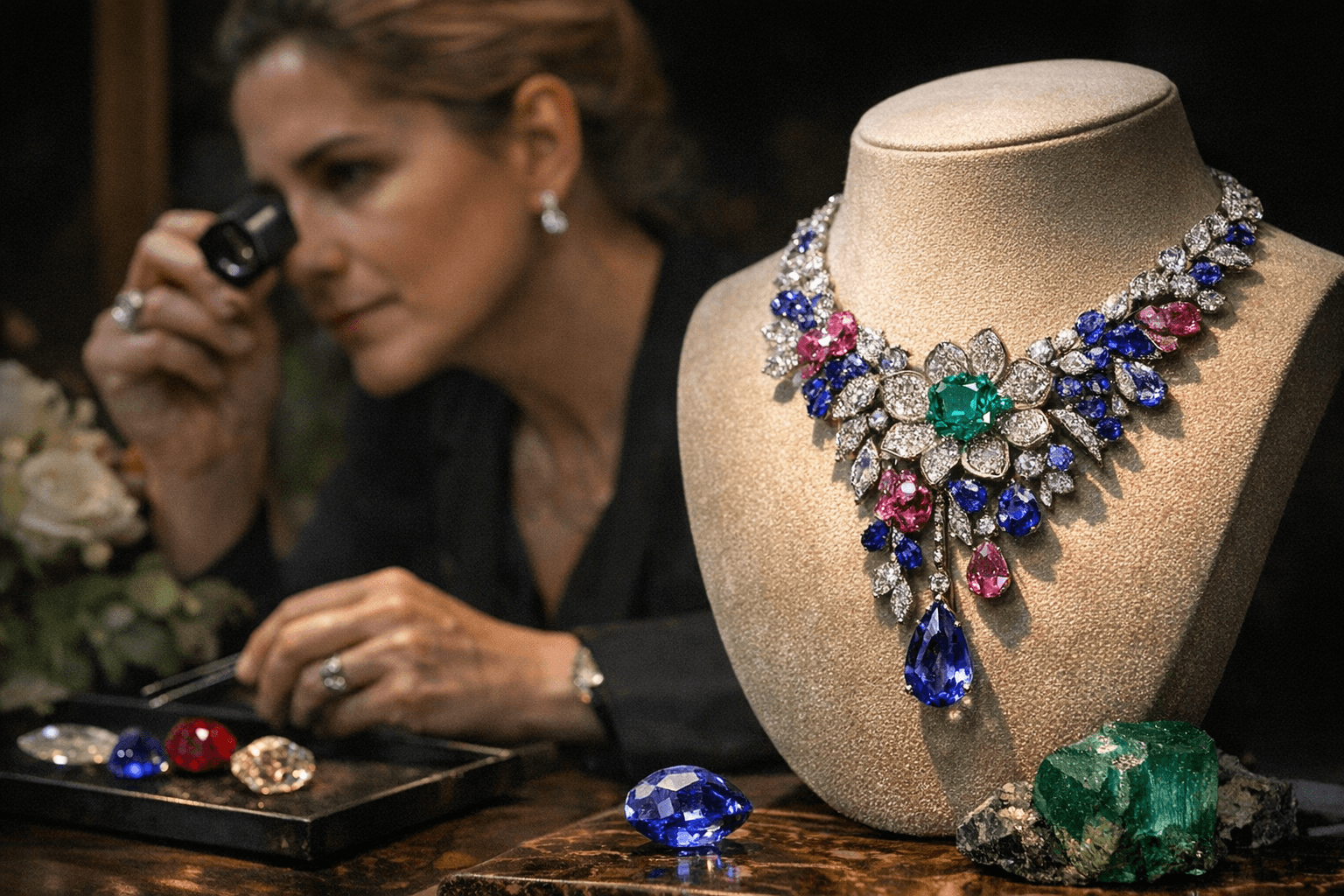
Tiffany’s name still changes the way a gemstone is read. In Blue Book 2026: Hidden Garden, the house turns its high-jewelry heritage into a lesson in color, rarity and design, with Nathalie Verdeille and the Tiffany Design Studio reimagining Jean Schlumberger’s flora-and-fauna language as sculptural jewels.
A garden built from gemstones
Hidden Garden is Tiffany at its most legible and its most elusive. The collection is said to showcase the world’s finest diamonds and extraordinary colored gemstones, and that pairing tells you almost everything about the house’s view of value: brilliance is only part of the story, but pedigree, color and artistic construction matter just as much. Verdeille, Tiffany’s senior vice president and chief artistic officer, has taken Schlumberger’s whimsical natural world and given it a more architectural register, so the pieces feel less like floral decoration and more like miniature landscapes.
That matters for birthstone jewelry because the appeal is the same, only scaled down. A birthstone is rarely just a gem color; it is a personal emblem, a memory cue and, in the best pieces, a design decision. Hidden Garden translates that idea into high jewelry by making nature the organizing principle, then using stones to carry the emotional weight.
Why Tiffany’s gemstone history still carries force
Tiffany’s authority here is not borrowed. It reaches back to one of the most famous stones in the house’s history, the Tiffany Diamond, a 287.42-carat rough stone discovered in South Africa in 1877 and acquired by Charles Lewis Tiffany in 1878. After cutting, it became a 128.54-carat gem with 82 facets, a transformation that still serves as the house’s shorthand for technical ambition and restraint.
That legacy gives Hidden Garden more than decorative flourish. It frames Tiffany as a company that has long understood a basic truth of fine jewelry: the most memorable stones are not simply large or rare, they are interpreted well. The 1965 debut of Jean Schlumberger’s Bird on a Rock reinforced that idea, and the design has since become a modern collection under Verdeille, extending one of Tiffany’s most recognizable motifs into the present.
The birthstone lens: color, meaning and appeal
Read through a birthstone lens, Hidden Garden becomes a useful guide to why certain gemstones have outlasted trends. Diamonds remain the anchor because their colorlessness allows light, setting and craftsmanship to do the talking. Colored stones, by contrast, carry a stronger personality: green suggests renewal and abundance, red reads as vitality and desire, blue often signals calm and authority, while softer hues suggest delicacy and romance.
That is why birthstone jewelry often feels more intimate than a generic gem purchase. A well-chosen stone can echo a month, a milestone or a family story, but it also has to hold its own visually. Tiffany’s garden language works because it treats each gem as both symbol and surface, letting color do the emotional work while the setting gives it shape.
Why some stones command premium prices
The jump from pretty to pricey usually comes down to four things: rarity, color quality, size and condition. The finest colored stones cost more when their hue is saturated, even, and lively under changing light. Large clean stones become exponentially scarcer as size increases, and untreated gems generally command more than those that have been modified to improve appearance.
Provenance matters too, especially at Tiffany, where history is part of the purchase. A stone that can be traced to a famous mine, a storied collection or a distinctive design tradition acquires another layer of desirability. That is one reason the Tiffany Diamond still resonates, and why Hidden Garden’s emphasis on extraordinary stones feels consistent rather than opportunistic.
What to look for in birthstone jewelry
If you want the look without the high-jewelry budget, the smartest strategy is to borrow Tiffany’s principles, not its scale. Start with the strongest color in your chosen birthstone, then let the setting support it instead of competing with it. A bezel setting gives a cleaner, more contemporary outline and protects the stone well for everyday wear; prongs expose more of the gem and usually allow more light, which can make a faceted stone sparkle more vividly.
- Choose the best color you can afford before chasing size.
- Favor balanced proportions over oversized settings that swallow the stone.
- For softer gems, like opal or turquoise, a protective setting is usually worth more than an open, delicate mount.
- For harder stones, like sapphire, ruby or diamond, an open prong setting can maximize brightness if the piece will not take heavy daily abuse.
A few useful rules hold across categories:
How to recreate the Hidden Garden effect in birthstone jewelry
The easiest way to translate the collection’s mood is to think in layers. A solitaire pendant in a saturated birthstone color delivers the cleanest read, while a halo adds the kind of radiance luxury houses love without requiring a couture-sized center stone. If you prefer rings, look for slender floral or leaf-like shoulders rather than ornate clusters; the reference to nature should feel intentional, not literal.
For more accessible shopping, colored sapphires are often the best value for strong saturation and durability, while garnet can offer deep red drama at a friendlier price point. Emeralds bring unmistakable garden richness, though their inclusions require a more forgiving eye and careful setting. Diamonds remain the most versatile choice when you want the silhouette to feel permanent rather than seasonal, especially in bands, earrings and stacking pieces.
The modern value of a heritage launch
The Blue Book launch itself underlined how Tiffany uses heritage as both design language and cultural currency. The celebration at the Park Avenue Armory brought in Rosé, Greta Lee and Connor Storrie, with a performance by Mariah Carey, making the collection feel like a full-house moment rather than a private preview. But the real headline is quieter: Tiffany is still betting that exceptional stones, treated with discipline, will always outlast gimmickry.
Hidden Garden succeeds because it treats gemstones the way collectors and birthstone buyers both want to see them, as objects with memory, color and character. That is the enduring luxury proposition: not just a beautiful stone, but a stone that knows where it came from and why it matters.
Know something we missed? Have a correction or additional information?
Submit a Tip