47th Street’s Unwritten Rules, Inside Manhattan’s Diamond District
47th Street is all speed and hidden risk. Heather Sandor’s insider rules show why paperwork, trust and etiquette matter as much as the stone.

The first mistake on 47th Street is thinking the stone is the only thing that matters. In Manhattan’s Diamond District, the real risk often sits around the diamond, in the paperwork, the counterparty, the timing, and the way a deal is handled. With about 2,600 jewelers operating on the block and close to 90% of the diamonds entering the United States passing through New York City, 47th Street is less a shopping street than a pressure test for anyone who wants to do business without getting burned.
The Gemological Institute of America’s New York campus sits at 50 W 47th Street, right in the middle of what it calls the world’s largest diamond market. The district’s concentration is not accidental. New York City tourism materials trace it to World War II, when many in the trade fled Europe for New York and the migration to 47th Street became complete. By 1997, the city had formalized the corridor as the 47th Street Diamond District Business Improvement District, described then as the city’s 41st and smallest BID, just one block long. That density still shapes how the market works today: fast, crowded, competitive, and unforgiving of loose ends.
Why Heather Sandor’s advice carries weight is simple. Her family has operated on 47th Street since 1957, and she and her husband, Ron Sandor, bring more than 30 years of experience in the New York Diamond District. She co-owns A&C Gem Trading Corp., a wholesale colored stone business, which means her perspective comes from the daily mechanics of moving goods, not from a distance. Her March 12 GIA lecture, “47th Street 101: Decoding the Diamond District,” was aimed at the next generation of jewelers, but the lessons land far beyond the classroom.
That matters because 47th Street is full of people who can sell a beautiful object and far fewer who can explain the chain of custody behind it. The district’s history, from wartime migration to the creation of a one-block BID, explains why trust became a central currency here. In a place where so much of the American diamond trade flows through so few square feet, reputation can open doors, and carelessness can close them just as quickly.
If you are new to the district, treat every introduction like due diligence. The first rule is to know exactly who sits across the table from you. On 47th Street, a polished showroom does not replace verification, and a familiar accent or confident pitch does not prove that the counterparty has the goods, the authority, or the consistency you need.
- Confirm the business name, suite number, and the person authorized to sell. A stable address on a block as dense as 47th Street matters because it tells you the business is anchored, not improvising.
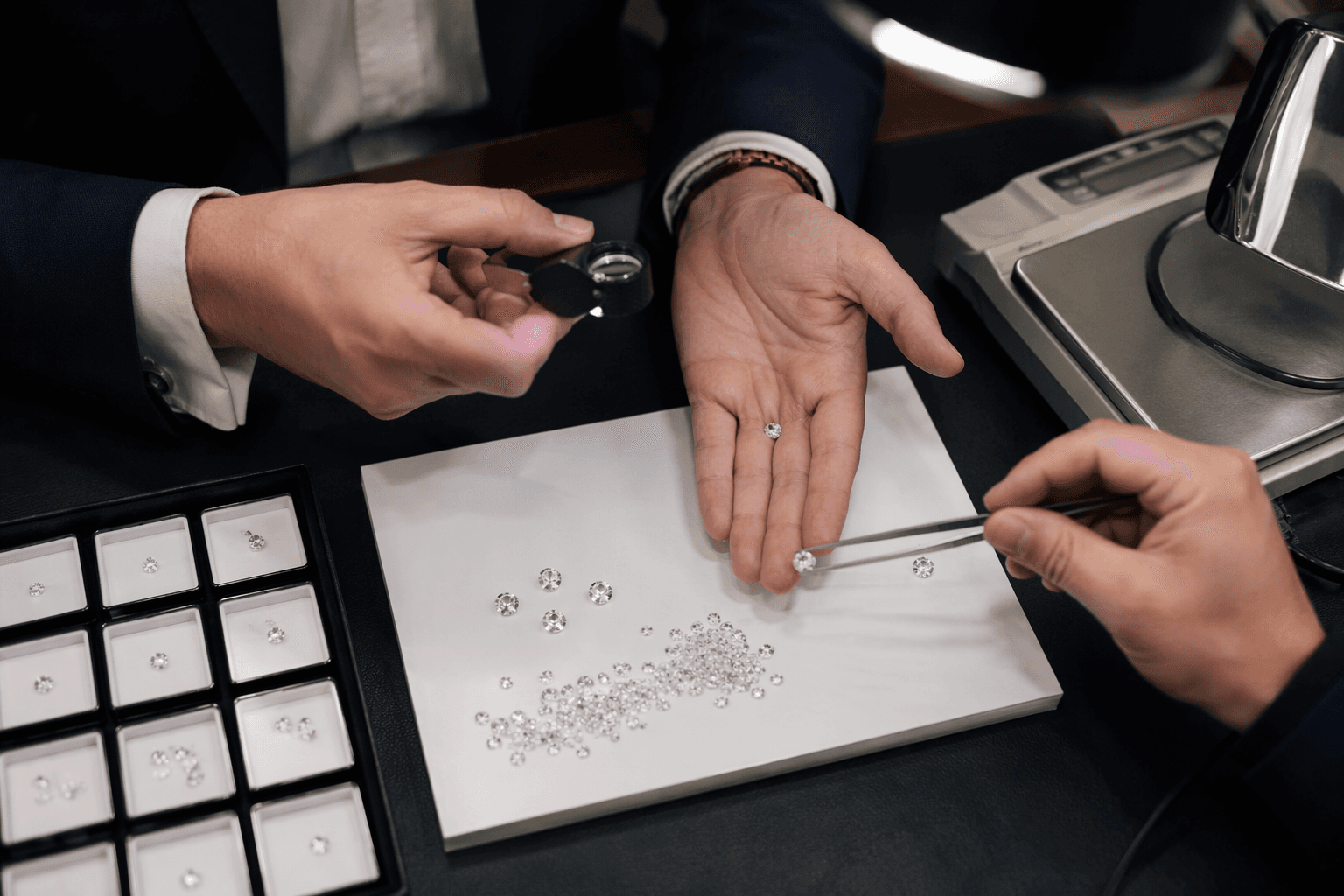
- Ask for the paperwork before the drama. Lab reports, parcel details, and stated specs should match the stone in front of you. If the numbers do not line up, stop there.
- Compare what you are offered to what the market can realistically support. In a district with more than 2,600 independent jewelers, pricing is competitive, but a price that seems too smooth or too eager can signal a problem with quality, liquidity, or provenance.
- Keep the handoff clean and discreet. The Diamond District has always been a place where security matters, so transfers should be organized, controlled, and never casual.
- Respect the pace of the street. The district rewards people who arrive prepared, know what they want, and do not waste time bluffing their way through a transaction.
Those checkpoints are not about mystique. They are about reducing avoidable losses in a market where speed can be mistaken for sophistication. A newcomer who knows how to read a seller, match a stone to its documents, and move with discipline has a far better chance of avoiding the kind of expensive confusion that still catches out experienced buyers in crowded wholesale districts.
The district’s geography is part of the lesson. GIA’s campus at 50 W 47th Street places formal gemological education inside the same ecosystem that fuels the trade, which is telling. This is a market where theory and practice sit on the same block, and where the best operators understand both the language of grading and the social code of the street. Heather Sandor’s own business move reinforces that reality: JCK reported that A&C Gem Trading Corp. opened a new showroom at 54 W. 47th St. in mid-June 2024, a reminder that even veteran firms still invest in physical presence on the block.
That physical presence is not just about visibility. On 47th Street, location signals continuity, and continuity still counts. A business with a long footprint, like Sandor’s family operation dating to 1957, carries a different kind of credibility than a transient setup. In a district built on volume and trust, the old rule holds: if you cannot explain where the stone came from, who touched it, and why the paper matches the parcel, you are not ready to do the deal.
The smartest buyers, sellers, and new entrants understand that 47th Street is not a shortcut to glamour. It is a concentrated business environment where every handshake, every invoice, and every lab report can affect margin, risk, and reputation. Heather Sandor’s value is that she makes the unwritten rules legible, and in Manhattan’s Diamond District, that clarity is often worth more than the first price you are quoted.
This article was produced by Prism’s automated news system from verified source data, official records, and press releases, then run through automated quality and moderation checks before publishing. The system is built and supervised by the people who set the standards it runs under. Read our full AI policy.
Did this article answer your question?