Calms Jewelry’s Ripple ring pairs heptagonal diamond with sculptural gold
A heptagonal lab-grown diamond turns Calms Jewelry’s Ripple ring into a sculptural statement, where gold softens geometry instead of competing with it.
Why the Ripple ring matters now
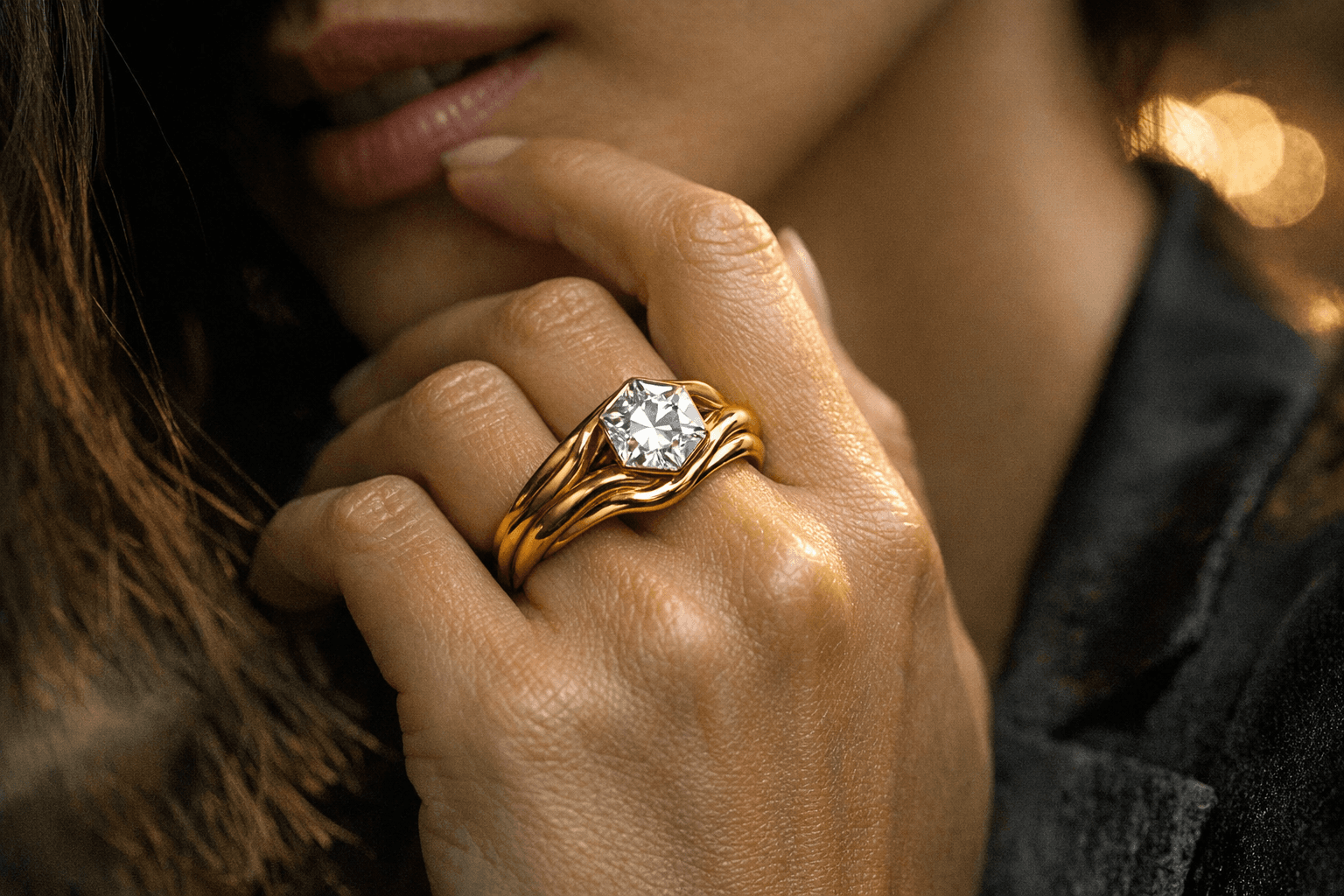
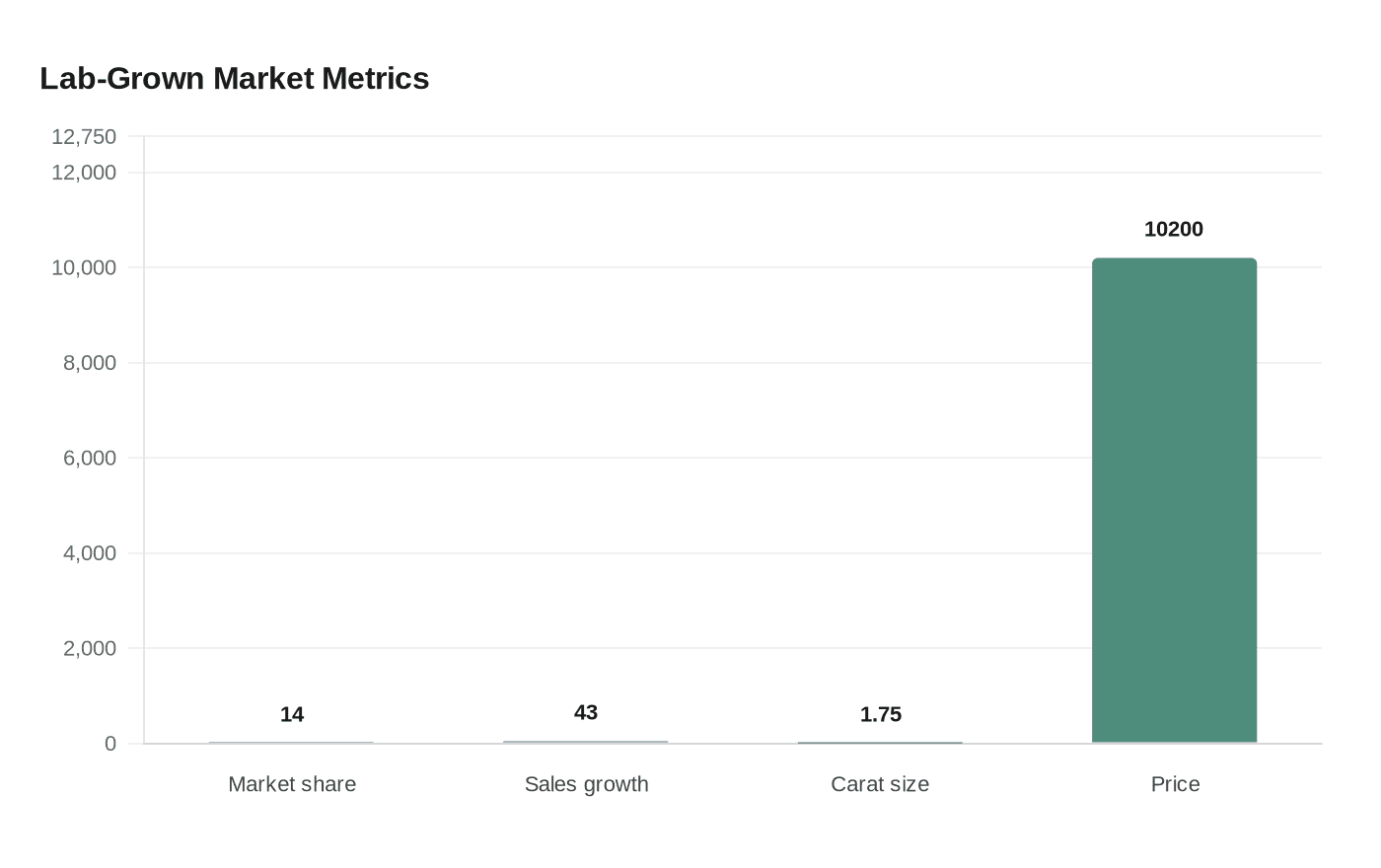
Before you spend a single dollar on a lab-grown ring, Calms Jewelry’s Ripple makes the real question plain: do you want a diamond that blends into a familiar solitaire formula, or one where the setting is part of the story? The Ripple is one-of-a-kind, built around a 1.75-carat IGI-certified lab-grown diamond, cut in a distinctive heptagonal step cut and set in solid 18K yellow gold, with a listed price of $10,200.
That price sits inside a category that is still expanding, but also under pressure. Lab-grown diamonds accounted for 14% of the U.S. jewelry market in 2024, and lab-grown diamond jewelry unit sales rose 43% that year. In a market where margins are being squeezed and sameness is everywhere, Calms is staking out a different position: not cheaper, not louder, but more deliberately made.
The heptagonal cut changes everything
The stone is the reason the ring reads so differently from a standard engagement ring. A heptagonal step cut is unusual enough to stop the eye, but the shape also changes how the ring wears on the hand. Instead of the soft roundness of a classic brilliant or the hard corners of an emerald cut, the seven-sided outline gives the ring a graphic edge that feels architectural, almost signet-like in its presence.
That matters because unusual cuts do more than look distinctive. They can make a diamond feel larger or more dominant visually, not because the carat weight changes, but because the eye follows the outline and the uninterrupted geometry of the face. Here, the stone is not hidden inside a familiar mounting. It is the hero piece, and the setting has to earn its place beside it.
Gold that moves with the stone
Calms names the ring Ripple because the design is rooted in the movement of water, and that idea shows up in the way the gold wraps around the diamond. Rather than competing with the stone, the sculptural band layers gold outward from it, echoing the diamond’s geometry while softening its edges. Brittany Siminitz of JCK describes the ring as a laboriously realized sculptural piece, with echoes of ribbed rings from the 1980s, but the effect here is less nostalgic than refined.
That balance is what gives the ring its visual discipline. Solid 18K yellow gold brings warmth and weight, while the step-cut diamond keeps the whole piece crisp. For the wearer, that combination can be more versatile than it first appears: the ring has enough presence to stand alone, but it also reads cleanly beside a plain band or a minimalist stack because the shape itself does so much of the work.
Why the craftsmanship carries real weight
Jennifer O’Brien, founder of Calms Jewelry, said the Ripple ring is one of the most time-intensive pieces she has created to date. She said the sculptural form required multiple rounds of refinement to achieve both visual balance and structural integrity around the one-of-a-kind heptagonal diamond. That kind of iteration matters, because a ring like this lives or dies on proportion.
O’Brien also said she knew the lab-grown diamond would be a hero piece for the brand, but had to try many sketches before finding a setting substantial enough for the stone. The project took more than five months from digital modeling through multiple castings, with help from several CAD experts in New York City’s Diamond District. That timeline tells you something the price tag alone cannot: this is not a quick design wrapped around a commodity stone. It is an engineered object, built to hold an unusual diamond securely while still looking fluid.
New York provenance gives the ring its backbone
Calms Jewelry is based in New York City and says it makes its pieces there, using recycled 18K gold and platinum with lab-grown diamonds. Its bespoke work is handcrafted in Midtown Manhattan, and the brand also offers custom engagement rings and can source natural diamonds, antique gemstones, or lab-grown diamonds through its New York network. That mix of modern materials and local craft gives Ripple a stronger claim than the average lab-grown release, because the brand is not leaning only on the stone’s origin. It is also selling process, place, and finish.
The New York context matters, especially for a piece that is so visibly shaped by hand and digital modeling. The city’s Diamond District on 47th Street traces its roots to diamond trading on Maiden Lane in the 1790s, with businesses shifting uptown in the 1920s. Ripple lands in that long tradition with a contemporary twist: a lab-grown center stone, a sculptural setting, and a made-in-New-York identity that is about craftsmanship rather than nostalgia.
When an unconventional design is worth the premium
The premium makes sense when the design changes how the ring functions, not just how it photographs. Ripple does that by combining an unusual heptagonal stone with a setting that seems built around the gem’s exact geometry. The result is more than novelty, because the shape, the gold, and the proportions all work together to create a ring with a clear point of view.
It is less compelling if your only goal is maximum carat weight for the lowest price. In that case, the market is full of conventional lab-grown options that will cost less and look closer to what most people expect from an engagement ring. Ripple is for someone who wants the opposite: a ring with visible authorship, tighter craft, and a silhouette that can hold its own in a room.
- Choose this kind of design if you want the setting to be as memorable as the stone.
- Choose it if you value third-party certification, in this case IGI, alongside design.
- Choose it if you want a piece that feels made, not merely assembled.
That is the real appeal of Ripple. In a category crowded with interchangeable solitaires, it shows how a lab-grown diamond can become something sharper, more sculptural, and far harder to dismiss as ordinary.
This article was produced by Prism’s automated news system from verified source data, official records, and press releases, then run through automated quality and moderation checks before publishing. The system is built and supervised by the people who set the standards it runs under. Read our full AI policy.
Did this article answer your question?