Danielle Sultan debuts architecture-inspired Lozenge ring with 6.15-carat diamond
Danielle Sultan’s Lozenge ring centers a 6.15-carat natural diamond, but its real claim is a disciplined architectural language.
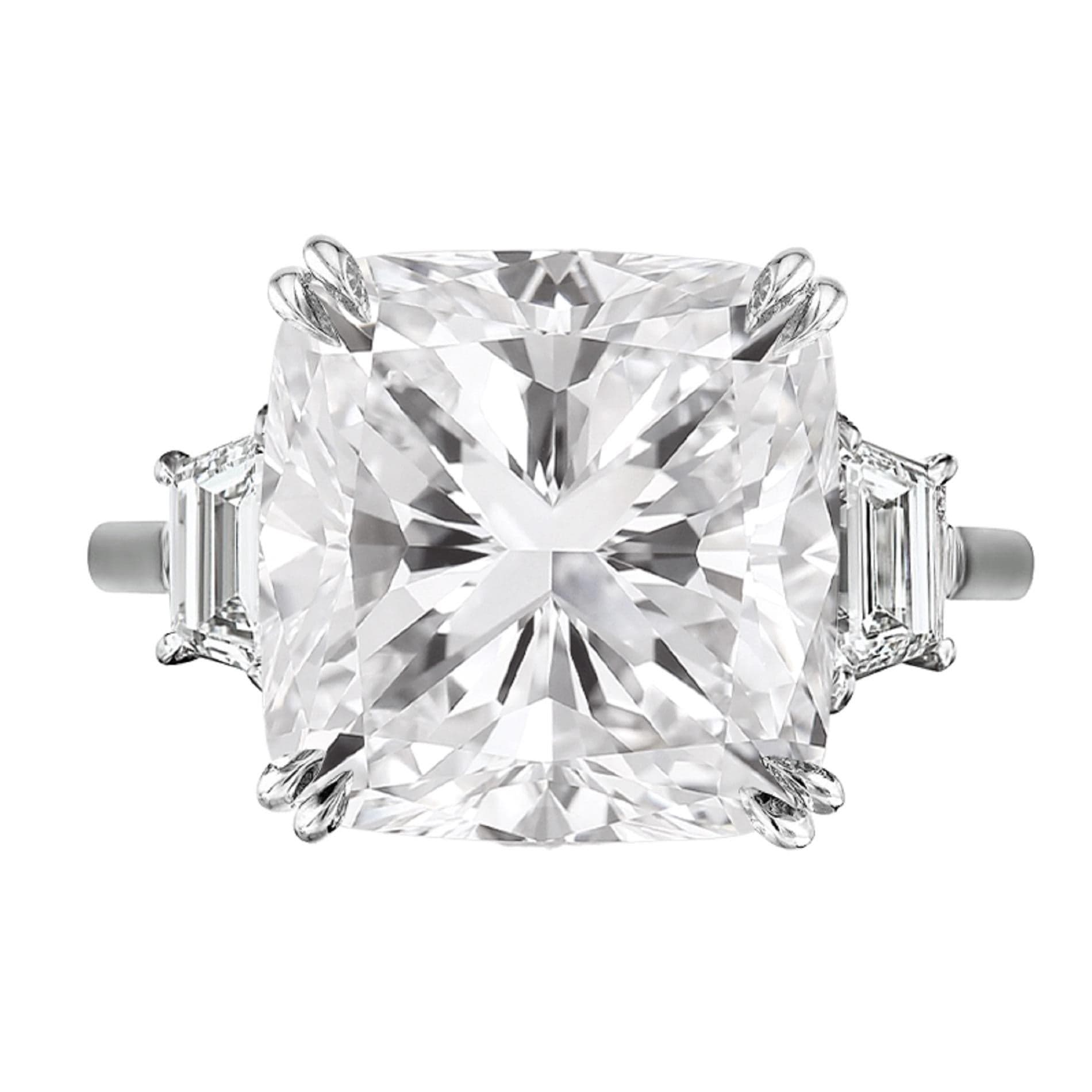
Danielle Sultan’s Lozenge ring does not try to outshout the diamond at its center. It uses a 6.15-carat natural stone, K color and VS1 clarity, then frames it with three gold contours that travel around both the gem and the hand, turning the setting itself into part of the composition.
That tension between jewel and structure is what gives the piece its force. The ring, in 18-karat gold and size 54, weighs 14.8 grams and comes with a GIA report. It is signed Danielle Sultan and numbered CT01, a small but telling signal that this is meant to read as collectible design, not a one-off flourish. The Lozenge ring was introduced at the beginning of 2026 and later shown at PAD Paris in April, where it entered the high-jewelry conversation with a distinctly architectural accent.
Sultan’s point of view is rooted in architecture before it is rooted in jewelry. New York-born and Paris-based, she earned a master’s in architecture from Columbia University, worked in the Paris office of Kengo Kuma, then trained at the Haute École de Joaillerie. That path matters because the Lozenge ring feels less like a conventional cocktail ring than a study in proportion, void, and line. Its geometry is sharp without becoming severe, and its lozenge motif gives the stone a modernist frame that nods to Art Deco without simply repeating it.

The references she cites, Suzanne Belperron and Gérard Sandoz among them, place her in a lineage of 20th-century French designers who treated ornament as an idea as much as a surface. Sultan’s one-of-one pieces are realized through private commissions, sometimes using gemstones already owned by collectors and sometimes stones sourced for a specific project, with work carried out in ateliers between Paris and New York. That production model gives the debut collection a degree of intimacy, but it also raises the question of scale: can a language this tailored extend beyond a small circle of commissions?
For now, the answer looks promising. In a market where many new high-jewelry launches lean on familiar tropes, Sultan has chosen a stricter route: a natural diamond, a precise cut of gold, and a structure that treats the hand as a site of architecture. The result feels less like a nostalgic revival than a careful reinterpretation, with enough discipline and clarity to suggest commercial potential if she can preserve that balance as the line grows.
This article was produced by Prism’s automated news system from verified source data, official records, and press releases, then run through automated quality and moderation checks before publishing. The system is built and supervised by the people who set the standards it runs under. Read our full AI policy.
Know something we missed? Have a correction or additional information?
Submit a Tip