De Beers expands Desert Diamonds into bridal jewelry categories
De Beers is steering Desert Diamonds into bridal staples to defend natural-diamond demand where retailers sell most consistently. The move is as much about inventory and pricing power as it is about style.
A category defense, not a fashion flourish
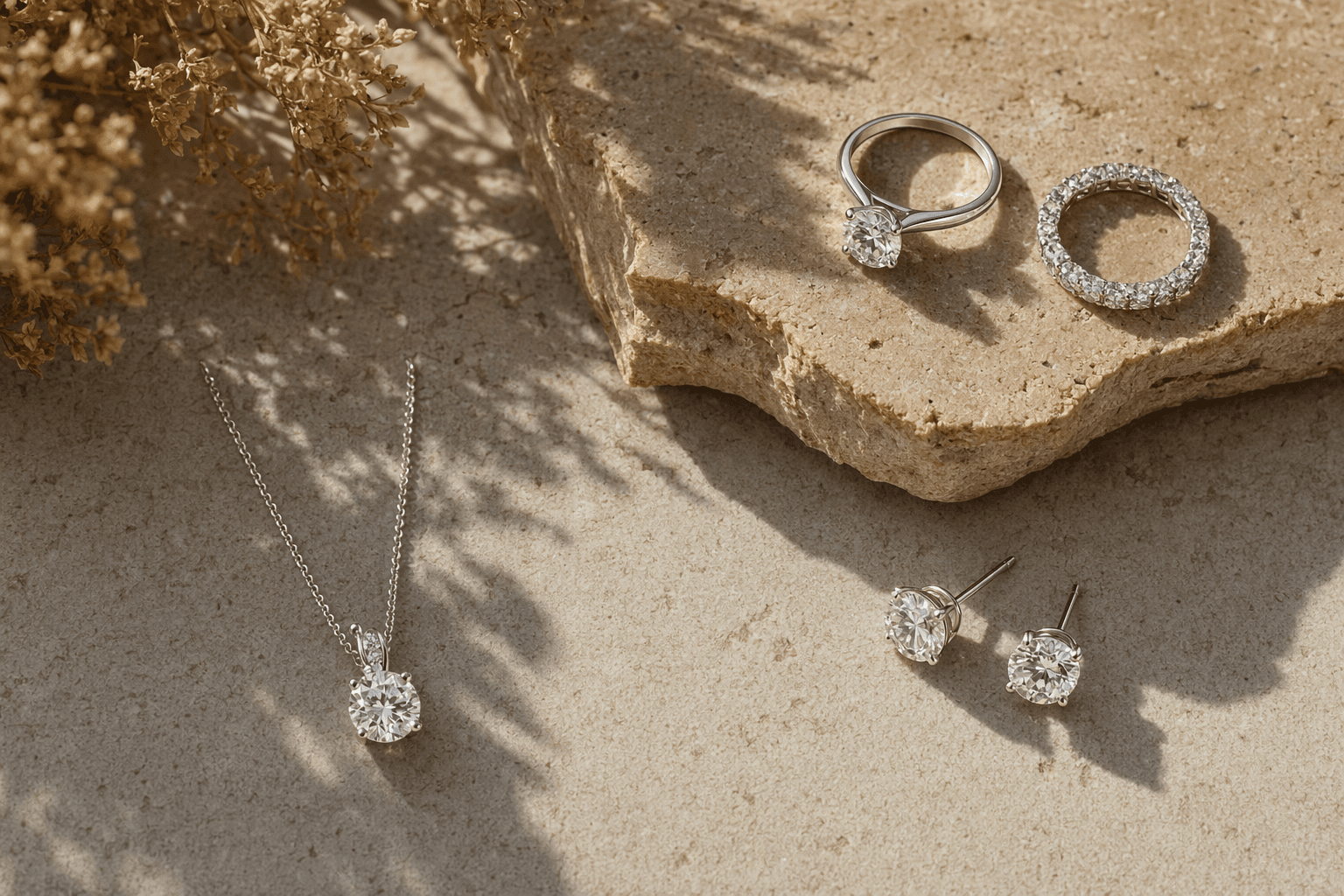
De Beers is not pushing Desert Diamonds as a novelty for the vitrines. It is trying to plant the idea where natural diamonds still matter most: the solitaire, the three-stone ring, the wedding band, the eternity band, and the classic bracelet and stud categories that keep jewelry counters turning. That is the point of the expansion into bridal and core jewelry, and it is why the company is now building a store-locator path for a product many retailers do not yet carry.
The strategy reads less like a brand story than a defense of the category itself. In a market where lab-grown stones can be manufactured to look closely alike, De Beers is narrowing the conversation to the pieces consumers already recognize as milestones, anchors, and repeat purchases. If the company can keep natural diamonds visible in those bread-and-butter formats, it has a better chance of protecting both shelf space and the premium that comes with it.
Why these formats matter now
The list of target pieces is telling. De Beers is starting with three-stone rings, eternity bands, wedding bands, and solitaires, then extending the message to tennis bracelets, halo pieces, and stud earrings. Those are not random additions. They are the kinds of designs that sell in familiar cycles, travel well across price points, and give jewelers a straightforward way to explain natural-diamond value without inventing a new buying occasion.
That is also why the timing matters. De Beers says Desert Diamonds was first unveiled as a beacon in October 2025, backed by the company’s largest category marketing investment in more than a decade. Its consumer testing found more than 90 percent of consumers said they would like to own and would consider purchasing a desert diamond, while the idea generated more than 250,000 mentions and 450 million views across digital platforms over two years. Those numbers suggest the concept has already landed emotionally; the next question is whether it can land commercially in the cases where most consumers actually buy.
The color story behind the campaign
De Beers is using “desert” as more than a poetic label. Sally Morrison, who leads the company’s natural-diamond work, said focus-group participants made an immediate connection to Earth, renewal, and rebirth, which is exactly the kind of language natural diamonds need if they are to feel distinctive in an age of manufactured alternatives. The company is also pressing a basic point that many consumers still miss: diamonds come in multiple colors, and no two natural stones are exactly alike.
That is the deeper competitive argument. Lab-grown diamonds may offer visual similarity, but De Beers wants Desert Diamonds to stand for geological individuality, the idea that a stone formed over time should reflect the wearer rather than simply match a template. The warm-toned palette, including cream, champagne, and brown stones, reinforces that message. In bridal, where symbolic meaning carries real retail weight, those tones create a softer, more personal alternative to the single-minded white diamond standard.
Getting the product into the store matters most
For all the campaign language, distribution is the commercial bottleneck. JCK reported that many consumers may like the concept, but most stores do not yet stock Desert Diamonds, which is why De Beers is pairing the campaign with a store-locator effort and focusing the retail message on specific objects that are easier to merchandise. That is smart strategy: a concept without inventory is just mood lighting.
The company says the bridal campaign will run as an industry-wide umbrella program intended to create demand for natural diamonds, not just one line or one designer. It is appearing across digital, social, out-of-home, and publishing channels, including Brides, Martha Stewart, and People Inc. properties, with an estimated reach of 25 million American consumers. Retail partners are already part of the picture, including Jared Jewelers through Storied Diamond - Desert Sands of Eternity™ and KAY Jewelers through Neil Lane’s Desert Diamonds, a sign that De Beers wants breadth as much as it wants buzz.
What this says about inventory and pricing power
The logic here is as commercial as it is aesthetic. By concentrating on the pieces that anchor bridal cases and everyday fine jewelry, De Beers is trying to support the most repeatable sales categories in the store. A solitaire or eternity band is easier to merchandise, easier to explain, and easier to compare against lab-grown alternatives than a more obscure fashion piece, which means the battle for pricing power happens in a familiar setting where natural diamonds can still claim tradition, permanence, and emotional meaning.
It is also a way to keep the industry focused on categories with proven turnover rather than letting lab-grown diamonds define the value conversation in the broad middle of the market. The more De Beers can make Desert Diamonds feel like a normal part of bridal and staple inventory, the less room there is for the idea that natural diamonds belong only at the top end. In that sense, the campaign is not about adding a new style language so much as reclaiming the old one.
A familiar playbook, sharpened for a tougher market
De Beers has used category-wide beacons before, and Desert Diamonds clearly sits in that lineage alongside earlier ideas such as the three-stone ring, the eternity ring, and the right-hand ring. In June 2025, the company also introduced Origin: De Beers Group and a separate beacon, Ombré Desert Diamonds, which was slated for Signet and potentially other retailers. The pattern is clear: De Beers is not betting on a single product hit, but on a system of category cues that can reframe how consumers shop.
The urgency behind that system is hard to miss. Paul Rowley has described the market as one of the worst crises he has seen, with pressure from lab-grown diamonds and weaker demand in China. De Beers’ 2025 interim results showed first-half sales volumes of 12.3 million carats, down from 12.7 million a year earlier, and an underlying EBITDA loss of $189 million, while the company also cut rough-diamond prices to move inventory. Against that backdrop, Desert Diamonds looks less like a styling story than a bid to keep natural diamonds at the center of the trade where it still counts most.
Know something we missed? Have a correction or additional information?
Submit a Tip