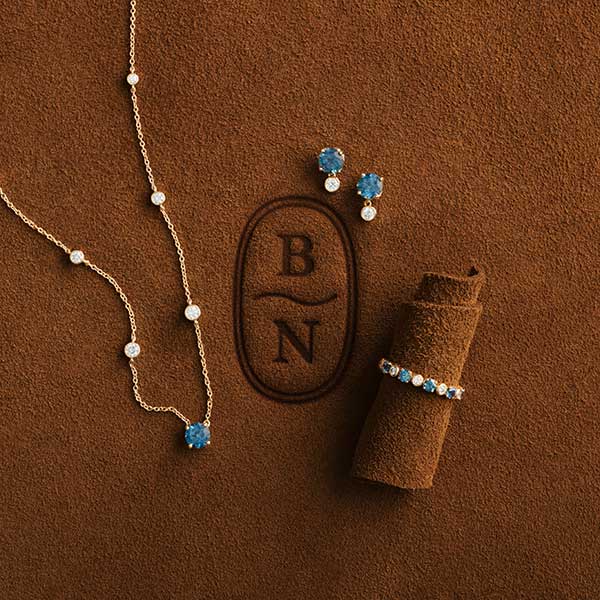
Designer of Taylor Swift's Engagement Ring Launches Antique Bridal Line
Kindred Lubeck, designer of Taylor Swift's old mine-cut engagement ring, launched Artifex Bridal on April 10 with antique-cut pieces sold in drops of just 25 per quarter.

Taylor Swift's left hand did something to the jewelry industry on August 26, 2025 that a decade of trade shows could not. The Instagram post showing her engagement ring from Travis Kelce collected 37 million likes, introduced millions of followers to terminology they had never encountered, such as old mine brilliant cut, bezel setting, and hand-engraved band, and made Kindred Lubeck, the New York goldsmith who built the ring from scratch, one of the most searched names in bridal jewelry. On April 10, Lubeck converted that moment into something more permanent: the launch of Artifex Bridal, a structured bridal line built on the same craft principles as the ring that started it all, released in deliberately small batches, at 4 p.m. EST, with no promise that anything produced under it will outlast the current quarter.
Lubeck is the goldsmith behind Artifex Fine Jewelry, recently made famous for designing Taylor Swift's engagement ring. She is more intimately celebrated for her sculptural silhouettes, antique sensibilities, and hand-engraved details that feel as personal as handwriting. The ring that Travis Kelce presented to Swift was an old mine brilliant-cut diamond, bezel set in yellow gold with hand-engraved details, exemplifying the vintage traditions that define Artifex Fine Jewelry. Kelce reportedly worked alongside Lubeck to embed the piece with special Easter eggs dedicated to the pop star, and the result was a commission that reportedly carried a seven-figure price tag. Lubeck had no plans to reproduce it. Taylor's particular ring, she confirmed, will remain one of a kind.
Swift expressed her admiration in an interview on Heart Breakfast, noting her immediate recognition of Lubeck's distinctive style. Lubeck's response: "The fact that she recognized my work, that is such an incredible honor." The recognition was mutual in a cultural sense, too. Swift's post gave Lubeck's name the kind of circulation that small-batch goldsmiths spend careers hoping for and rarely receive.
The Artifex Bridal collection that launched yesterday gives that audience a structured point of entry. The seven engagement rings and five bridal pieces feature antique cut diamonds all hand-selected by Lubeck. Antique-cut stones are not a category that lends itself to algorithmic sourcing: old mine cuts and old European cuts predate the standardization of diamond proportion charts, and no two read identically. Each one was shaped in the Georgian or Victorian era before precision machinery arrived, and the result is a faceting style defined by a higher crown, larger facets, a visibly open culet, and an optical profile that differs substantially from a modern round brilliant. Where the brilliant scatters hard, white light across a room, an old mine cut gathers and holds it, producing the warmer, softer glow that collectors associate with candlelight diamonds. That quality is why estate dealers and serious collectors have pursued old mine cuts for decades, and why the Swift ring photograph communicated an aesthetic so distinct that viewers who had never encountered the term could immediately sense the difference.
Lubeck announced Artifex Bridal in Vogue. The collection, in her framing, consists of "engagement rings, wedding bands, and other fine jewelry intended to carry a bride through her engagement and beyond." That description matters because it signals how she thinks about bridal jewelry: not as a single centerpiece stone but as a wardrobe of related objects that a person will wear across years. The five bridal pieces reflect that ambition. Among them, a wedding band with channel-set baguettes and a milgrain border, and a tennis bracelet with a hand-engraved sunburst motif and invisible clasp.
Each of those details carries specific technical meaning. Channel-set baguettes run in a continuous groove of metal with no prongs interrupting the stone line, a setting style that protects the stones and reads as sleek and geometric even on a band with antique-era proportions. Milgrain, the tiny beaded border pressed along the edge of a metal surface, first appeared on European jewelry in the late nineteenth century and became a signature of the Edwardian period. Done by hand, it shows slight irregularities around the circumference that distinguish it immediately from laser-etched facsimiles. And the hand-engraved sunburst on the tennis bracelet is a demonstration of Lubeck's core technique applied to a form that most houses treat as pure stone and setting: engraving the metal itself, turning what is typically a structural element into a surface with its own drawing.
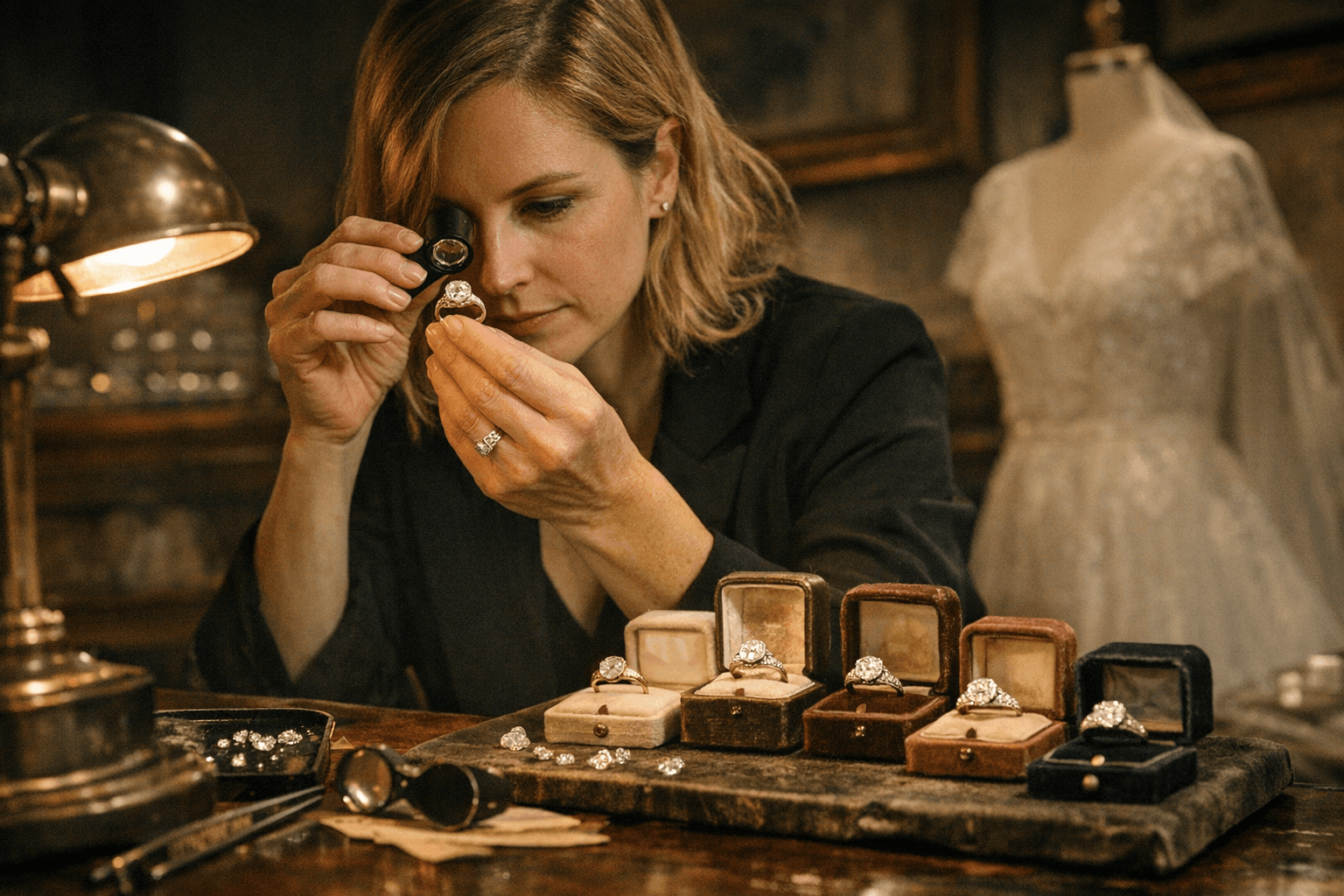
The scale of the line is the other defining characteristic. "Mass producing is wholly against the ethos of the brand," she said, explaining that she plans to do quarterly drops of around 25 rings. The rationale behind that number is craft-based rather than marketing-strategic. She produces only ten rings annually to maintain quality over quantity. She personally selects each stone and collaborates with trained jewelers to integrate her hand-engraving techniques. Lubeck articulated the underlying philosophy clearly: "It's such a special moment to get engaged. It fundamentally does not feel right to pick out something that is exactly the same as someone else gets."
That position places Artifex Bridal in deliberate opposition to the direction that much of the bridal market has moved. Mass-production engagement ring retail is built on SKUs, standardized settings, and interchangeable stones. Lubeck's model is closer to the way bespoke commission work has always operated, except that the quarterly drop structure gives buyers a calendar rather than a commission waitlist.
For anyone drawn to the Lubeck aesthetic who wants to pursue it independently, whether because the quarterly drop is already sold out or because the budget calls for a different approach, the antique look starts with the cut. Ask a jeweler specifically about old mine cuts, old European cuts, and rose cuts before discussing anything else. These are the three main pre-industrial faceting traditions, and each produces a distinct optical character. An old mine cut has a squarish outline and pronounced culet; an old European cut is rounder with a smaller table; a rose cut is flat-bottomed with a domed top and no culet at all. Any of the three reads as genuinely antique when sourced from estate stock. Lab-grown diamonds are now produced in old mine proportions by specialist cutters, and they represent a meaningful price reduction of 20 to 40 percent compared to mined equivalents, without sacrificing the visual character that makes the cut distinctive.
For settings, the Lubeck signature combines a bezel mount in yellow gold with worked metal surfaces. A bezel wraps the stone's girdle in a continuous rim, protecting the edge and lending the piece an organic quality that prong settings do not produce. Yellow gold amplifies the antique reference; platinum or white gold makes the same setting read as more modern, even with an old-cut stone at its center. Milgrain borders and hand-engraved band surfaces are the finishing details that separate the antique look from a vintage-inspired approximation. When speaking to a jeweler, ask whether milgrain is hand-pressed or laser-applied, whether engraving is done in-house or outsourced, and whether the old mine stone they are showing you is a genuine antique, a modern recut, or a lab-grown reproduction in antique proportions. The answer to each question tells you something real about what you are buying.
Artifex Bridal by Kindred Lubeck will consist of quarterly drops of roughly 25 rings each, along with bracelets and earrings to match, plus more bridal options, with no two pieces exactly alike. Lubeck grew up in her father's goldsmith shop in Neptune Beach, Florida, learned classical metalsmithing techniques, and built a practice around work that most commercial jewelers have never attempted. The Swift moment did not change any of that. What it did was make 37 million people suddenly curious about what a bezel-set old mine diamond looks like on a hand, and what it means for a piece of jewelry to be made by someone who cut their teeth on hand engraving before celebrity attention was even a possibility. Artifex Bridal is the answer she chose to give.
This article was produced by Prism’s automated news system from verified source data, official records, and press releases, then run through automated quality and moderation checks before publishing. The system is built and supervised by the people who set the standards it runs under. Read our full AI policy.
Did this article answer your question?