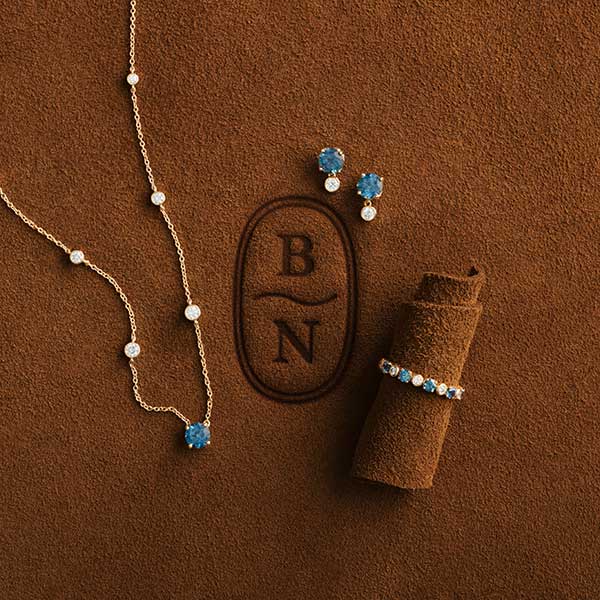
Ethera's Akshaya Tritiya Edit Brings Lab-Grown Diamonds to Everyday Wear
Ethera's Akshaya Tritiya edit reframes festival jewellery buying with lab-grown diamonds designed for daily wear, backed by nine stores in one year.
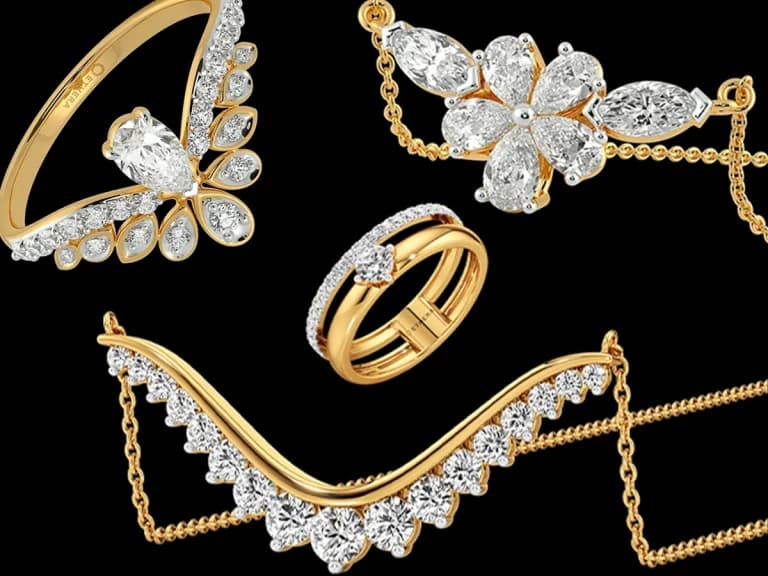
Picture the jewellery drawer in the average Indian home: a pendant that came out twice, a ring purchased for a past Akshaya Tritiya and retired to its velvet box, a bracelet still waiting for the occasion that never arrived. Ethera, the Bengaluru-based lab-grown diamond brand founded in 2024 by Nitesh Jain and Sharad Arora, has built its Akshaya Tritiya Edit around a direct challenge to that pattern.
The collection spans solitaires, clusters, pendants, lightweight rings, and bracelets, all positioned around day-to-day wearability rather than ritual acquisition. Akshaya Tritiya, observed on April 19 this year, is considered among the most auspicious jewellery-purchasing moments in the Indian calendar, an "Abujh Muhurat" in which no specific timing is required for purchases to be considered blessed. The most concentrated window for gold buying runs from 10:49 AM on April 19 to approximately 6:14 AM on April 20. Ethera's argument is that the pieces bought in that window should not wait years for another auspicious occasion to justify wearing them.
That argument requires the jewellery to actually hold up. Wearability is a design brief with technical requirements, and the gap between a piece described as "everyday" and one built for it is visible in the details of construction. Settings, specifically, are where evaluation should begin.
The bezel setting, in which a continuous or partial rim of metal wraps flush around the stone's girdle, is the most practical choice for pieces worn daily. It eliminates the exposed prong tips that snag on fabric and catch on sleeves, reduces the chance of chipping the diamond's edges against hard surfaces, and keeps the overall profile low enough to sit comfortably under a cuff. For a solitaire pendant intended for five-day-a-week wear, the bezel or flush-set construction is the detail that separates a piece built for living in from one built for the box.
Prong settings, by contrast, maximise the light entering a stone from all angles, making them the right choice where brilliance is the priority. A four-prong or six-prong solitaire ring will always outperform a bezel for fire and scintillation in daylight. The practical trade-off is maintenance: prongs require annual checks by a jeweller, and rounded, well-polished tips reduce snag risk significantly. For earrings and stud formats where wear stress is lower, prong settings are the obvious choice. For a bracelet worn against a desk all day, a channel or tension setting is structurally sounder than individual prongs and reduces the chance of a stone working loose over time.
On carat weight, the everyday case is strongest in the 0.25 to 0.75 carat range. A well-cut 0.30 carat round brilliant delivers significant optical presence on the hand without the height profile that makes a larger stone awkward at a keyboard. Lab-grown diamonds are chemically and optically identical to mined stones. A VS2 clarity, F-G colour stone in this range shows no inclusions visible to the naked eye, faces up white under office lighting, and carries a fraction of the price of a mined equivalent. That price accessibility is the structural reason lab-grown diamonds function as a rotation choice rather than a once-a-decade purchase.
For a starter rotation from Ethera's Akshaya Tritiya Edit, three pieces cover the full week without competing. A solitaire or cluster pendant for the neckline works in formal and casual registers, layers without effort, and disappears under a collar when unnecessary. A pair of stud earrings or small hoops in a solitaire or cluster format is the single most versatile jewellery investment in any wardrobe. A slim diamond bracelet or tennis-style band, at a lower carat weight and finer gauge, reads as contemporary rather than formal and survives a working day without drama.
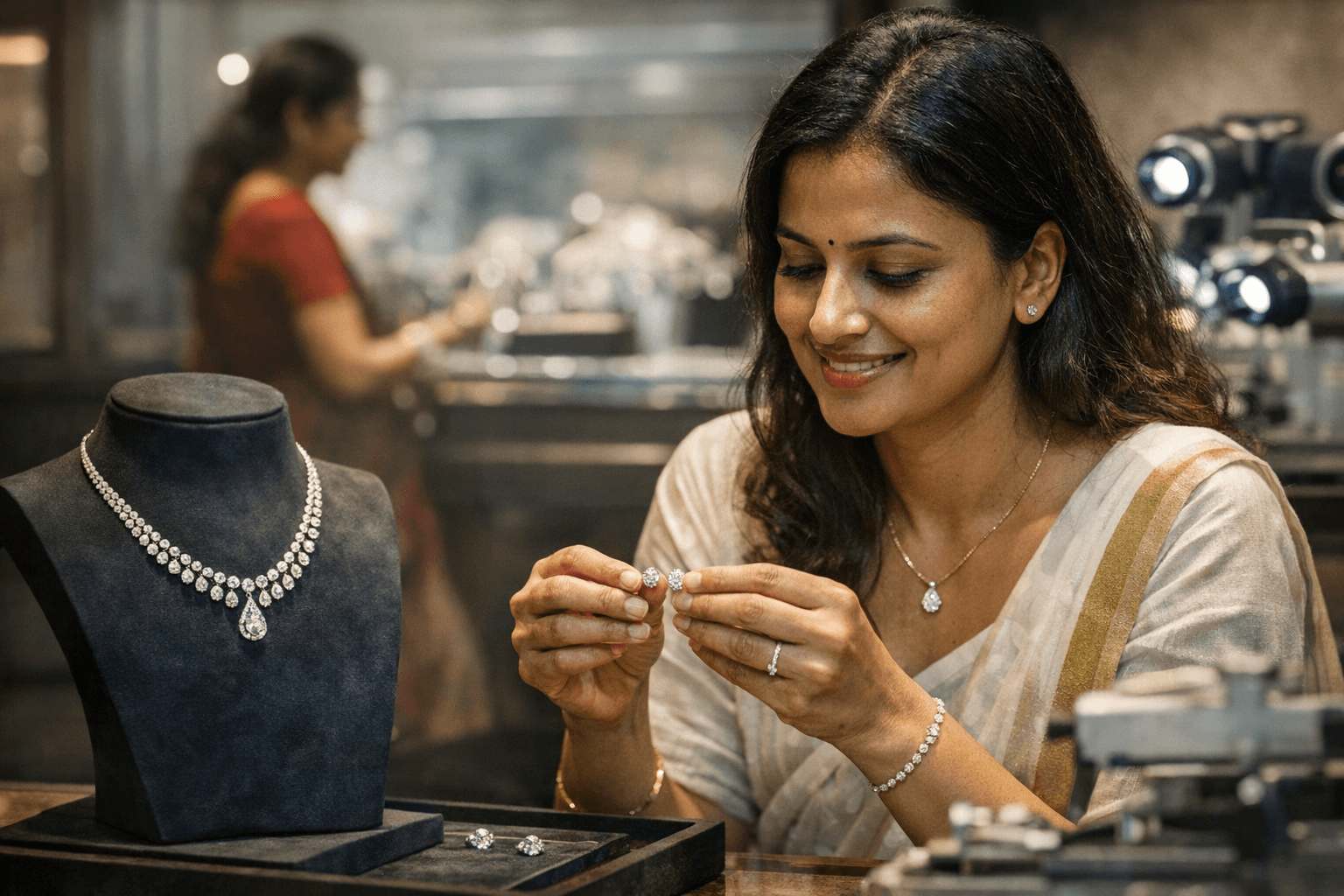
Quality evaluation on any lab-grown diamond piece requires three non-negotiable checks. Ask for a grading certificate from the International Gemological Institute (IGI) or the Gemological Institute of America (GIA); both certify lab-grown stones, and the report should be cross-referenced against the actual piece in hand. Examine the setting finish in strong direct light: uneven bezel walls, rough prong tips, visible solder joints, or asymmetric stone placement indicate production shortcuts that reduce longevity. Confirm BIS hallmarking on the metal for gold purity. Ethera subjects each piece to a 40-point quality check across its full catalogue of more than 200 new designs launched monthly, a pace that makes standardized process controls the practical foundation of consistent quality rather than an optional layer.
The retail expansion timed with this launch is itself a statement. In April 2026, Ethera opened stores in Bengaluru's Indiranagar and Electronic City neighborhoods, New Delhi's DLF Midtown, and announced a fourth incoming location at Gurugram's Elan Miracle Mall, bringing the total store count to nine within approximately one year of the brand's founding. For a digital-first brand, the investment in physical space reflects a straightforward truth about fine jewellery: customers who discover a piece online still want to hold it before committing. The stores are designed for that final confirmation step in the purchase process.
Co-founder Sharad Arora described the foundation of that approach: "Everything we're building at Ethera starts with a deep understanding of the customer, category, and long-term opportunity, shaping a brand rooted in strong design, transparent values, and a seamless omnichannel experience."
The market context behind the timing is substantial. India's lab-grown diamond jewellery segment is valued at USD 453.7 million in 2026 and projected to reach USD 1,798.6 million by 2036 at a 14.8% compound annual growth rate, according to Future Market Insights. Globally, the category is projected to expand from USD 29.73 billion in 2025 to USD 108.98 billion by 2035 at approximately 13.87%, according to Precedence Research. India processes roughly 90% of the world's rough diamonds, and polished lab-grown diamond exports are growing at approximately 55% annually per the Gem and Jewellery Export Promotion Council. Titan's entry into the category with its 'beYon' brand has given the segment mainstream credibility it lacked three years ago.
BlueStone, which doubled its earlier investment in Ethera with a ₹25 crore round in February 2026, went public in August 2025 with an IPO raising up to ₹1,540.65 crore, and posted ₹1,830 crore in FY2025 revenue across more than 275 physical stores. Its sustained investment in Ethera carries institutional weight: BlueStone is now a publicly listed company making capital allocation decisions on record, not a private backer taking speculative positions.
The word Akshaya means "never diminishing." The most durable version of that promise, for a generation of buyers who wear what they own, is a piece of jewellery that actually gets worn.
This article was produced by Prism’s automated news system from verified source data, official records, and press releases, then run through automated quality and moderation checks before publishing. The system is built and supervised by the people who set the standards it runs under. Read our full AI policy.
Did this article answer your question?