Dior, Piaget, and Bvlgari Unveil Diamond High-Jewellery Collections in 2026
Dior's 57-piece Belle Dior collection, Piaget's 75-diamond Possession pendant, and Bvlgari's archive-rooted Eternal line show how the maisons are redefining wearable high jewellery in 2026.
Three of the most storied names in high jewellery made their intentions for 2026 unmistakably clear this past March, each presenting collections that push diamond craftsmanship into distinct, considered directions. Together, Dior, Piaget, and Bvlgari offered something rarer than spectacle: a coherent argument for what high jewellery can do when it refuses to simply dazzle and instead demands to be worn.
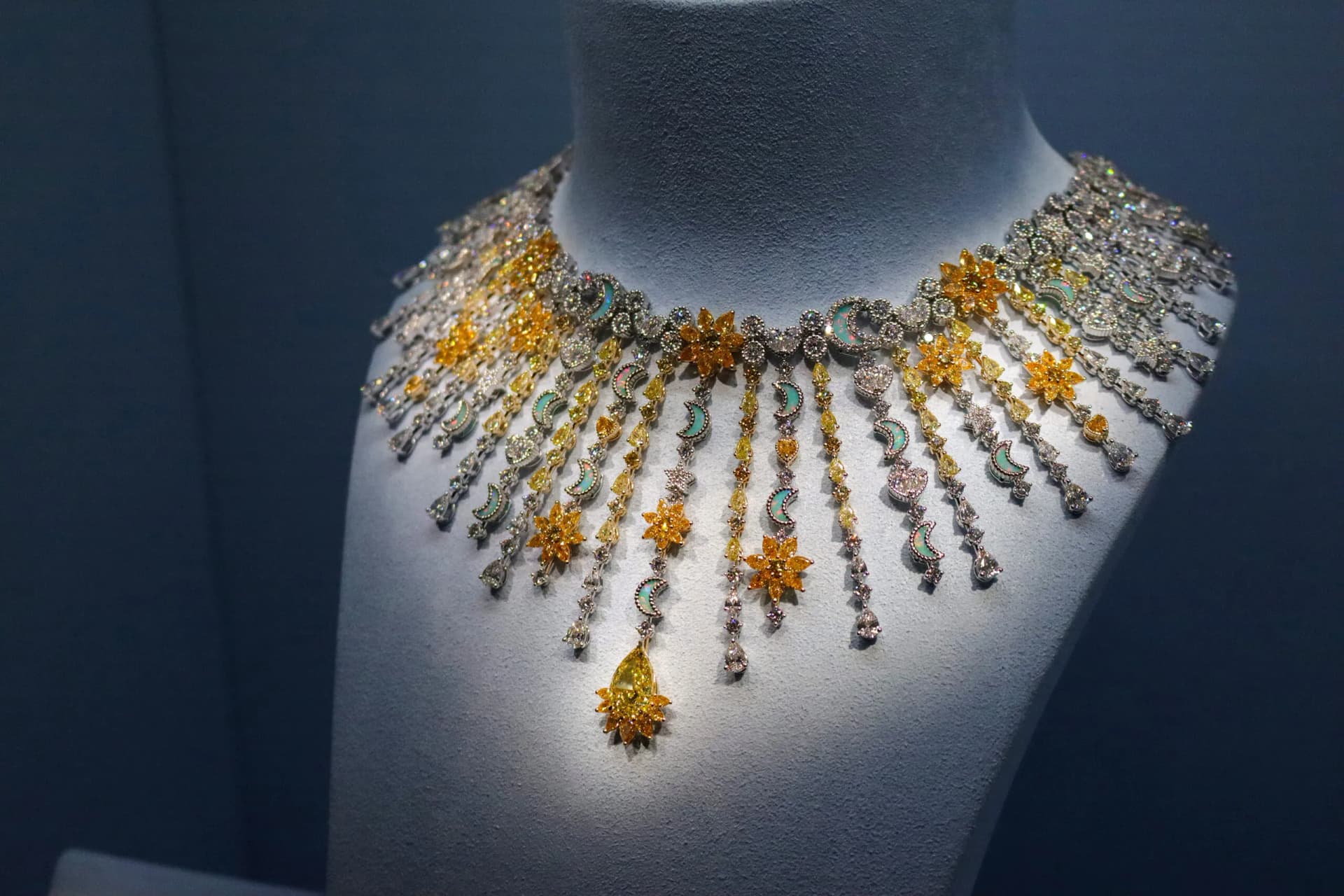
Victoire de Castellane's Belle Dior haute joaillerie collection centres on movement. Braiding, a longstanding signature of de Castellane's work, is pushed into vertical forms that hang and fringe rather than sit flat, recalling the swing of Dior's ball gowns or the upward pull of a flowering stem. Comprising 57 pieces, the collection draws on couture, nature, and celestial symbolism as overlapping themes. The hero of the collection is the Soleil Céleste necklace, embellished with a variety of gems crowned by a fancy vivid yellow pear-shaped diamond of 5.77 carats, described as a sun captured in stone. Symbolism deepens throughout: yellow diamonds form radiant points, while stars and moons carved from black opal doublets rest on turquoise, drawn from Christian Dior's own interest in divination. The result is a collection that reads as couture translated stone by stone, where the logic of an atelier draft governs the architecture of a necklace.
Where Dior argued for verticality and sweep, Piaget made the case for intimacy. The house's Possession pendant, set with 75 brilliant-cut diamonds totalling approximately 1.47 carats, distils the collection's central gesture: a jewel designed to be touched as much as seen. Piaget's Possession setting holds the central diamond between two gold-engraved brackets so the stone appears to stand proud, while the Decor Palace engraving technique, inspired by the guilloché method traditionally used on watch dials, heightens the overall effect, allowing the precious metal to catch every ray of light. At 1.47 carats distributed across 75 stones, the pendant is an exercise in precision pavé rather than singular stone drama; it rewards closeness.
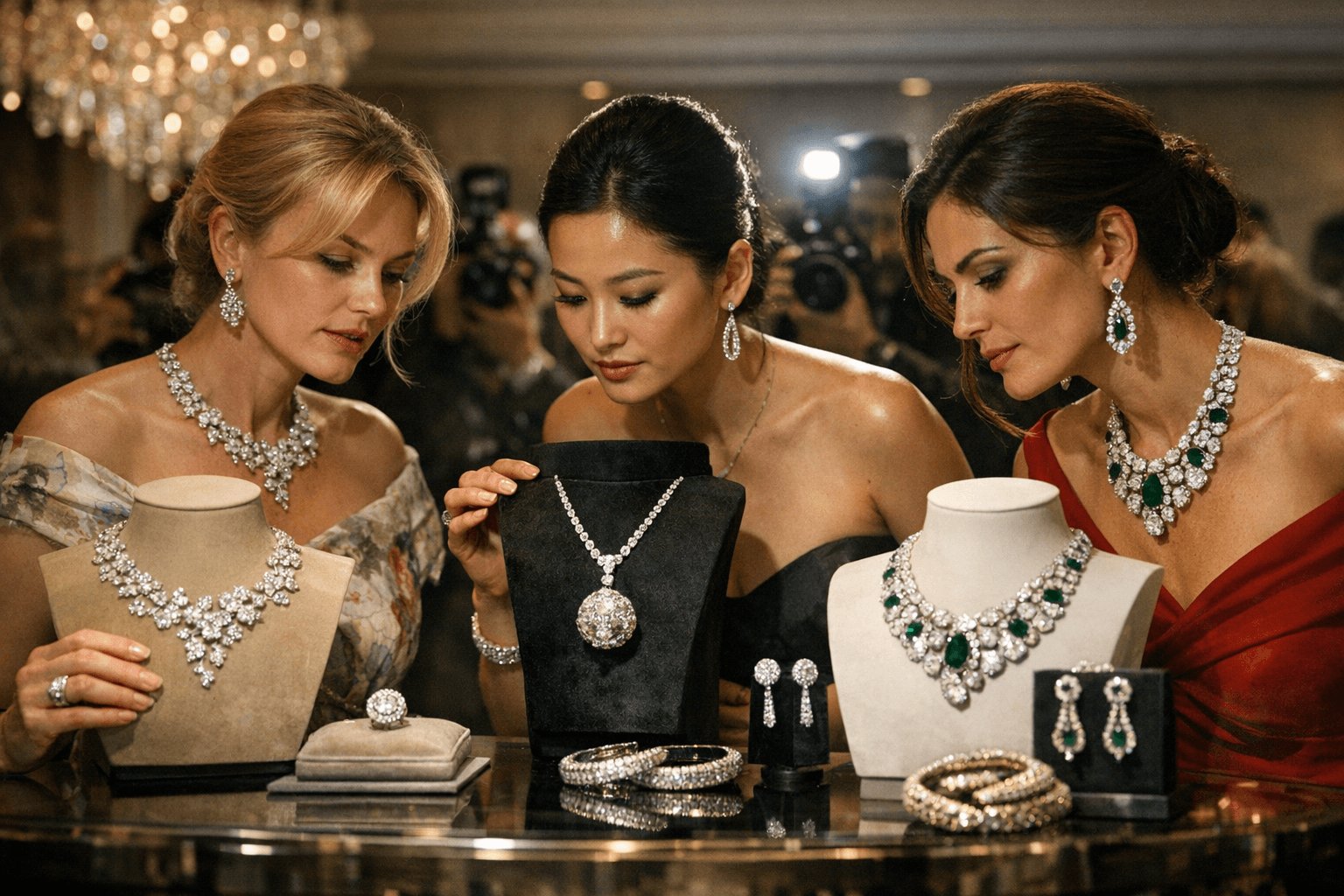
Bvlgari took the longest view of any of the three maisons, unveiling its Eternal collection in January 2026 as the opening chapter of a long-term journey through the house's archives. The collection begins with Vimini, a contemporary reimagining of a 1942 bracelet that helped define Bvlgari's early identity. The high jewellery pieces combine diamond-like carbon with carré-set diamonds and audacious forms, ranging from classic necklaces to bold poncho-style designs. The Vimini necklace made its public debut when Lisa wore it at the Golden Globes, a moment that collapsed the distance between archival research and cultural immediacy.
What connects these three collections is a shared conviction that diamond pavé and sculptural gold frameworks need not remain confined to the vitrine. De Castellane's fringed pendants move with the body. Piaget's spinning Possession logic gives even a small-stone pendant a tactile life. Bvlgari's DLC-and-diamond construction brings industrial modernity to an 84-year-old design. The most interesting question raised by all three maisons this season is not how many carats a piece carries, but how much of itself it gives away when worn.
This article was produced by Prism’s automated news system from verified source data, official records, and press releases, then run through automated quality and moderation checks before publishing. The system is built and supervised by the people who set the standards it runs under. Read our full AI policy.
Did this article answer your question?