Hearts On Fire CEO Shares Retail Strategy for Natural and Lab-Grown Diamonds
Hearts On Fire's North America president says the brand's average sale price nearly doubled after shifting to an elevation strategy focused on natural diamonds for affluent buyers.
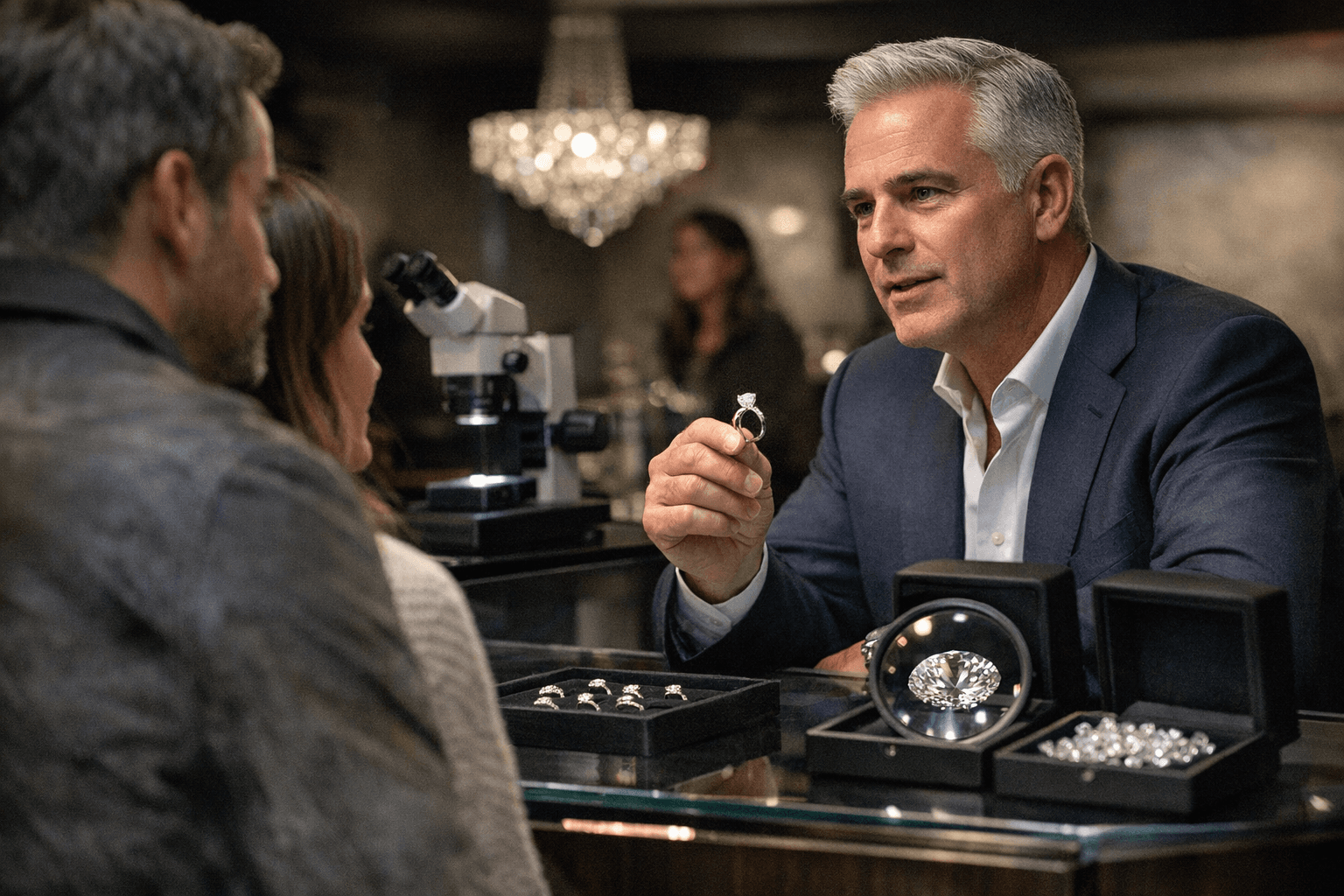
When Rebecca Foerster joined Hearts On Fire as president for North America in May 2022, she walked into a brand at an inflection point: a 30-year-old diamond label, owned by Chinese retail giant Chow Tai Fook since 2014, navigating a market that lab-grown stones had fundamentally reshuffled. Less than four years later, she has a striking data point to show for the strategy she chose: the brand's average sale price has nearly doubled.
Foerster appeared on the March 25 episode of "The Jewelry District," the video podcast produced by JCK and hosted by editor-in-chief Victoria Gomelsky and news director Rob Bates. The appearance came just 12 days after Foerster received the Jewelers Vigilance Committee's Stanley Schechter Award at the Rainbow Room in New York City, a recognition of her standing as one of the more pragmatic executives in the natural diamond world.
The core of her retail argument is a segmentation thesis she credits in part to diamond analyst Martin Rapaport, who told attendees at VicenzaOro that natural diamonds should go where the money is. Foerster said the line crystallized what Hearts On Fire had already begun doing. "That's why Hearts on Fire's elevation strategy was spot-on," she said, "because the people that appreciate natural diamonds have the money to spend on it. And they're buying more and more. Our average sale price almost doubled since we've taken on this strategy."
That elevation play means positioning natural diamonds at the top of the assortment and not competing on price with lab-grown alternatives, which Foerster does not dismiss. Her stance on the category is notably free of the defensive posturing common among natural diamond advocates. "Lab-grown diamonds are here to stay, and consumers demand them," she said. "I don't negative-sell the category; it has its place."
What she does insist on is clarity in how retailers talk about the difference. "We need to come together as an industry and be very clear and consistent in our messaging to the consumer so they understand exactly what they're buying, what makes a lab-grown different than a natural diamond, why the pricing is different," she said. "In the end, consumers are going to make the decision, but I at least want to make sure it's based on the right information."
The podcast segment, structured around timestamped topics including retailer best practices at the 20-minute mark and lab-grown's place in the market at 24 minutes, offers a window into how Foerster draws on a career that spans cosmetics and fragrance at Frederick Goldman, mining at Rio Tinto Diamonds and Alrosa, and advocacy at Diamonds Do Good. She described Hearts On Fire as the brand that originally drew her into the jewelry industry from the fragrance world, calling it "my beacon, my guiding light, the brand I wanted to aspire to."
Now, guiding it herself, Foerster's message to the retail floor is essentially: stop hedging, know your customer, and let price point do the sorting. For a brand whose signature cut is held to tolerances that only the top fraction of rough diamonds can meet, that clarity of positioning is, at minimum, consistent with the product.
This article was produced by Prism’s automated news system from verified source data, official records, and press releases, then run through automated quality and moderation checks before publishing. The system is built and supervised by the people who set the standards it runs under. Read our full AI policy.
Did this article answer your question?