GIA to add cut grades for marquise, oval and pear diamonds in 2027
GIA’s 2027 cut grades could redraw prices for marquise, oval and pear diamonds, giving fancy shapes a benchmark they have long lacked.

Marquise, oval and pear diamonds are heading toward a new price language. GIA said it will add cut grades for the three fancy shapes in 2027, a shift that could make some stones easier to sell at a premium and others harder to defend.
For decades, round brilliants have had the clearest grading logic in the market because their facet structure is standardized. Fancy shapes have not. GIA has long said there was no internationally accepted cut-grading system for fancy-cut diamonds, and that absence has left marquise, oval and pear stones priced as much by dealer judgment and visual appeal as by any shared benchmark. Once GIA’s grades arrive, the conversation changes from general beauty to measurable hierarchy.
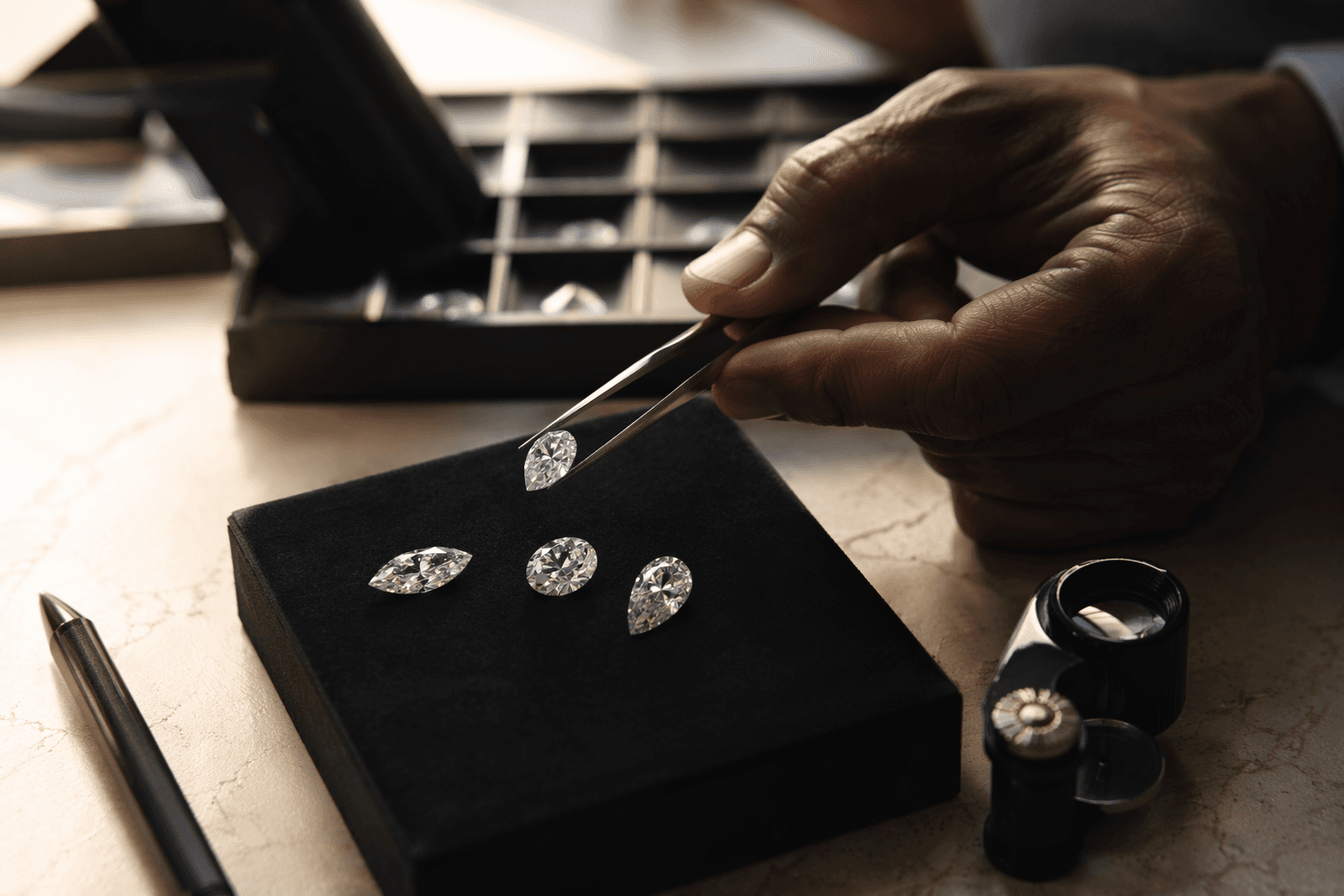
The groundwork was laid in a Fall 2024 Gems & Gemology paper that examined oval-, pear- and marquise-shaped diamonds for face-up appearance and outline appeal. An internationally diverse group of diamond buyers, sellers, cutters and appraisers observed research stones, while GIA researchers paired that feedback with 3D modeling and virtual facet maps. That matters because the trade has spent years debating whether the soft curves of an oval, the elongated point of a pear, or the sharp taper of a marquise can ever be judged with the same confidence as a round brilliant. GIA is betting that they can.
The commercial stakes are larger than a laboratory update. Once cut grades exist, retailers will be able to frame inventory against a new standard, and dealers will have a sharper tool for separating the elegant from the merely large. In a category where shape already influences how light, length and finger coverage are perceived, a formal grade could strengthen top stones and expose weak ones. It could also narrow the spread between what a seller asks and what a buyer is willing to pay, especially for stones whose appeal has relied on presentation rather than precision.
The move also arrives with new fluorescence comments that GIA is rolling out alongside the cut work. GIA says fluorescence is a common identifying characteristic on reports, and roughly 25% to 35% of diamonds submitted over the past decade have shown some degree of it. The new comments reportedly include one noting that fluorescence may enhance appearance in UV-rich environments such as daylight, and another, said to apply to less than 0.2% of natural D-to-Z diamonds, warning that haziness, milkiness or reduced transparency may become more noticeable under UV-rich lighting.
GIA is not entering a blank field. IGI already offers fancy-shape cut grading, and GCAL by Sarine has also moved into premium fancy-shape offerings. After GIA and AGS announced in 2022 that AGS Laboratories’ research staff, intellectual property, technology and Las Vegas facility would integrate into GIA, the combined effort was tasked in part with building a science-based fancy cut grade standard. That is the real story here: not just a new grade, but a coming reset in how the market prices beauty itself.
This article was produced by Prism’s automated news system from verified source data, official records, and press releases, then run through automated quality and moderation checks before publishing. The system is built and supervised by the people who set the standards it runs under. Read our full AI policy.
Know something we missed? Have a correction or additional information?
Submit a Tip