Raw Diamonds Gain Appeal as Lab-Grown Prices Reshape Jewelry Market
Raw diamonds are turning visible imperfection into a luxury cue. The premium only makes sense when rarity, provenance and craftsmanship, not novelty, do the heavy lifting.
Before you buy the sparkle, look at the stone’s skin
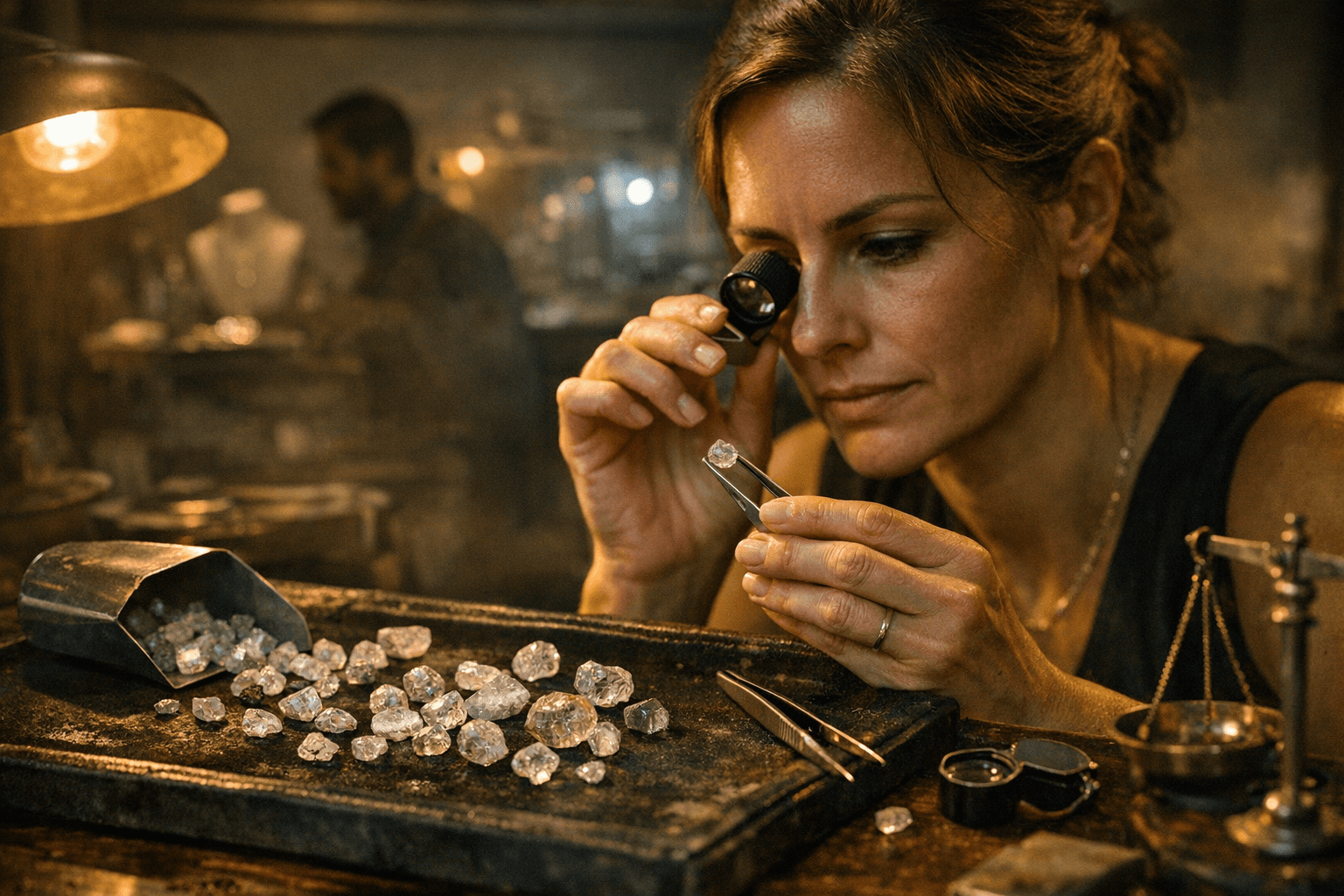
A rough diamond can look almost unfinished, and that is precisely the point. In a market flooded by lab-grown brilliance, the visible nicks, mineral textures and irregular crystal faces of an uncut natural diamond now signal something rarer than perfection: individuality. The question for buyers is no longer whether raw looks interesting. It is whether that look is merely decorative, or whether it truly carries value.
Why rough diamonds feel like a rebuttal to sameness
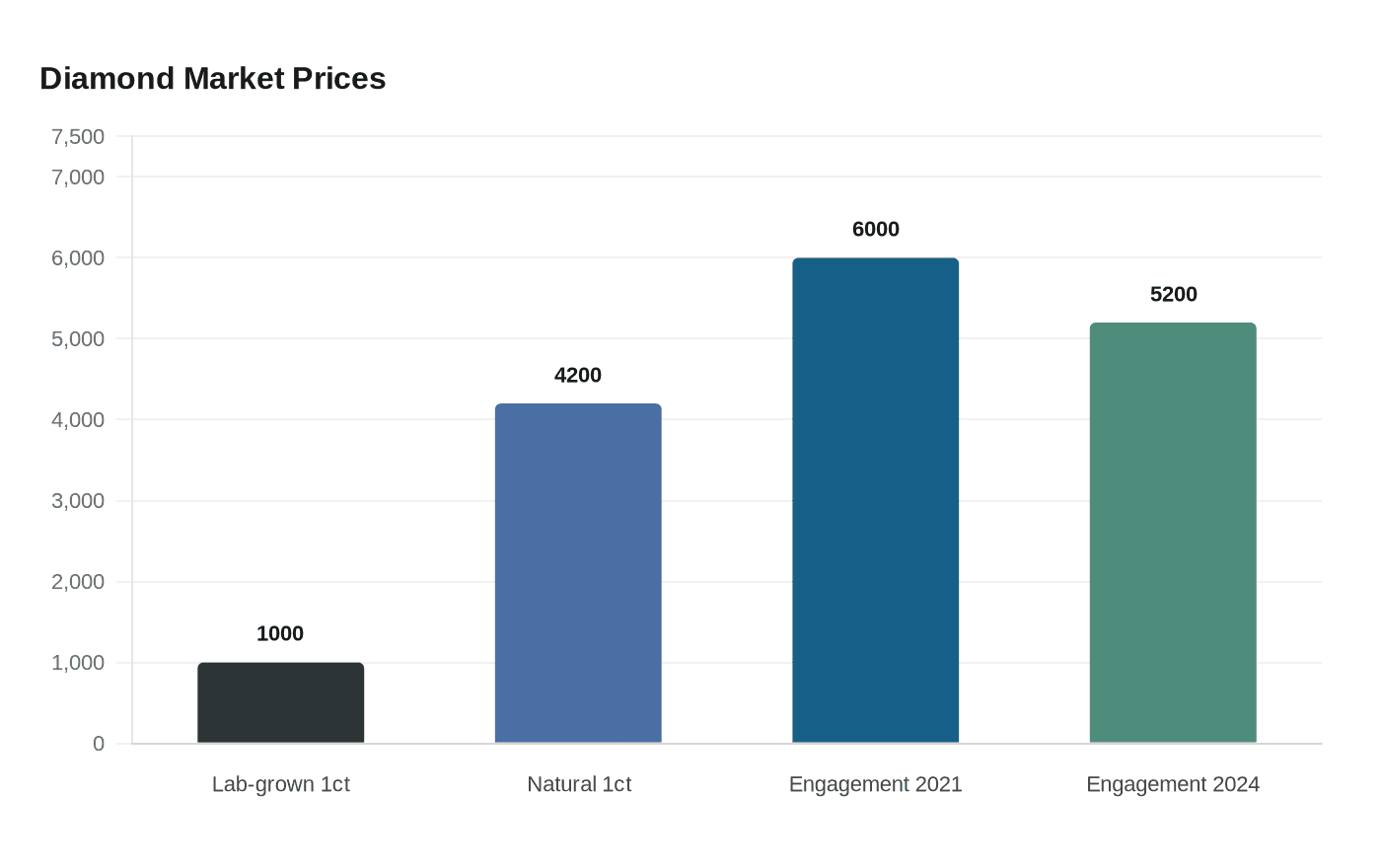
Lower-priced lab-grown diamonds have reshaped the jewelry market so decisively that they now account for more than 45% of all U.S. engagement ring purchases. By 2025, a 1-carat lab-grown diamond averaged $1,000 or less, while a natural 1-carat diamond averaged about $4,200. The average engagement ring price, meanwhile, fell from $6,000 in 2021 to $5,200 by 2024. In that landscape, rough natural diamonds offer a different luxury promise: not more perfection, but more evidence of a stone’s singular life.
That is the appeal Pamela Danziger has been describing, and it is easy to understand why it resonates now. Raw, uncut diamonds speak to buyers who want a gem that looks one of a kind, not mass-optimized. They also speak to emotion. A polished stone is about optical performance; a rough stone is about character, origin and the sense that nature, rather than a machine, had the first and final word.
What the market is telling you
The renewed appetite for rough stones is not happening in a vacuum. De Beers said rough diamond trading conditions remained challenging in the first half of 2025, with buyers cautious about restocking, polished inventory still surplus-heavy, and uncertainty around U.S. tariffs slowing trade. The company reported rough diamond sales of $1.7 billion in H1 2025, down from $2.0 billion a year earlier, and a consolidated average realized price of $155 per carat, down 5% year over year.
That is the paradox behind the current moment. Even as wholesale rough and polished markets stayed difficult, consumer demand for diamond jewelry remained broadly stable. The Natural Diamond Council reported that specialty jewelers’ natural diamond jewelry sales rose 2.1% in 2025, average natural diamond jewelry prices rose 10%, and marquise jewelry grew 12%. In other words, buyers did not abandon natural diamonds. They became more selective, and in that selectivity, rough stones found a stronger argument.
Who should pay a premium for a raw stone
Raw diamonds are not for the buyer who wants the most sparkle for the least money. Lab-grown diamonds still win that equation, especially for larger-looking center stones and contemporary bridal budgets. The premium for a rough natural diamond only makes sense when the buyer values the things a lab-grown stone cannot imitate: natural formation, visible irregularity, bespoke craftsmanship and the feeling of owning a specimen rather than a standard.
- The crystal shape is striking enough to carry the design.
- The maker has used the rough stone’s natural geometry instead of fighting it.
- The setting is well judged and secure, not merely rustic-looking.
- The piece has a clear design point of view, not just a “raw” label.
- You want a jewel that reads as personal, collectible and emotionally specific.
Pay more when:
Pay less, or walk away, when the stone’s roughness is being used to disguise weak material, ordinary craftsmanship or inflated pricing. A raw diamond should not be a shortcut to luxury. It should be the reason the jewel exists.
Raw is not the same as distressed
This distinction matters. Intentionally distressed design is a surface effect. A brushed gold finish, a hammered texture or an antique-inspired treatment can create the illusion of age, patina or casualness. A raw diamond is different: it is an uncut crystal with its own natural face, not a polished gem dressed down for effect.
The setting tells you whether the designer understands that difference. A bezel setting, which wraps metal around part of the stone, can give an irregular rough diamond a clean, modern frame and protect vulnerable edges. A prong setting exposes more of the crystal, which can heighten the sense of lift and light but may also make a lopsided or angular stone feel less stable if the mount is poorly executed. In raw-diamond jewelry, the metalwork is not a footnote. It is the architecture that turns a geologic object into a wearable object.
Rarity, origin and craftsmanship do not carry equal weight
Not every rough diamond deserves a premium simply because it is uncut. Some stones are compelling because their crystal form is unusually sculptural, their surface is textural, or their color and inclusions create a dramatic natural signature. Others are interesting mainly because the market has decided that “raw” sounds artisanal. Those are not the same thing.
The Gemological Institute of America has noted that rough-diamond jewelry has an artisanal, one-of-a-kind appeal, and Todd Reed captured the idea bluntly: “the most perfect cut is still an uncut.” That line endures because it frames rough diamonds as a design philosophy, not a defect. The idea is also deeply rooted in history. GIA points to centuries-old precedent in India, where diamonds were admired long before modern cutting techniques, and natural-diamond history sources trace diamond knowledge in India back more than 3,000 years.
That heritage matters, but only if it is carried through with actual workmanship. A rough diamond’s origin story can deepen its meaning, yet the maker still has to earn the price through proportion, comfort and finish. The best pieces make the stone look inevitable in its setting. The worst make it look like an expensive accident.
How to judge whether the premium is justified
The most useful test is simple: ask whether the piece would be better, worse or merely different if the diamond were polished. If the answer is “different,” you may be looking at a real design argument. If the answer is “better polished,” the raw form is probably doing too little work for too much money.
- Form: Does the crystal have a naturally compelling outline?
- Frame: Does the setting protect and flatter the stone?
- Point of view: Does the design feel deliberate, or just trend-driven?
Keep your eye on three things:
Raw diamonds are gaining appeal because they offer something the modern market has made scarce: evidence. In a season when lab-grown stones are cheaper, larger-looking and increasingly common, rough natural diamonds promise a different kind of value, one rooted in origin, scarcity and the visible hand of both nature and the jeweler. That is why they are more than a style. They are a statement about what luxury should mean when perfection is suddenly easy to buy.
This article was produced by Prism’s automated news system from verified source data, official records, and press releases, then run through automated quality and moderation checks before publishing. The system is built and supervised by the people who set the standards it runs under. Read our full AI policy.
Did this article answer your question?