Sotheby’s new Artistic Luxury sale led by rare Fabergé necklace
An imperial Fabergé necklace with aquamarines and diamonds is set to lead Sotheby’s New York sale, where Romanov provenance may matter as much as the stones.
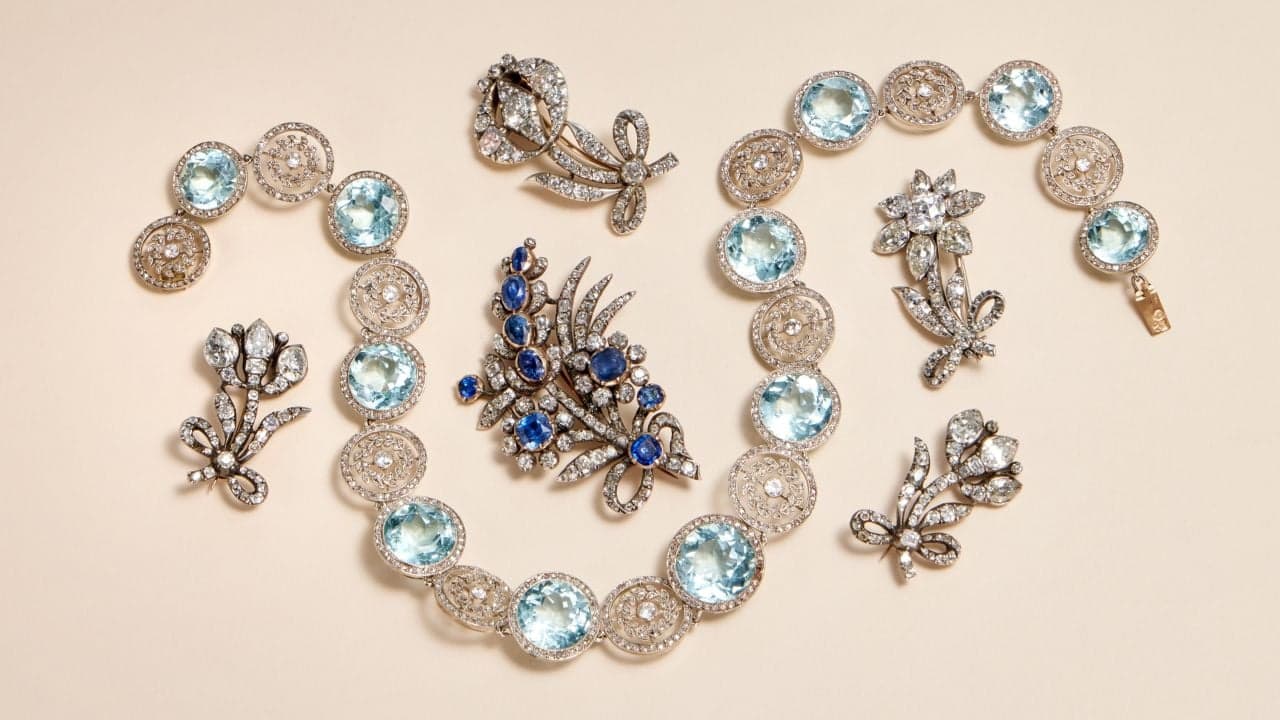
A Fabergé necklace set with eleven graduated Siberian aquamarines and rose-cut diamonds will lead Sotheby’s inaugural Artistic Luxury sale in New York, with an estimate of $400,000 to $600,000 that reflects far more than gem weight alone. The market is paying for a documented Imperial Cabinet history, a named workmaster, and the kind of Romanov-era pedigree that turns a jewel into an artifact.
Made by Albert Holmström in St Petersburg around 1911, the necklace alternates the aquamarines with graduated openwork laurel motifs centered with old-cut diamonds. Sotheby’s says the gold clasp is struck with Holmström’s initials and a scratched inventory number, 91288, small details that matter because they anchor the piece to the Fabergé workshop rather than to a later revival. At 15 1/4 inches, or 38.9 cm, it is a substantial collar-length jewel, but the appeal is less about scale than about the precision of its construction and the survival of its original markings.
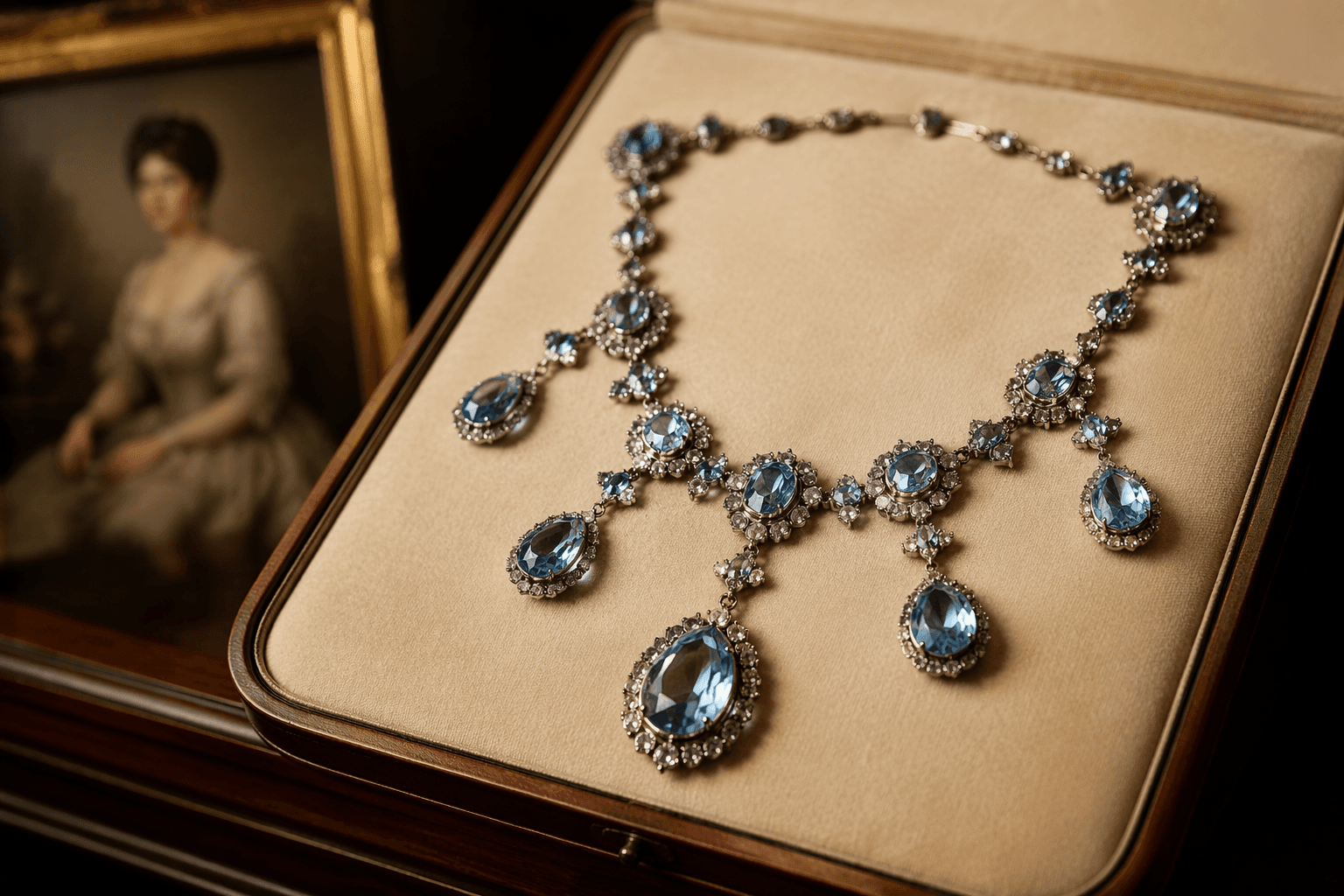
The strongest part of the story is the paper trail. Sotheby’s says the Imperial Cabinet presented the necklace in May 1911 to Empress Alexandra Feodorovna at a cost of 2,650 roubles, as a suggested gift for the visit of German Crown Prince Friedrich and Crown Princess Cecilie to St Petersburg. It was not selected, and it was returned to the Imperial Cabinet. That history gives bidders a direct line to the Russian Imperial court, and to the social machinery that produced Fabergé commissions in the first place.
Sotheby’s is placing the necklace at the top of a new Artistic Luxury category, meant to spotlight objects where luxury and artistry meet in materials such as gold, silver, enamel, hardstones and glass. The sale will take place on June 17, 2026, at 11:00 a.m. EDT in New York during Luxury Week, and the framing makes clear that historical provenance is the real premium being sold. Helen Culver Smith called the jewels “a fascinating window into the luxury and opulence of the Russian Imperial court.”

The Fabergé necklace will not stand alone. Sotheby’s will also offer three silver and diamond-set flower dress trimmings from the Russian Crown Jewels associated with Catherine the Great, with estimates of $30,000 to $80,000 depending on the lot. That spread shows the hierarchy inside the sale: surviving imperial objects with clear provenance command a different level of attention, while the Fabergé necklace sits at the intersection of craftsmanship, rarity and Romanov cachet, where the final price may be driven as much by history as by diamonds and aquamarines.
This article was produced by Prism’s automated news system from verified source data, official records, and press releases, then run through automated quality and moderation checks before publishing. The system is built and supervised by the people who set the standards it runs under. Read our full AI policy.
Know something we missed? Have a correction or additional information?
Submit a Tip