Spring 2026 Auctions Show Strong Diamond Demand Across Global Markets
Emerald-cut diamonds and loose stones are reshaping spring 2026 auction demand, with Sotheby's Gem Drop series pulling a new generation of collectors into the market.
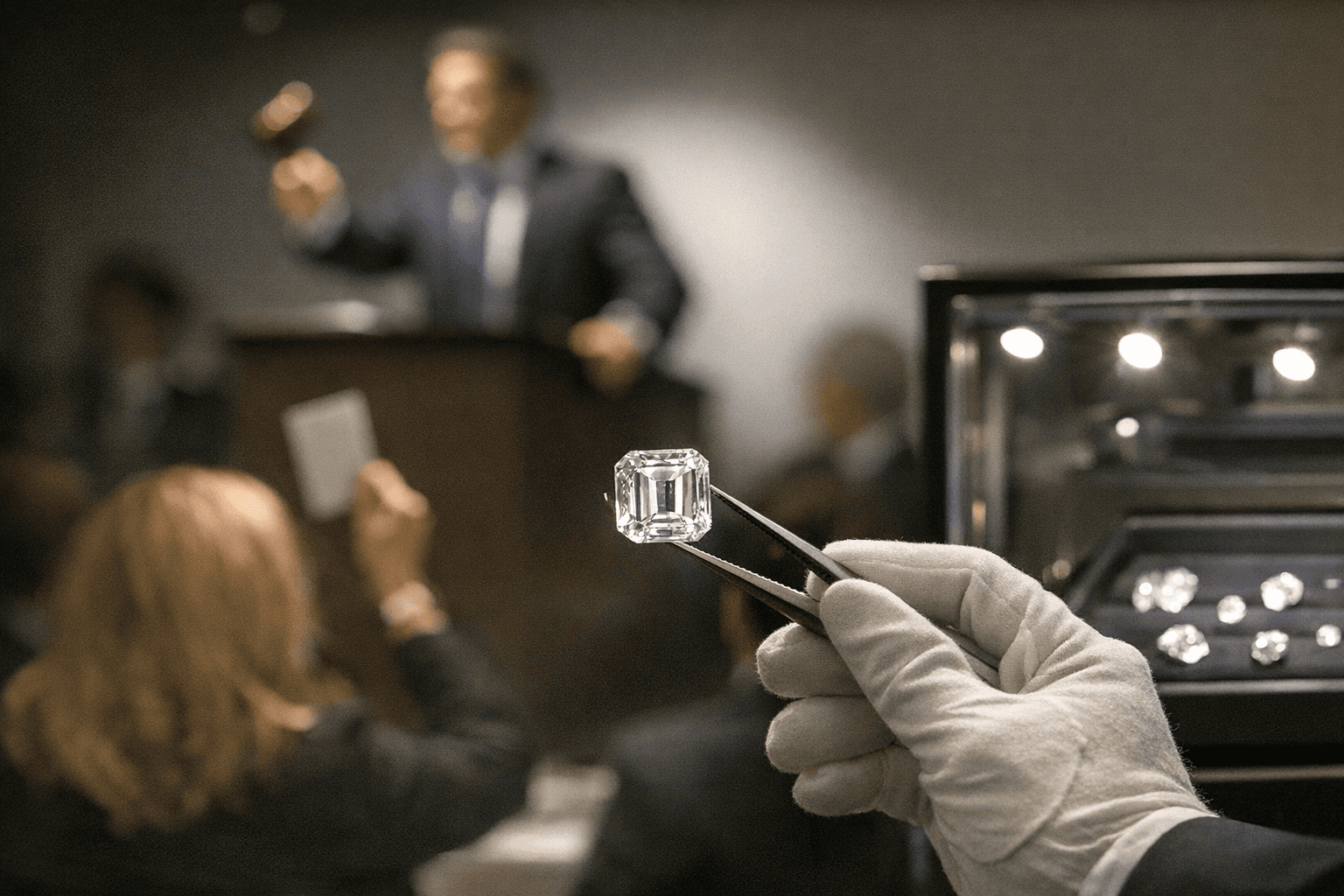
Before the spring auction cycle reaches its peak, one pattern has already emerged with unmistakable clarity: diamonds, particularly loose and lightly set stones in precise geometric cuts, are not simply holding their own against art and watches in the trophy-asset conversation. They are leading it.
Sotheby's Gem Drop April, which closed on April 10, illustrated that shift in concrete terms. The sealed online sale, part of a monthly series priced between $20,000 and $300,000 per lot, offered no buyer's premium and no reserve — a deliberately democratic structure that separates stone value from house markup. The lots leaned heavily on emerald cuts: a 7.01-carat D Flawless emerald-cut diamond ring, finished with lines of round white diamonds at its shoulders, carried a pre-sale estimate of $250,000 to $350,000. A pair of pendant earrings suspending six graduated emerald-cut diamonds totaling 12.06 carats, graded I to J color with clarity ranging from Internally Flawless to VS2, was estimated at $50,000 to $70,000. A diamond band ring set with 14 emerald-cut stones weighing 14.14 carats total, ranging from D to F color and VVS1 to VS2, rounded out the cut's dominance in the lineup. Three lots, one format, one recurring shape: the emerald cut's step-faceted geometry, long associated with Art Deco precision and midcentury restraint, is clearly where collector appetite is concentrating this season.
Sotheby's has framed the Gem Drop series around a structural argument: "Unmarked gemstones are among the biggest trends with jewelry collectors today." Loose stones have captured the attention of a new generation of jewelry buyers, and because you are buying the stone rather than a brand name, unsigned gems offer considerable value. That pitch is doing real work in the market. The no-reserve, no-premium format removes two of the most significant friction points for first-time auction buyers, and the $20,000 entry point sits squarely within reach of younger collectors who might otherwise approach the auction world only through watches or prints.
The geographic spread of spring sales reinforces how broadly this demand is distributed. Christie's held a Fine Jewelry sale in Paris on March 31. Sotheby's is scheduled to take the season to Hong Kong on April 23, where the high jewelry live sale will center on the Jwaneng 28.88, a flawless, D-color diamond of nearly 29 carats from De Beers' Jwaneng mine, estimated to fetch between $2.2 million and $2.8 million. It will be auctioned alongside additional De Beers diamonds from the same mine. The Hong Kong sale will also feature an 18.29-carat pear-shaped D-color Internally Flawless diamond ring, connecting the auction calendar's spring arc from the Hudson River to the South China Sea.
For anyone considering a redesign or a bridal commission, the emerald-cut dominance in the Gem Drop April is more than a market footnote. A stone like the 7.01-carat D Flawless lot — purchased loose, then set by a trusted bench jeweler in a simple four-prong platinum solitaire or a bezel with pavé shoulders — delivers the same step-cut drama as a signed piece at a fraction of the total outlay, without the surcharge that comes attached to a maker's name. The no-reserve, no-premium Gem Drop structure means the price you pay is the price the market actually set, not a negotiated markup layered onto a boutique retail margin.
What the spring 2026 calendar makes plain is that the diamond market's momentum is no longer a story told only in Geneva and Hong Kong ballrooms. It is being written incrementally, lot by lot, in online sealed auctions that close 60 seconds apart — a pace calibrated precisely for the collector who learned to buy at auction not from a white-glove preview but from a phone screen.
This article was produced by Prism’s automated news system from verified source data, official records, and press releases, then run through automated quality and moderation checks before publishing. The system is built and supervised by the people who set the standards it runs under. Read our full AI policy.
Did this article answer your question?