Technology Reshapes Diamond Trade, Boosting Transparency, Craftsmanship and Trust
A diamond now arrives with a digital paper trail, and that record can make or break trust, pricing, and the sale itself.
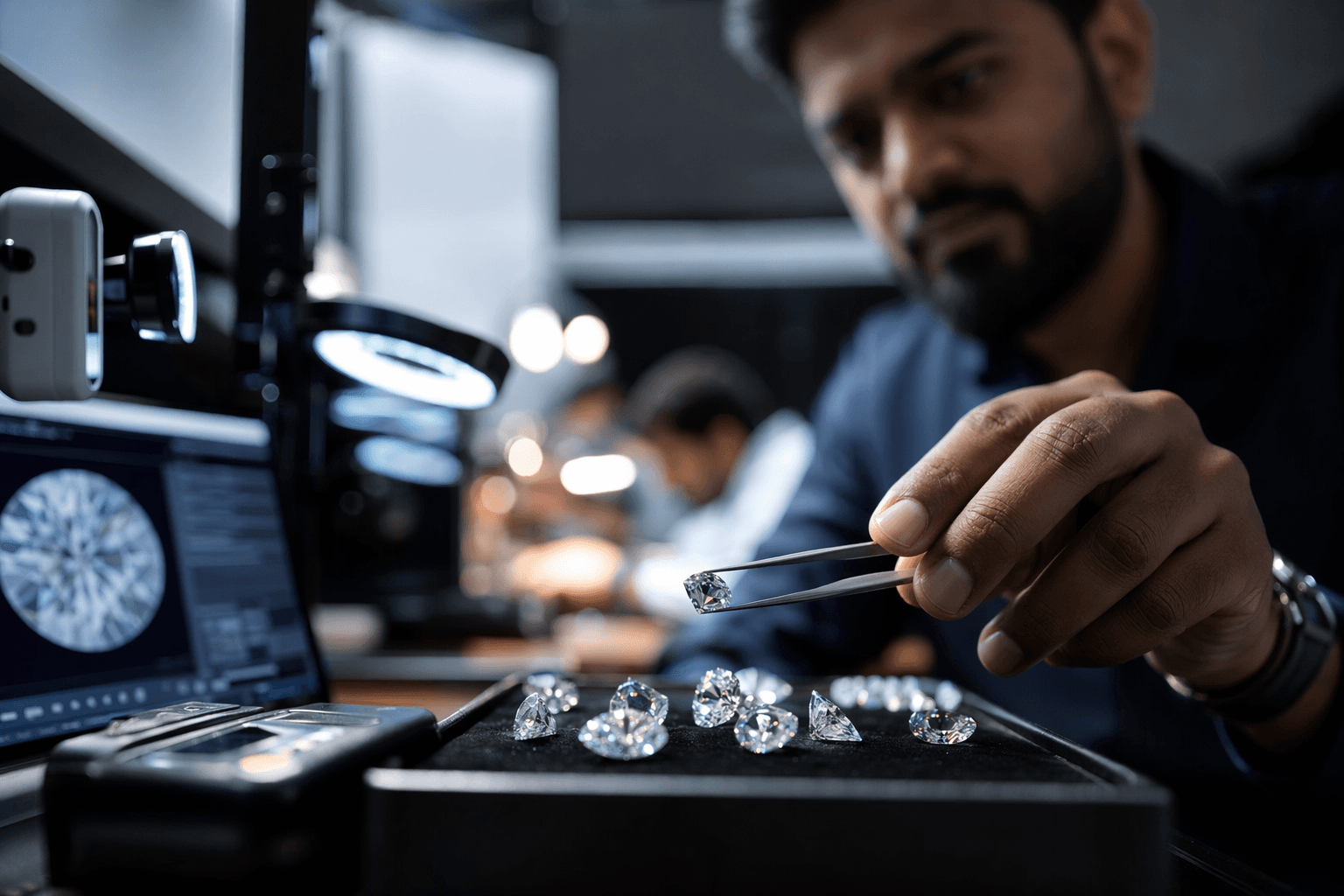
The new diamond pipeline is built on proof
A diamond can now move from mine to showroom with a digital identity attached, a blockchain record behind it, and an AI-assisted grade in its file. That matters because the modern diamond trade is no longer selling romance alone. It is selling evidence: where the stone came from, how it was cut, whether its grading can be trusted, and whether its path through the market can survive sanctions scrutiny and consumer skepticism.
Rapaport’s central argument is the one the trade is now being forced to live with. Technology is not replacing craftsmanship; it is being used to defend it. In a market where lab-grown stones have reset expectations on price and speed, and where buyers are asking harder questions about origin, the strongest sellers are the ones who can show their work.
Mine to market, with a digital spine
De Beers says its Tracr platform, launched in 2018, has now registered more than three million diamonds at source. Each stone receives a unique digital identity that captures carat weight, colour, clarity and cut, then records its journey from mine to market. That is not a branding flourish. It is a direct answer to the industry’s oldest trust problem: once a rough stone leaves the ground, its story has usually been reduced to paperwork that can be incomplete, inconsistent or easily stretched.
The commercial logic is obvious. Miners and manufacturers with clean, documented supply chains gain leverage, because traceability has become part of the product itself. Retailers win when they can put a verified story beside a ring in the case. The losers are the sellers whose only provenance language is vague and untested. A diamond described as “responsibly sourced” sounds nice. A diamond with a source record, a digital identity and a documented route through the chain is harder to dispute.
De Beers went a step further in 2024 with ORIGIN, a polished-diamond program tied to Tracr that gives retailers access to stones tracked through the system, along with information about journey and social impact. That shift is telling. The trade is moving beyond “trust us” toward “here is the file.” In today’s showroom, that file can matter as much as the stone.
Grading is moving from the loupe to the cloud
The most consequential technical shift may be happening in grading. The Gemological Institute of America and IBM Research have joined on an AI clarity system that sends diamond images to the cloud, compares them with a large grading database and computes a clarity grade. GIA has long said clarity is the most difficult and time-consuming part of diamond grading, which explains why automation here is so disruptive. If the hardest part of the grading process can be standardized and accelerated, the whole system becomes faster, more scalable and easier to audit.
IBM’s historical point is striking. GIA helped standardize diamond grading in the 1930s with the jeweler’s loupe, a reminder that gemology has always evolved through tools. The latest shift is not a rejection of human judgment. It is a new attempt to make judgment more consistent. That is good news for laboratories and dealers who want fewer bottlenecks, and for retailers who need quicker, cleaner data to close a sale. It also creates pressure on anyone selling loose stones without documentation, because the market is slowly getting less tolerant of grading claims that cannot be checked.
Digital visualization belongs in this same category. A client may still choose a stone because of fire, symmetry or the way it sits in a setting, but technology increasingly lets that choice be previewed, compared and explained before a jeweler ever touches the metal. The best tools do not flatten the jewelry experience. They give it a clearer frame.
Sanctions turned traceability into a compliance issue
The push for transparent diamonds is not only about consumer confidence. It is also about geopolitics. The European Commission says the G7 agreed in December 2023 to restrict non-industrial Russian diamonds from January 1, 2024, with phased restrictions on diamonds processed in third countries beginning March 1, 2024. UK guidance later tightened the threshold again, extending the prohibition to diamonds of 1 carat and above from March 1, 2024, and to 0.5 carat and above from September 1, 2024.
That kind of rulemaking changes the economics of the trade. Compliance is no longer a back-office function. It is a competitive filter. Traders with weak records, tangled sourcing or slow data systems can lose access to key markets. Firms with real traceability infrastructure can move faster, clear customs more cleanly and sell with less friction. The obstacle is that the system is still uneven. Industry reporting has made clear that a full traceability regime has been slowed by technological limits and policy disagreements, which means the industry is still living in a gap between ambition and execution.
That gap creates winners and losers too. The winners are firms that can document chain of custody at scale. The losers are the middlemen who relied on opacity as a business model. If the stone cannot be traced, it becomes harder to move, harder to price and harder to defend.
Lab-grown diamonds changed the price conversation
All of this is happening while the market is under pressure from lab-grown stones. De Beers said in early 2024 that it expected a recovery after a difficult 2023, but the broader market story was less comforting for natural-diamond sellers. Analysts and trade outlets reported that lab-grown prices were falling sharply and taking share in jewelry. By October 2024, Axios reported that roughly half of the diamonds bought that year were manufactured in a laboratory.
That figure is the share-shifting fact the trade cannot ignore. It changes the showroom conversation from “Which diamond?” to “Why this diamond?” Natural stones now have to justify themselves on provenance, rarity, craftsmanship and long-term value. Lab-grown stones often compete on size and price, which means natural diamonds cannot lean on generic beauty claims anymore. They need evidence of origin, precise grading and a narrative that actually matches the asking price.
For retailers, this is where technology becomes practical salesmanship. A documented stone helps a salesperson explain why one round brilliant commands more than another, even before setting and brand are considered. It also lets a jeweler point to specific traits rather than broad promises. In a market crowded with similar-looking goods, specificity closes the sale.
What this means at the counter
The most persuasive diamond story today is not about hype. It is about visible proof. Technology is helping the trade answer the three questions customers now ask, whether they say them out loud or not: Where did this come from? Why does it cost this much? And can I trust the answer?
- Miners and vetted suppliers win when they can register stones at source and carry that data forward.
- Laboratories and grading teams win when AI trims time and improves consistency.
- Retailers win when traceability, imagery and grading data help turn a hesitant browser into a buyer.
- Opaque sellers lose when claims cannot be backed up.
The bigger lesson is that digital tools are not erasing the human side of diamond jewelry. They are making it more accountable. In a trade defined by sparkle, the new luxury is proof.
This article was produced by Prism’s automated news system from verified source data, official records, and press releases, then run through automated quality and moderation checks before publishing. The system is built and supervised by the people who set the standards it runs under. Read our full AI policy.
Did this article answer your question?