TEFAF New York spotlights Hemmerle and Ana Khouri high jewelry
TEFAF New York is less society spectacle than demand signal: Hemmerle, Ana Khouri, and diamond-dust art point to sculptural jewels, scarcity, and material experimentation.
TEFAF New York as a market signal
At TEFAF New York, the loudest message is not abundance but selectivity. The fair’s compact jewelry curation, anchored this year by Hemmerle and Ana Khouri, points to a market that still values one-of-one workmanship, sculptural form, and materials with a point of view rather than simple carat weight alone.
The invitation-only collectors’ preview on Thursday, May 14, opens the week before the fair runs May 15 through 19 at the Park Avenue Armory. TEFAF says the 2026 edition brings together 88 exhibitors from 14 countries across four continents, with 9 new exhibitors joining 78 returning dealers. That mix matters because it frames jewelry not as a side show but as part of a broader conversation with modern and contemporary art, design, jewelry, and antiquities.
Why this fair matters to diamond jewelry buyers
TEFAF New York has always been unusually useful as a read on demand because it does not isolate jewelry from the rest of the collecting ecosystem. The fair’s access to the Park Avenue Armory’s historic period rooms on the second floor gives the presentation an architectural seriousness, but the real value is commercial: buyers see how high jewelry sits beside objects, design, and art, which is often where the best clues about collecting behavior appear.
For diamond jewelry businesses, that cross-category setting is a reminder that clients increasingly want pieces that can move between wardrobes, salons, and collections. The strongest signals this season are not about volume. They are about scarcity, museum-level craftsmanship, and the growing appeal of jewelry that behaves like wearable sculpture.
Hemmerle’s language of material intelligence
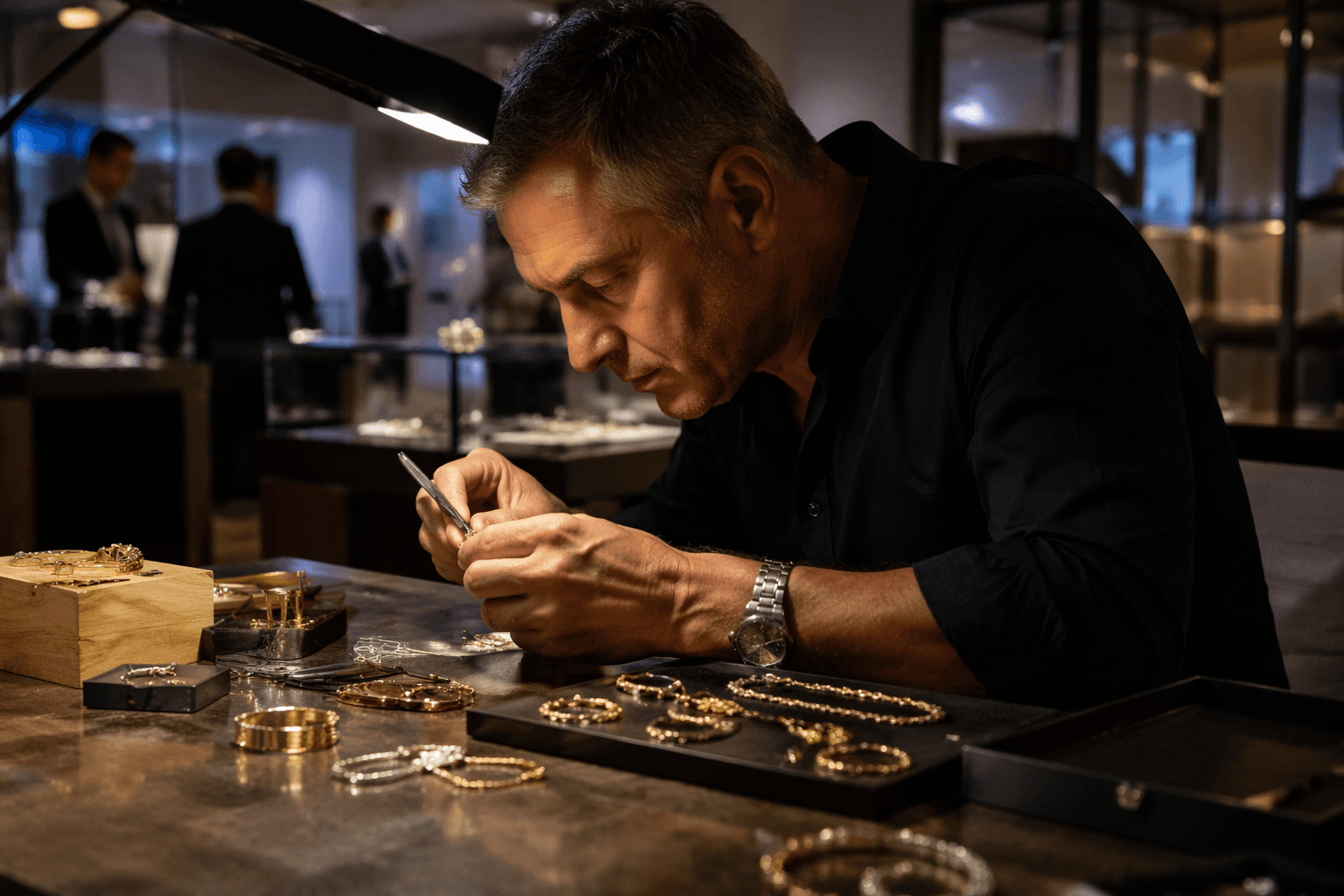
Hemmerle brings a particularly clear message to the fair. Founded in Munich in 1893, the house is now a fourth-generation family-run jeweler, and TEFAF describes it as known for inventive material combinations. That phrasing is important: in today’s high jewelry market, invention is no longer limited to stone size or classic silhouettes. It often lives in the tension between unexpected materials and impeccable construction.
Hemmerle’s presence also carries weight because its jewelry sits in the permanent collections of the Metropolitan Museum of Art, the Victoria and Albert Museum, Cooper Hewitt Smithsonian Design Museum, and Die Neue Sammlung. That museum footprint signals something practical for buyers and dealers alike: the brand is read as design history as much as luxury merchandise. In a market where clients are increasingly fluent in provenance, connoisseurship, and object value, that kind of institutional validation helps justify the highest tier of pricing.
Ana Khouri and the rise of wearable sculpture
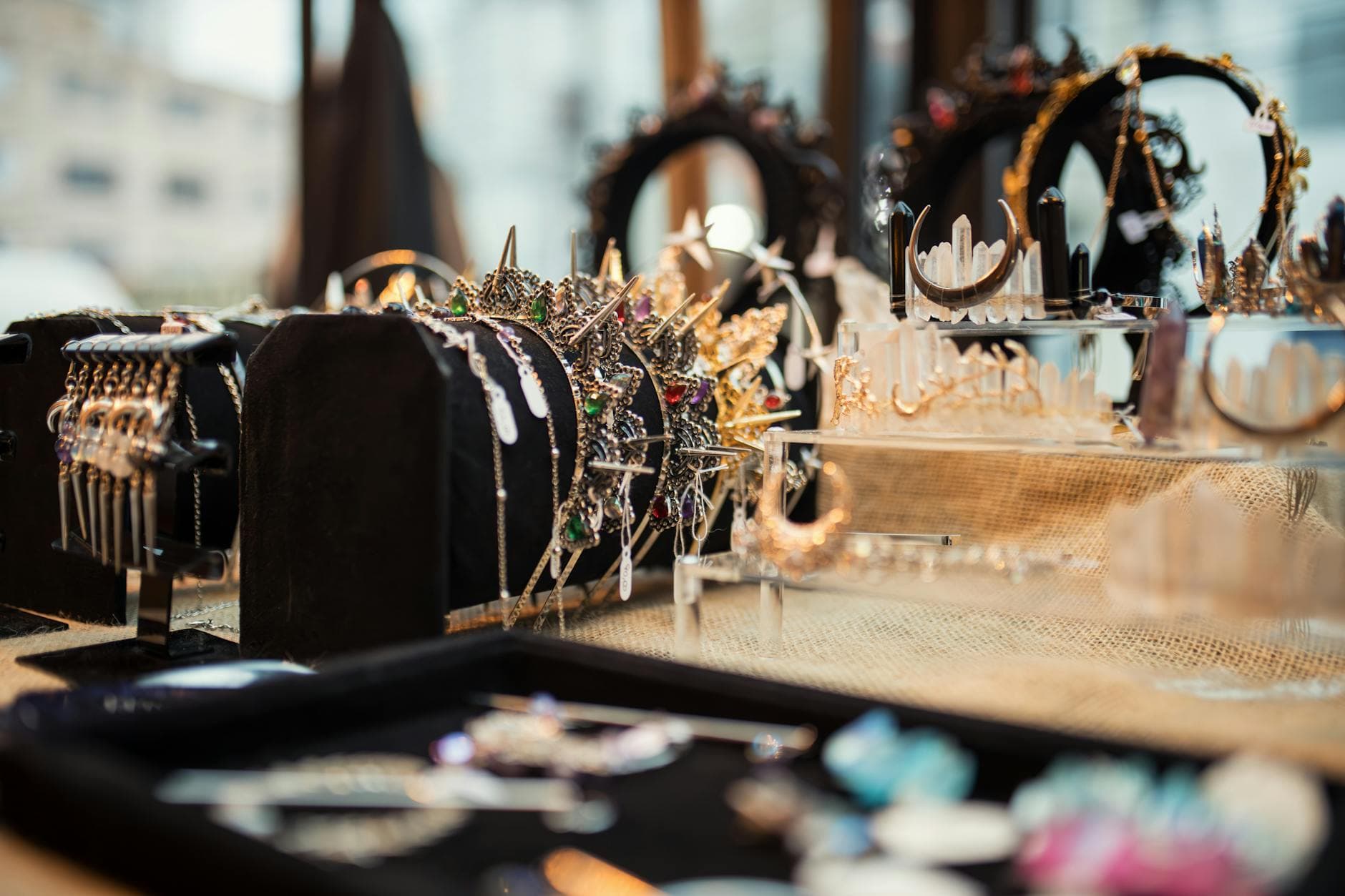
Ana Khouri’s placement at TEFAF New York tells a similarly instructive story, but with a different visual vocabulary. She has been invited to participate in the fair every year from 2022 through 2026, and TEFAF describes her practice as existing at the intersection of sculpture and high jewelry. That is exactly the space where many of the most convincing contemporary diamond jewels now live: not as traditional settings with decorative embellishment, but as forms that treat the body as a gallery for line, volume, and negative space.
Khouri’s distribution strategy is just as telling as her design language. Her one-of-a-kind pieces are shown exclusively at her New York salon, while her limited-edition designs are exhibited globally at The Row. The split between exclusivity and controlled reach is a useful model for the market right now. It keeps the most important pieces rare while allowing broader visibility for designs that can travel, which is a strong indicator of confidence rather than caution.
For diamond jewelry, the takeaway is clear. Clients are still responding to classic materials, but they want them translated through an artist’s eye. Settings that emphasize silhouette, stone placement, and proportion matter more when the buyer is choosing a jewel as an object, not just as adornment.
The diamond story expands beyond the jewel case
The Diamond Nebula exhibition in SoHo extends that idea in a strikingly different direction. The show is a 12-work canvas series by artist Shreya Mehta on view at Grown Brilliance’s boutique through May 22. The project uses lab-grown diamond dust as an artistic medium, which immediately widens the conversation around diamonds from personal wear to creative material.
The collaboration began when Grown Brilliance sent Mehta diamonds and diamond byproducts, including dust and shards, and invited her to experiment freely. The works use lab-grown diamond dust mixed into pigments made with vegan materials such as marble, lapis lazuli, and indigo berries, and the series draws inspiration from NASA imagery and from 55 Cancri Ae, the exoplanet often described as diamond-rich. That constellation of references says a lot about where diamond storytelling is headed: less status symbol, more elemental material, scientific wonder, and visual texture.
There is also a philanthropic angle that sharpens the project’s public profile. WWD reported that one work, Diamond Nebula 1.120, will donate 100% of proceeds to the Make-A-Wish Foundation. In market terms, that detail matters because it shows how luxury materials increasingly travel across categories, from jewelry to fine art to cause-driven editions, while still keeping the diamond at the center of the narrative.
What the season is really rewarding
Taken together, Hemmerle, Ana Khouri, and Diamond Nebula point to a market that is rewarding discernment over display. Buyers are being drawn to jewels and objects that carry a clear material thesis, whether that means inventive combinations, sculptural form, or the unusual use of diamond dust outside the traditional setting.
- Scarcity still sells, but it has to feel intentional, not merely rare.
- Museum-level credibility remains powerful, especially for pieces with unconventional materials or construction.
- Sculptural design is no longer niche; it is one of the clearest signals of high-end confidence.
- Lab-grown diamond byproducts are finding cultural value beyond the jewelry case, which broadens the material story for the category.
TEFAF New York is therefore doing what the best fairs do: it reveals where serious money is looking next. In this season’s diamond jewelry market, the center of gravity is shifting toward pieces that are as thoughtfully built as they are beautifully worn, and that is the kind of signal collectors tend to trust.
Know something we missed? Have a correction or additional information?
Submit a Tip