A guide to engagement ring shapes, from round to pear
Round still leads, but oval and pear are pulling attention for their length, scale, and more individual profile. The shape you choose changes how a ring reads in photos, on the hand, and in a setting.

The silhouettes everyone is actually trying on
The first thing people notice in an engagement ring is not the carat weight, but the outline. A round stone reads as the classic point of reference, while oval and pear cuts stretch the eye, soften the hand, and make a ring feel more directional in photos. That visual shift explains why shape has become such a defining decision in a market where buyers are balancing symbolism, perceived size, sparkle, and budget at the same time.
The round brilliant still sits at the center of the category. The Knot’s 2024 Jewelry and Engagement Study found round center stones in 28% of respondents’ rings, and the Natural Diamond Council’s 2025 trends coverage put round brilliants at 62% of engagement-ring units sold, with oval at 14%. Even so, industry reporting says demand for round brilliant-cut goods has fallen 15% since 2015, while interest in oval and pear diamonds has climbed, which tells you the market is not rejecting round so much as broadening its taste for more elongated forms.
Round: the shape that defines the category
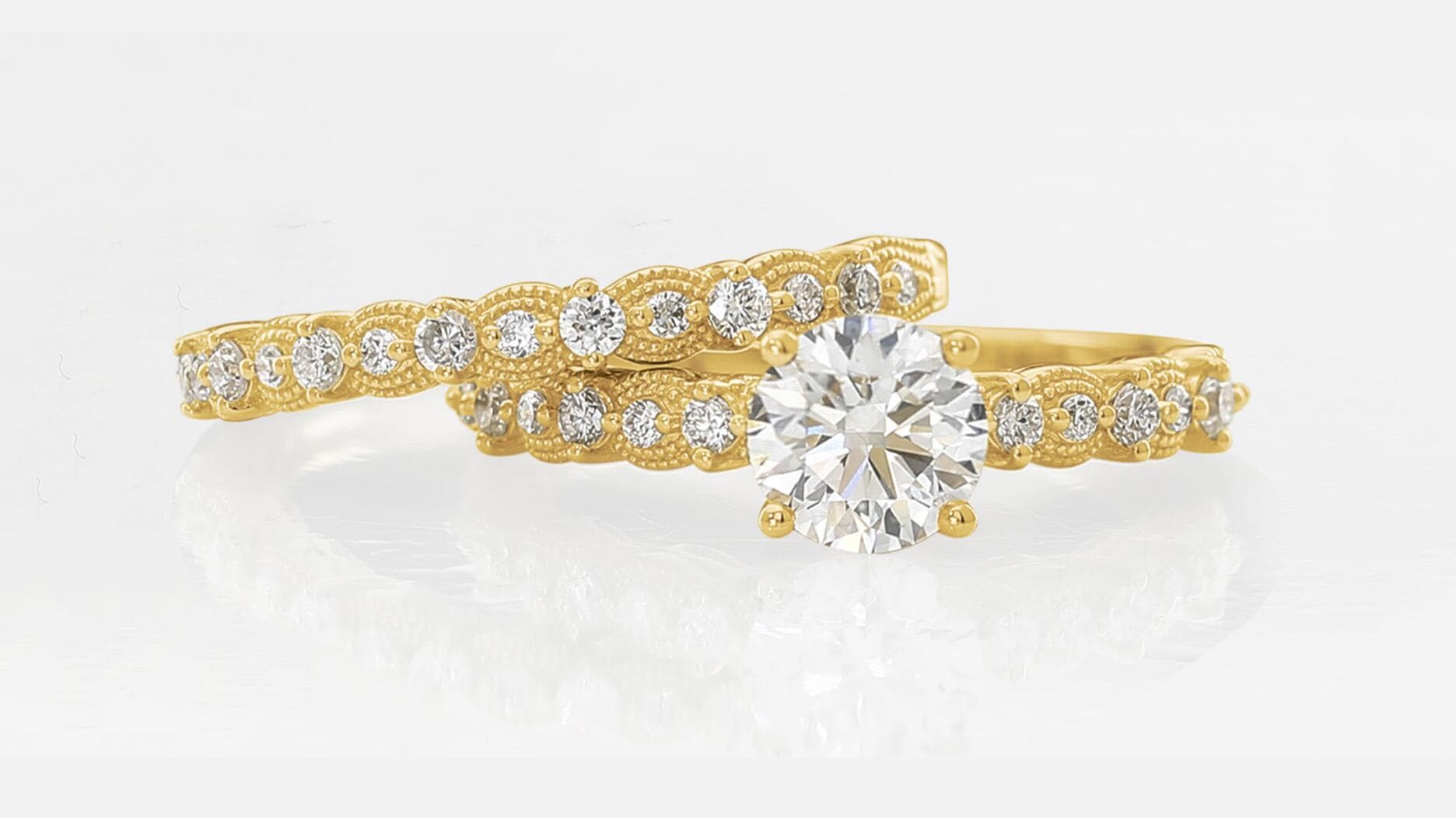
The round brilliant is the most popular and iconic diamond shape, and it has earned that position through repetition and refinement. Modern round-brilliant cutting traces back to experimentation that culminated in the early 20th century, and the standard round brilliant carries 58 facets, a structure designed to maximize light return. That is why the shape still reads as the brightest, most immediately legible option in a display case.
On the hand, round feels balanced and centered. Its symmetry gives it the most familiar profile in photos, and that predictability is part of the appeal: it works as a visual anchor whether the setting is plain, pavé, or more decorative. GIA notes that shape and cut style influence how a diamond reflects light, its perceived size, and how it complements a setting, and round is the shape that most clearly shows all three at once.

Oval: the elongated stone that still reads classic
Oval has become the most recognizable alternative to round because it keeps the same general sparkle story while changing the silhouette. The Knot describes an oval as an elongated diamond, and that length is what gives it its modern appeal. It still feels familiar in a bridal context, but the shape visually stretches across the finger, often making the stone appear larger than a round of the same carat weight.
In photos, oval reads fluid and sleek. The longer outline gives a ring more presence without adding bulk, which is one reason it has gained share as buyers look for a more personalized look. If round is the standard, oval is the edited version, with the same bright language but a softer, more fashion-forward line.
Pear: the shape that feels directional and deliberate
Pear cuts bring a different kind of drama. The tapered point and rounded end create an asymmetrical profile that feels more individual than either round or oval, and that imbalance is exactly what gives pear its character. It draws the eye downward, which can make the finger look longer and the stone feel more sculptural.

Pear has also benefited from the move toward more personalized engagement rings. As appetite for oval and pear diamonds has risen, pear has become the choice for people who want a shape that looks less expected in a ring stack and more distinct in a close-up shot. It has a strong point of view without abandoning brightness or recognizable diamond sparkle.
Cushion: softened geometry with a quieter mood
Cushion sits in the middle ground between square geometry and a softer, pillow-like outline. It lacks the high-contrast polish of a round brilliant and the lengthening effect of oval or pear, but that is part of its appeal. The shape feels relaxed and slightly vintage in mood, with corners that are rounded enough to keep the profile gentle rather than architectural.
On the hand, cushion tends to read as plush and romantic. It does not stretch the finger the way oval and pear do, but it offers a broader, softer face that can feel substantial without being severe. For buyers comparing shapes side by side, cushion often looks less engineered and more atmospheric, especially in settings that lean ornate or old-world.
Why shape changes how a ring looks in real life
Shape is not only an aesthetic choice; it affects how a ring pairs with a setting and how large it appears from above. GIA’s shape guide makes the point plainly: cut style and outline influence light reflection, perceived size, and compatibility with the mounting. That is why the same carat weight can feel dramatically different once it is set in a ring.
Round tends to look most even and universally bright. Oval and pear often deliver more finger coverage, which can create the impression of a larger stone in photographs and in everyday wear. Cushion sits closer to the middle, with a broader face but less of the elongated line that makes oval and pear feel so current.
The market context behind the shape shift
Price is part of the conversation, even when nobody wants it to be the whole conversation. Jewelers Mutual’s 2024 engagement-ring study found the average engagement-ring value among respondents was between $2,500 and $5,000, while industry reporting on the Natural Diamond Council’s 2025 trends put the average engagement-ring cost at $7,364, up 9%. That spread shows how widely the category ranges, and why shape matters as a visual strategy as much as a style preference.
The season matters too. The Knot has reported that 47% of couples get engaged between November and February, which concentrates a huge share of ring shopping into a narrow window. In that stretch, shape becomes the fastest way to communicate taste, whether the goal is the authority of round, the length of oval, the directional edge of pear, or the softer geometry of cushion. The current shift is not away from classic diamonds, but toward silhouettes that make a ring look more specific the moment it catches the light.
This article was produced by Prism’s automated news system from verified source data, official records, and press releases, then run through automated quality and moderation checks before publishing. The system is built and supervised by the people who set the standards it runs under. Read our full AI policy.
Did this article answer your question?