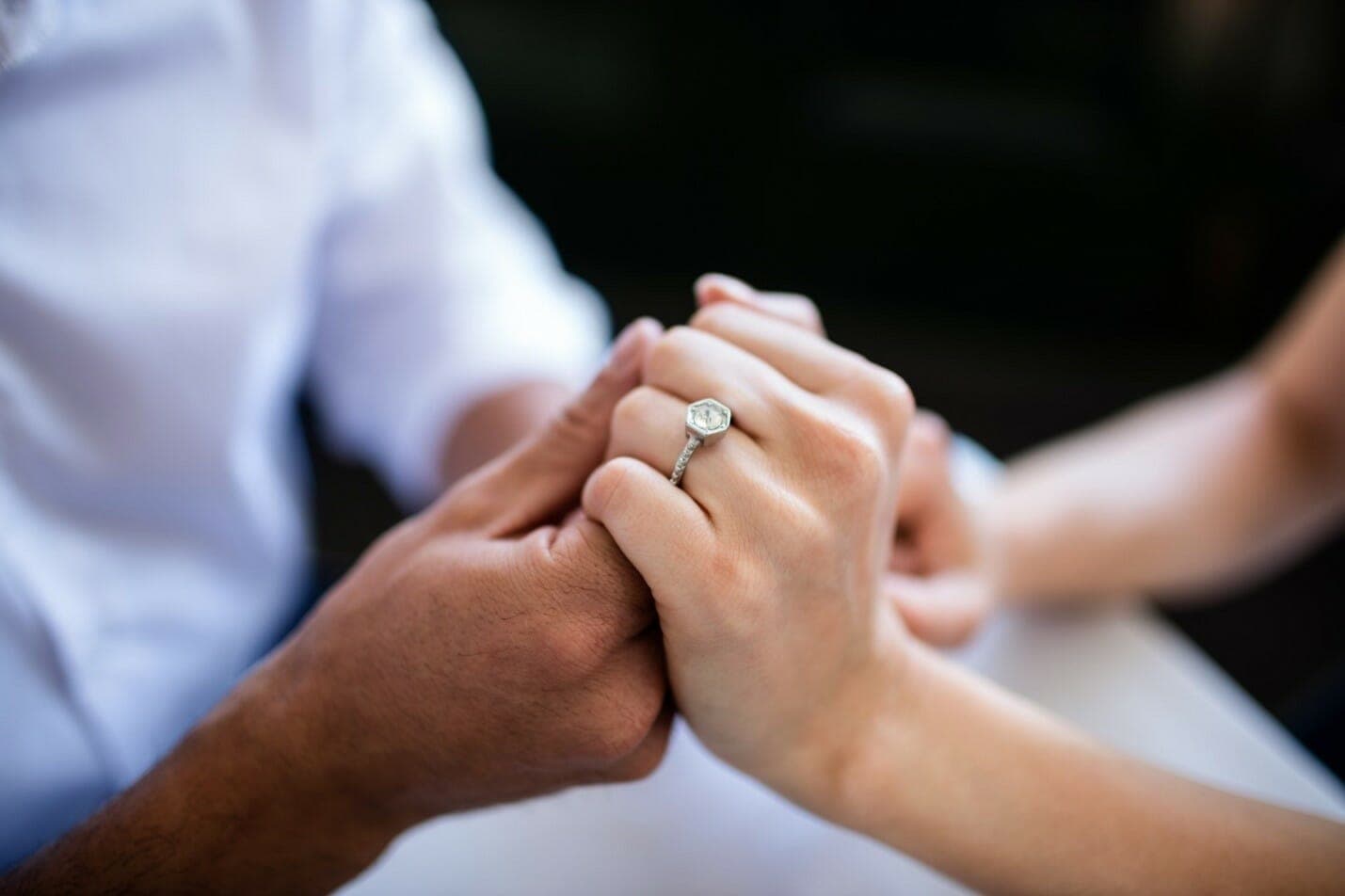
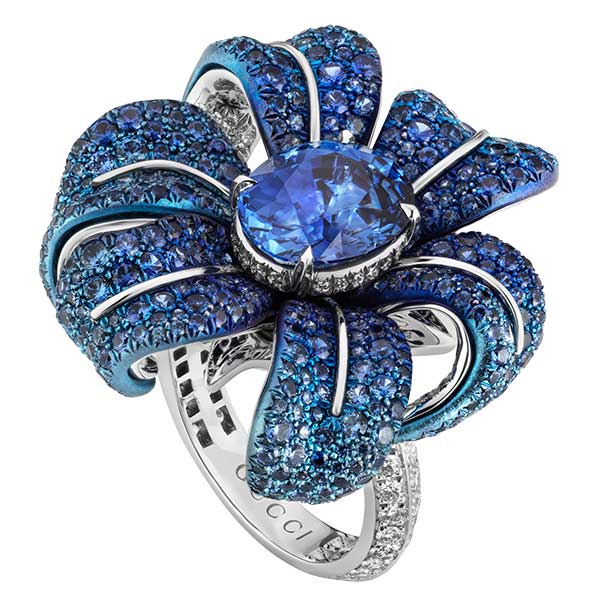
JFK Jr.’s engagement ring echoed Jackie Kennedy Onassis’s sapphire design
Carolyn Bessette-Kennedy’s engagement ring was a quiet homage to Jackie O’s “swimming ring,” with sapphire, diamonds, and a cool platinum line.

A proposal with a family blueprint
A fishing trip on Martha’s Vineyard over the Fourth of July holiday in 1995 ended with a proposal that was as much about memory as romance. John F. Kennedy Jr. did not reach for a flashy solitaire; he chose a ring that looked backward, borrowing from the most elegant chapter of his family’s jewelry history and recasting it for Carolyn Bessette-Kennedy’s spare, modern taste.
That choice is what makes the ring endure. It was never just an engagement ring in the celebrity sense. It read as a deliberate inheritance, a piece of wearable lineage that linked Carolyn to Jacqueline Kennedy Onassis through design rather than sentimentality. The engagement stayed private until their September 1996 wedding on Cumberland Island, Georgia, and the ring emerged as the most eloquent clue to how carefully JFK Jr. understood the visual language of his future wife.
What the ring actually looked like
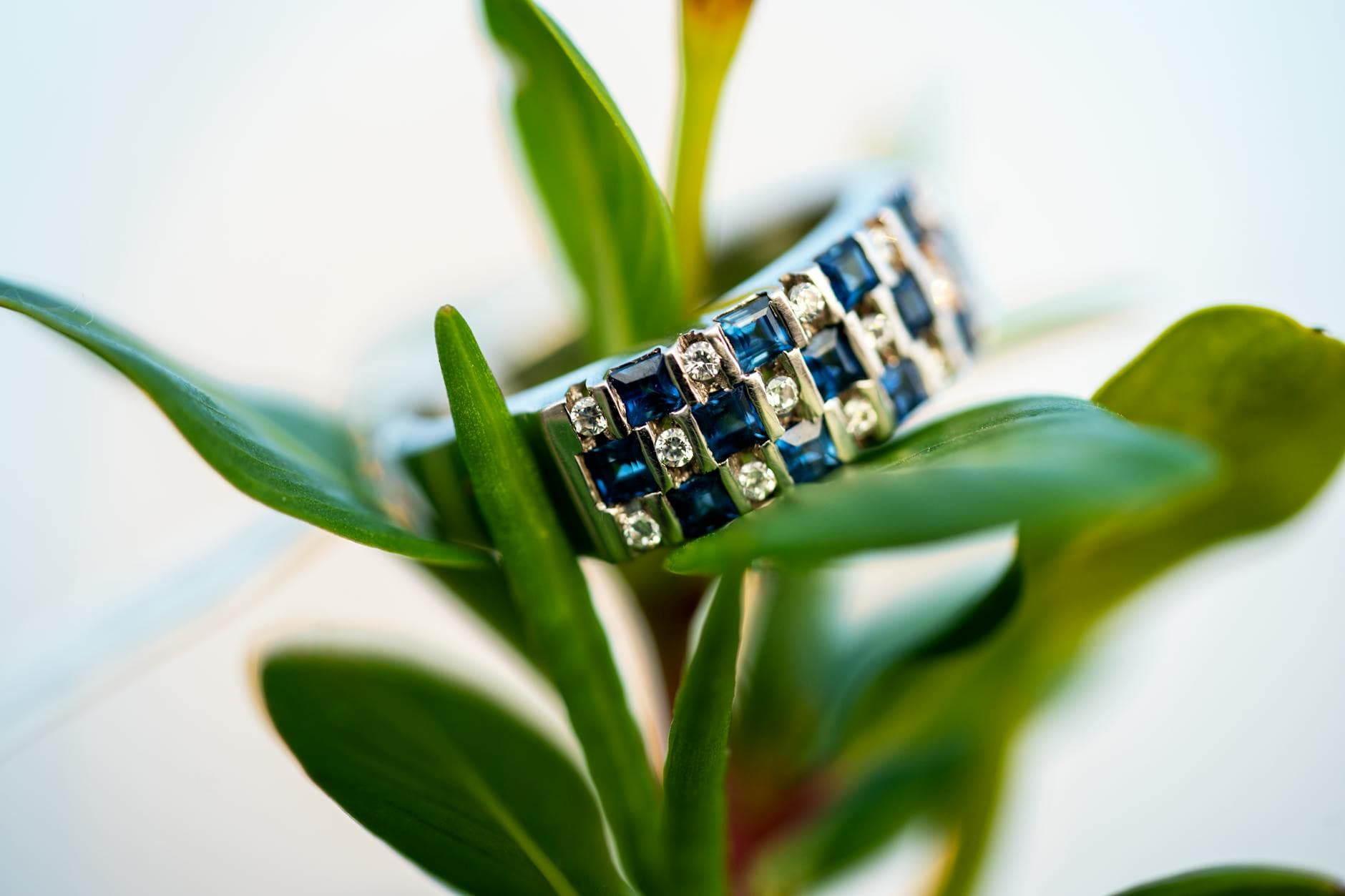
Later accounts describe Carolyn’s ring as a platinum eternity band with alternating diamonds and sapphires, a construction that gives the piece its rhythm and restraint. In some descriptions, the sapphire takes center stage, with diamonds beside it, but the larger impression is the same: a cool, even procession of stones rather than a single theatrical burst of brilliance.
Platinum matters here. Its white, dense sheen sharpens the contrast between the deep blue sapphires and the bright diamonds, and it gives the ring a crisp, contemporary edge that gold would not have supplied in the same way. The eternity format also changes the emotional register of the piece. Instead of isolating one gem as the star, it lets the stones circulate endlessly around the finger, which feels less like declaration and more like conviction.
Jackie’s “swimming ring” and the power of the reference
The design lineage becomes clearer when the ring is placed beside Jacqueline Kennedy Onassis’s own band, long nicknamed her “swimming ring.” TODAY described that ring as “pared down and elegant, perfect for swimming,” a phrase that captures exactly why it still fascinates jewelry watchers: it was practical, polished, and unmistakably aristocratic without ever becoming loud.
Carole Radziwill wrote in *What Remains* that Carolyn told her the ring was “a copy of a ring [John’s] mother wore.” That single line explains the emotional precision of the gesture. JFK Jr. was not merely borrowing a style cue from his mother; he was translating a family emblem into Carolyn’s more severe, minimalist register. The effect was not imitation so much as inheritance updated for a different woman and a different decade.
There is also a delicious ambiguity around Jackie’s original band that only adds to its mythology. Some accounts describe it as a gold and emerald “swimming ring,” while TODAY identified it as gold with emeralds and diamonds. Other versions point to a Jean Schlumberger connection, which places the ring within the broader world of high-design jewelry rather than simple romantic tokenism. That uncertainty has never dulled its appeal; if anything, it has made the piece feel more storied, as though it belongs to both fashion history and private family lore.
Why the ring feels so 1990s, and so current
Jewelry historian Marion Fasel has said Carolyn’s engagement ring epitomized the minimalism of the 1990s and represented understated elegance, and that is exactly right. The ring’s power lies in what it refuses to do. It does not chase scale, novelty, or overt status signaling. Instead, it relies on proportion, repetition, and a disciplined palette, all of which make it feel exceptionally modern even now.
Page Neal has also characterized the ring through that same minimalist lens, and the assessment holds because the design is built on control. Every element is doing a job: the platinum cools the composition, the sapphires deepen it, the diamonds punctuate it. It is the jewelry equivalent of a perfectly cut bias dress, which may be why it felt so aligned with Carolyn Bessette-Kennedy’s image in the first place.
The craftsmanship is part of the story too. Jillian Sassone told *The Knot* that the value of a diamond-and-sapphire eternity band like Carolyn’s comes down to craftsmanship and the precise matching of stones. That is the jeweler’s truth of it. In a band built from repeating gems, the beauty depends on consistency in color, cut, and calibration. When the stones are well matched, the effect is seamless. When they are not, the spell breaks immediately.
Why this design keeps returning
The ring has become newly resonant again in 2026, as FX and Hulu’s *Love Story* renewed attention to Carolyn Bessette-Kennedy’s style and jewelry. That revival makes sense because today’s appetite for vintage references is less about nostalgia than recognition. People want pieces that carry a visible lineage, whether that means an heirloom silhouette, a historic cut, or a design that signals taste before it signals size.
Carolyn’s ring delivers that instantly. It is recognizable without being generic, refined without being cold, and rich with the kind of family reference that makes a jewel feel lived-in from the moment it appears. Jackie’s “swimming ring” gave it precedent; Carolyn’s platinum sapphire version gave it a new code of beauty. Together, they show how a well-chosen ring can do more than mark an engagement. It can preserve a family’s aesthetic memory and make it feel freshly relevant every time the world looks back.
This article was produced by Prism’s automated news system from verified source data, official records, and press releases, then run through automated quality and moderation checks before publishing. The system is built and supervised by the people who set the standards it runs under. Read our full AI policy.
Did this article answer your question?