Best Lab-Grown Diamond Engagement Rings: Top Retailers, Certifications, and Expert Tips
Lab-grown diamonds now put a 2-carat stone within reach of a 1-carat mined budget, and the smartest 2026 buyers are spending that savings on design, not just size.
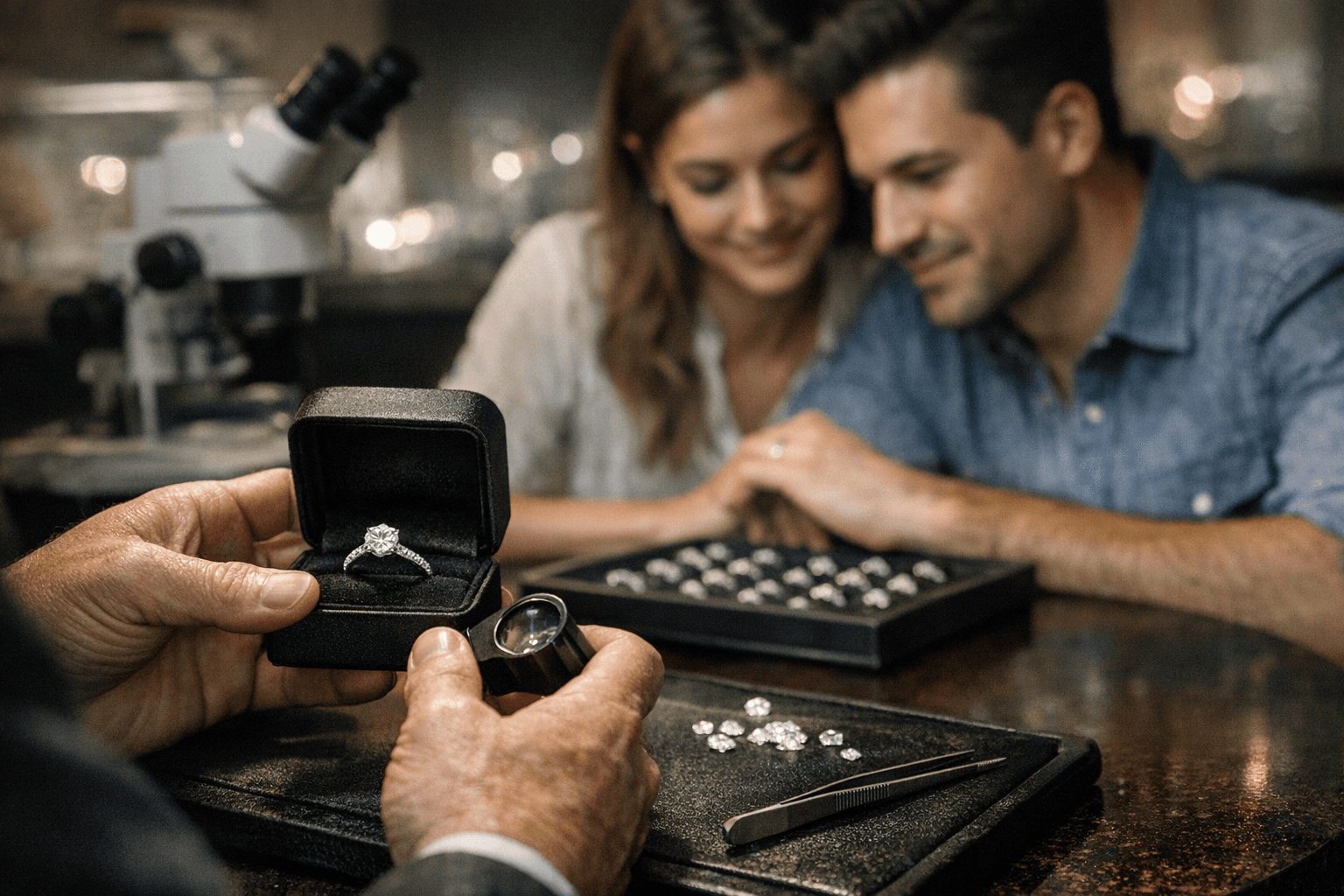
A 2-carat lab-grown oval with a pavé split-shank band now costs roughly what a 1-carat mined solitaire commanded a few years ago. That arithmetic is not just reshaping budgets; it is reshaping what buyers design. The 2026 engagement ring shopper is increasingly using lab-grown not as a concession but as a design strategy: redirecting price-per-carat savings into intricate settings, hidden halos, colored sapphire side stones, and east-west orientations that would have absorbed the entire ring budget if a mined center stone were involved. The category has moved firmly into the mainstream, and with it has come a retailer landscape crowded enough that the gap between genuine craftsmanship and polished marketing is not always visible at first glance.
Here is a retailer-by-retailer and certification-by-certification breakdown of where to shop, what documentation to demand, and which expert principles separate a ring worth wearing for decades from one that simply photographs beautifully.
Top Retailers
1. Blue Nile
Blue Nile holds the largest collection of GIA-certified lab-grown diamonds of any online retailer, which matters because the grading body behind a certificate is as important as the certificate itself. Its premium Astor Collection features super-ideal cut diamonds that enhance light performance beyond a standard cut grade, and showrooms across the country let buyers view stones in person before committing. For shoppers who want GIA documentation on a lab-grown stone and the option to hold it before purchasing, Blue Nile is the most straightforward place to start.
2. James Allen
James Allen surpasses most competitors with over 165,000 natural diamonds and 75,000 lab-created stones, and its ring-builder tool is one of the most genuinely useful customization interfaces available: pair any loose stone with any setting and see a 360-degree HD rendering before you commit. James Allen provides a wider variety of certifications than most retailers, including IGI, which specifies the creation method, either CVD or HPHT, on the report. That disclosure matters for buyers who want full transparency about how their stone was made, not just what it grades.
3. Clean Origin
Clean Origin's ring builder allows buyers to create the perfect combination of stone and setting, visualizing exactly how a chosen diamond will look before committing to the purchase. Every diamond above 0.5 carats comes with IGI or GCAL certification, so buyers are purchasing documented proof of quality rather than marketing promises. Clean Origin sells exclusively lab-grown stones, which means its entire operation is oriented around synthetic diamonds rather than treating them as an add-on to a natural diamond business, and that focus tends to produce more competitive pricing on larger stones where the lab-grown advantage is most pronounced.
4. Vrai
Vrai grows each diamond from the first atom in its own zero-emission foundry, which is a meaningful differentiator in a market where "sustainably produced" frequently means very little on closer inspection. Rather than sending stones to third-party grading labs, Vrai uses its own data-backed certification system supported by one billion data points per carat, with grades backed by a lifetime warranty and value guarantee that third-party certifiers like GIA and IGI do not offer. Vrai's Cut for You program offers 30 distinct diamond shapes, and every engagement ring can be customized down to pavé details and metal color. Buyers accustomed to independent grading will need to weigh Vrai's in-house system carefully, but the lifetime warranty adds a layer of accountability that external certifiers simply do not provide.
5. Mejuri
Mejuri approaches lab-grown diamonds from a design-forward fine-jewelry perspective rather than a conventional engagement ring retail model, which makes it the right fit for buyers who want something minimal, modern, or stackable. Its lab-grown diamond pieces are set in 14k gold with clean proportions, crafted for versatile everyday wear and a minimalist aesthetic. The trade-off is inventory depth: Mejuri's engagement-specific selection is narrower than dedicated ring retailers, so buyers with specific requirements around stone size or elaborate setting architecture will likely need to look elsewhere.
Certifications That Matter
6. IGI (International Gemological Institute)
IGI has become the most widely used grading body for lab-grown diamonds, and its reports are accepted across most major retailers including James Allen and Clean Origin. IGI reports specify the creation method on lab-grown diamonds, noting whether the stone was produced via CVD or HPHT, a level of disclosure that gives buyers complete provenance information beyond the standard four Cs. For buyers comparing stones across multiple retailers, an IGI certificate provides a reliable common language for evaluating cut, color, clarity, and carat.
7. GIA (Gemological Institute of America)
For natural diamonds, GIA is the undisputed gold standard certification, and its credibility has extended meaningfully into lab-grown grading. Blue Nile's distinction as the largest holder of GIA-certified lab-grown diamonds reflects how seriously that certification still signals quality to a segment of buyers. One practical note: GIA's lab-grown reports have historically not disclosed the production method the way IGI reports do, which is worth factoring in if CVD versus HPHT provenance matters to you.
8. GCAL (Gemological Certification and Appraisal Lab)
GCAL, used by Clean Origin, is gaining recognition for performance-oriented grading that goes beyond the standard four Cs to assess how a diamond handles brilliance and fire under real-world conditions. Its grading methodology includes light-return analysis and optical symmetry assessment, giving buyers a more complete picture of how a stone will actually look in a setting. For buyers redirecting mined-diamond savings into a larger lab-grown center stone, GCAL's performance focus is a useful check against a stone that grades well on paper but lacks visual presence in person.
Expert Tips
9. Prioritize cut grade over carat weight
The most consistent advice from gem specialists working with lab-grown buyers is to resist the temptation to maximize carat weight at the expense of cut quality. A poorly cut 2-carat stone will appear flat and lifeless, while an Excellent or Ideal-cut 1.5-carat stone delivers the brightness and scintillation that makes a ring look genuinely expensive at any size. Since lab-grown pricing already makes larger stones accessible, the smarter allocation is to lock in the best available cut grade first and scale carat weight within the remaining budget.
10. Invest savings in the setting architecture
One of the concrete advantages of buying lab-grown in 2026 is that price-per-carat savings can be redirected into the setting itself, where design complexity is often the single factor that separates a ring that looks like it costs $4,000 from one that looks like $15,000. Split-shank bands, pavé side stones, hidden halo architectures, and sapphire accent clusters all require skilled bench work and add significant visual weight without demanding a larger center stone. Retailers like James Allen and Vrai make it possible to configure these details at the point of purchase, and buyers should treat the setting budget as a first-order creative decision, not a secondary one.
11. Verify lab reports and scrutinize post-purchase policies
Every major certification body maintains an online verification database: before completing any purchase, cross-reference the report number on the stone against IGI's, GIA's, or GCAL's public portal to confirm the certificate is authentic and matches the stone's actual grades. Beyond the paperwork, pay close attention to warranty terms, resize guarantees, and stone inspection policies. A top-tier gem certification acts as a deed for your diamond; without it, a stone has no resale value beyond the metal weight of its setting. Retailers treating lab-grown as a long-term business tend to offer lifetime warranties and ongoing service; those treating it as a trend tend to offer short return windows. That gap in post-purchase commitment is usually the most honest signal about a retailer's actual confidence in what they are selling.
The design freedom that lab-grown pricing unlocks in 2026 is real, but it only pays off when buyers choose the right stone, from a credentialed retailer, with a setting built to last. The carat-weight conversation has already been won; the craftmanship conversation is the one worth having now.
This article was produced by Prism’s automated news system from verified source data, official records, and press releases, then run through automated quality and moderation checks before publishing. The system is built and supervised by the people who set the standards it runs under. Read our full AI policy.
Did this article answer your question?