Cluster engagement rings return as couples seek more personal style
Cluster rings are back because they read bigger, feel more individual and fit a market that still wants carat weight without the one-stone formula.
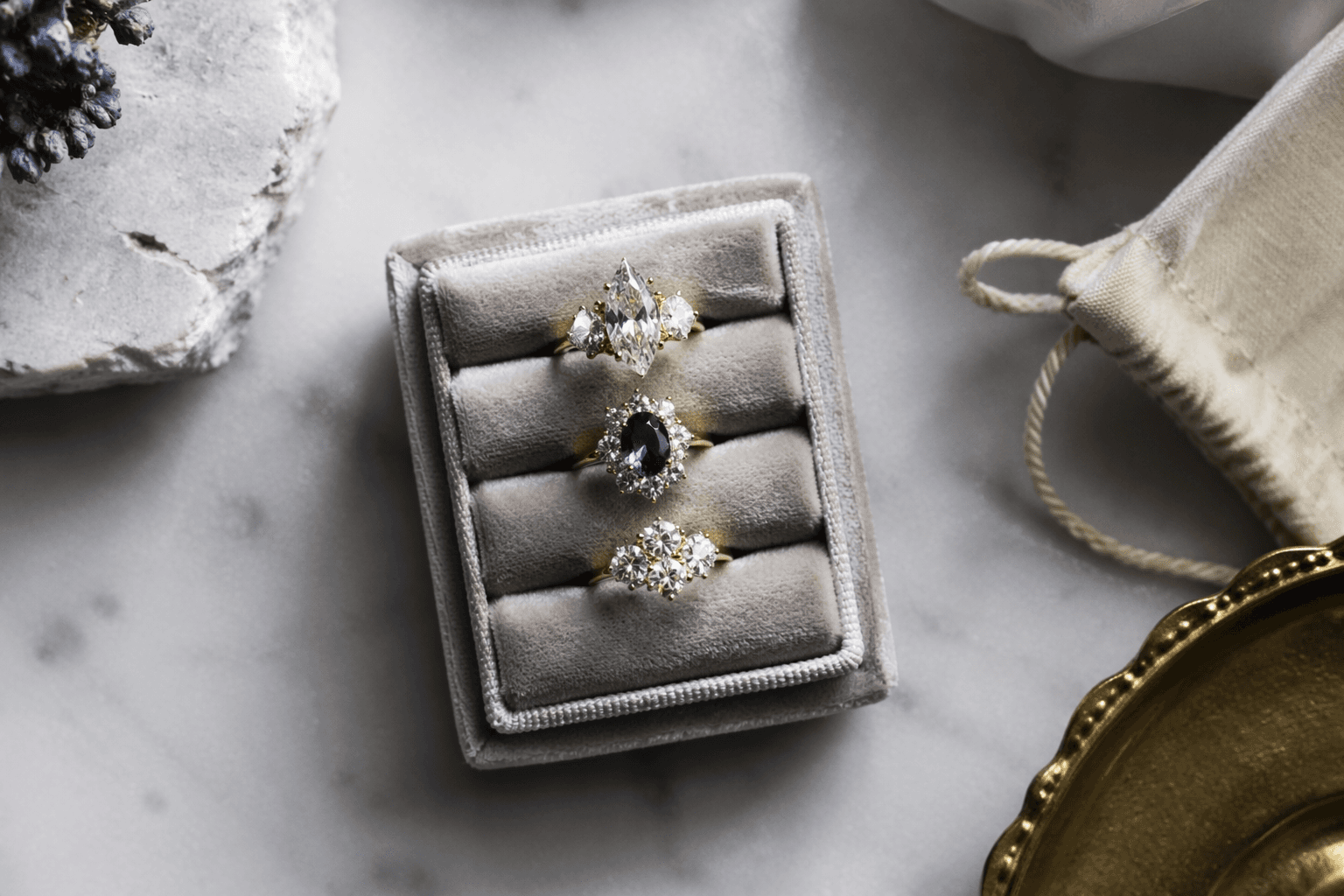
Multiple stones grouped into one face can give an engagement ring more finger coverage, more visual texture and a less scripted look than a classic solitaire. That is helping put cluster engagement rings back into view.
Why the solitaire is losing its monopoly
The solitaire still dominates the cultural imagination of the engagement ring, and that history is hard to shake. Merriam-Webster defines an engagement ring as a ring given in token of betrothal, especially a diamond solitaire, a definition that reflects how deeply one-stone rings have shaped American expectations. De Beers reinforced that template for decades through category marketing, including “A Diamond Is Forever” and later Forevermark advertising that centered a solitaire diamond engagement ring.
That old script is no longer the only one buyers want to follow. Cluster engagement rings are re-entering the conversation as consumers look for pieces that feel more personal and less conventional than the classic solitaire.
What a cluster ring gives that a solitaire does not
A cluster ring changes the visual math of an engagement ring. Instead of making one stone carry the entire design, it spreads the sparkle across several stones, which can make the ring appear fuller across the finger and more expressive at first glance. That kind of arrangement can read as floral, geometric, antique-inspired or deliberately asymmetrical, and that flexibility is part of its appeal.
The best cluster designs feel intentional rather than busy. When the stones are arranged with enough negative space and proportion, the ring can look like a composed object, not a compromise. That is one reason the category is benefiting from the broader appetite for bespoke, vintage-inspired, bezel, east-west and bold cluster styles now circulating through the market.
The numbers show buyers still want presence
The move toward more individual styling does not mean people are suddenly choosing smaller rings. The Knot’s 2024 Jewelry and Engagement Study puts the average engagement ring cost in the U.S. at $5,200, down from $5,500 in 2023 and $6,000 in 2021, while the average carat weight rose to 1.7 carats in 2024 from 1.5 carats in 2021. Buyers want value and impact, but they are not insisting on a single large center stone to get there.
Cluster rings fit that shift neatly. They can create a substantial visual footprint without relying on one oversized diamond, which makes them feel, to many shoppers, like a smarter use of budget. In a market where appearance, scale and self-expression all matter, a ring that looks generous on the hand can have a stronger value perception than a solitary stone of the same spend.
Who is choosing clusters instead of solitaires
The buyer moving toward a cluster ring is often the one who wants the ring to signal taste, not just tradition. The Knot’s 2024 research shows couples are increasingly planning proposals and ring shopping together. A jointly chosen ring is more likely to reflect shared aesthetic decisions than inherited convention.
That does not mean the solitaire is disappearing. It means the market is splitting into clearer camps. Some buyers still want the cleanest possible diamond story, especially when they want the engagement ring to function as a direct symbol of commitment. Others are choosing clusters because they want the ring to look distinct from the dozens of near-identical solitaires they have seen in vitrines, social feeds and proposal photos. The cluster buyer is usually chasing individuality, while still wanting a ring that reads as elevated and unmistakably engagement-ready.
Why the style feels right for this moment
The broader 2025 and 2026 trend picture helps explain the revival. Strong demand for bespoke, vintage-inspired, bezel, east-west and cluster designs is moving the engagement ring away from the rigid center-stone formula. These styles share one quality: they make the design visible from across a room and memorable in a photo, which is increasingly important in a proposal culture shaped by documentation and sharing.
That is especially true for clusters, which can deliver a stronger shape story than a standard round or oval solitaire. They can echo antique jewels without feeling costume-like, and they can appear more architectural than a single stone surrounded by a plain shank.
This article was produced by Prism’s automated news system from verified source data, official records, and press releases, then run through automated quality and moderation checks before publishing. The system is built and supervised by the people who set the standards it runs under. Read our full AI policy.
Know something we missed? Have a correction or additional information?
Submit a Tip