How to choose the best metal for an engagement ring
Platinum asks more upfront, but it buys durability and fewer maintenance rituals; white gold keeps the opening price lower, with replating and allergy checks built into ownership.
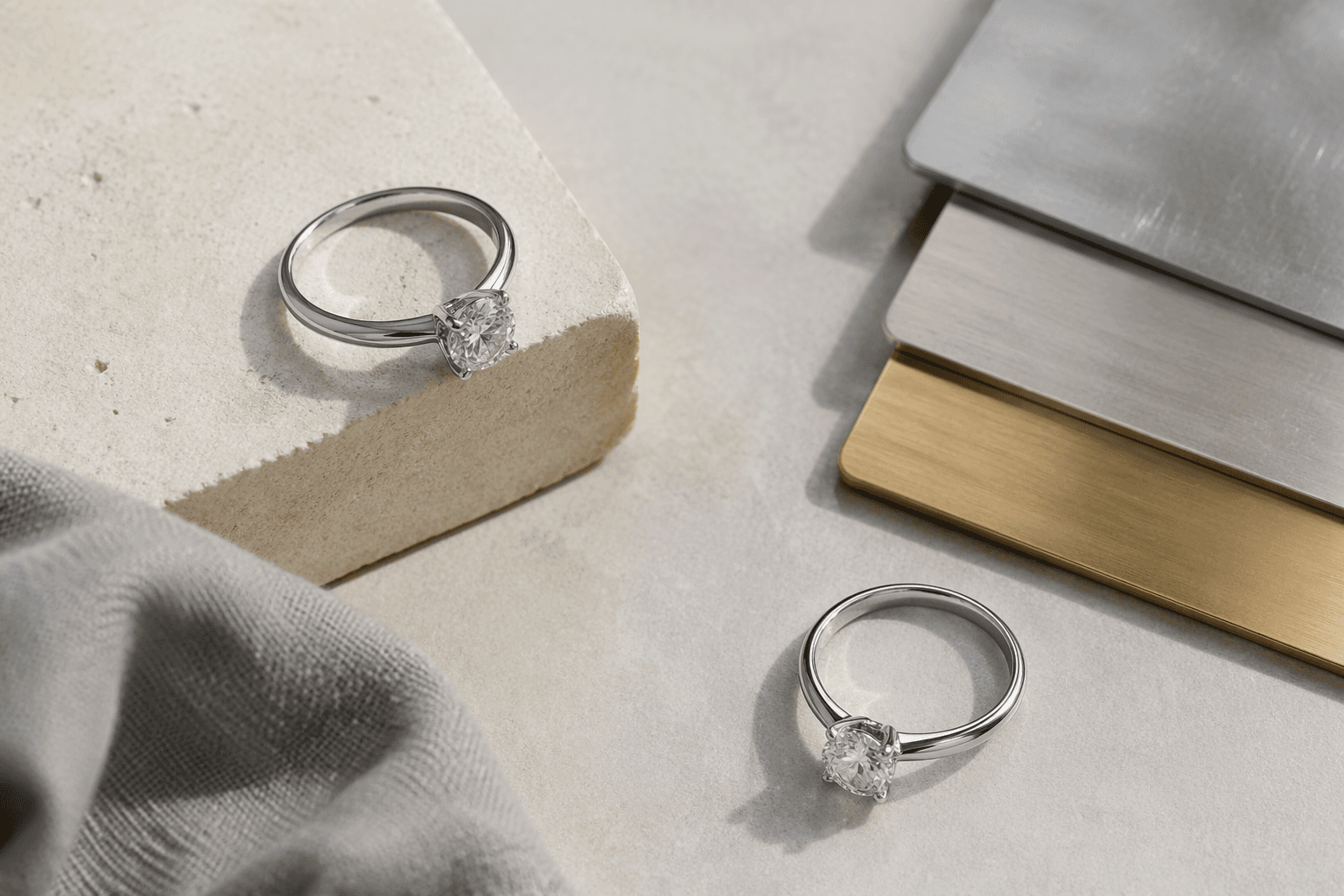
A platinum pavé setting asks for more at the outset, but it offers a sturdier long-term life. A white-gold hidden halo usually costs less to buy, though its bright finish depends on rhodium plating that wears away and eventually needs renewal. The choice comes down to price today, upkeep tomorrow, and how much wear the ring can absorb without becoming a project.
Start with the ownership curve
Metal choice is a balance of durability, maintenance, style, and resizing flexibility, not a one-size-fits-all decision. Platinum sits at the high end of that equation, while white gold is the familiar middle ground for diamond rings that need a bright, polished look without the premium of platinum.
Why white gold remains the default
White gold is usually the first metal people picture when they imagine a modern engagement ring, and for good reason. GIA lists it in 14K or 18K forms, typically alloyed with nickel or palladium, plus copper and zinc. That mixture gives the metal its strength and working character, while rhodium plating creates the crisp white surface shoppers expect in a solitaire, halo, or hidden-halo ring.
The tradeoff is built into the finish. Rhodium plating wears away gradually, so the ring may need to be replated over time to keep its brightest appearance. White gold can therefore look like the more accessible choice at purchase, but it often carries a maintenance rhythm that platinum does not. For a buyer who wants a clean, icy look and a lower initial outlay, that is a sensible compromise. For someone who wants the ring to look more or less the same with fewer interventions, it can feel like an obligation.
Skin sensitivity matters here as well. People with nickel allergies should avoid white gold alloyed with nickel. That makes the alloy as important as the color. Two white rings can look nearly identical in the case, but one can be far easier to live with than the other depending on what is mixed into the gold.
Why platinum earns its premium
Platinum is a durable, high-end option, but not a maintenance-free one. Over time, platinum can develop a patina, a softer surface character that some wearers love and others prefer to polish away. It can also be expensive to resize, which matters more than many buyers realize until the ring needs an adjustment after the proposal, a pregnancy, weight change, or simply a shift in comfort.
Platinum often makes the most sense in settings that are meant to live hard. A pavé engagement ring, where small stones are set close together and the metal does a lot of the visual work, benefits from the sense of permanence platinum brings. The ring may not need constant replating to preserve its presence, and the metal’s heavier-duty reputation gives the whole design a more consequential feel. In practical terms, platinum is the better answer when the buyer would rather pay more once than manage recurring cosmetic upkeep.
Where sterling silver and palladium fit
Sterling silver is the budget option, but it is soft, scratches easily, and tarnishes over time. That is why it is rarely used for engagement rings or wedding bands, even when the look is attractive at first glance. Silver can be lovely in fashion jewelry; for a ring meant to withstand years of daily wear, it is usually the wrong tool for the job.
Palladium belongs in the same white-metal conversation, and white does not mean identical. Even when a buyer is only shopping among pale, precious metals, the real differences live in wear, upkeep, and comfort on the hand.
The role of titanium and tungsten
For some shoppers, the most important question is not how the metal looks in a showcase, but how it behaves in daily life. Titanium is a very light metal that needs essentially no upkeep, although resizing is limited. Tungsten goes even further on the rigidity scale, because it cannot be resized.
They solve for different priorities than platinum and white gold. Titanium is for someone who values a feather-light feel and near-zero maintenance. Tungsten is for someone who prizes hardness and accepts that the ring will not be easily altered later.
A clean way to choose
The simplest way to decide is to imagine the ring five years from now, not just on proposal day.
- Choose platinum if you want a more durable metal, are comfortable with patina or occasional polishing, and would rather avoid regular replating.
- Choose white gold if you want a bright white finish, a lower upfront price, and do not mind renewing rhodium plating as the surface wears.
- Avoid white gold alloyed with nickel if skin sensitivity is part of the equation.
- Skip sterling silver for an engagement ring if long-term wear matters, because softness and tarnish make it a poor match for daily use.
- Consider titanium or tungsten only if ultra-light wear or minimal upkeep matters more than resize flexibility.
This article was produced by Prism’s automated news system from verified source data, official records, and press releases, then run through automated quality and moderation checks before publishing. The system is built and supervised by the people who set the standards it runs under. Read our full AI policy.
Know something we missed? Have a correction or additional information?
Submit a Tip