East-west engagement rings bring a modern, gender-neutral twist to classics
Zendaya put the sideways diamond back on the map, and east-west settings now make ovals, pears, and marquises look wider, sleeker, and more modern.
Why the sideways setting changes the whole ring
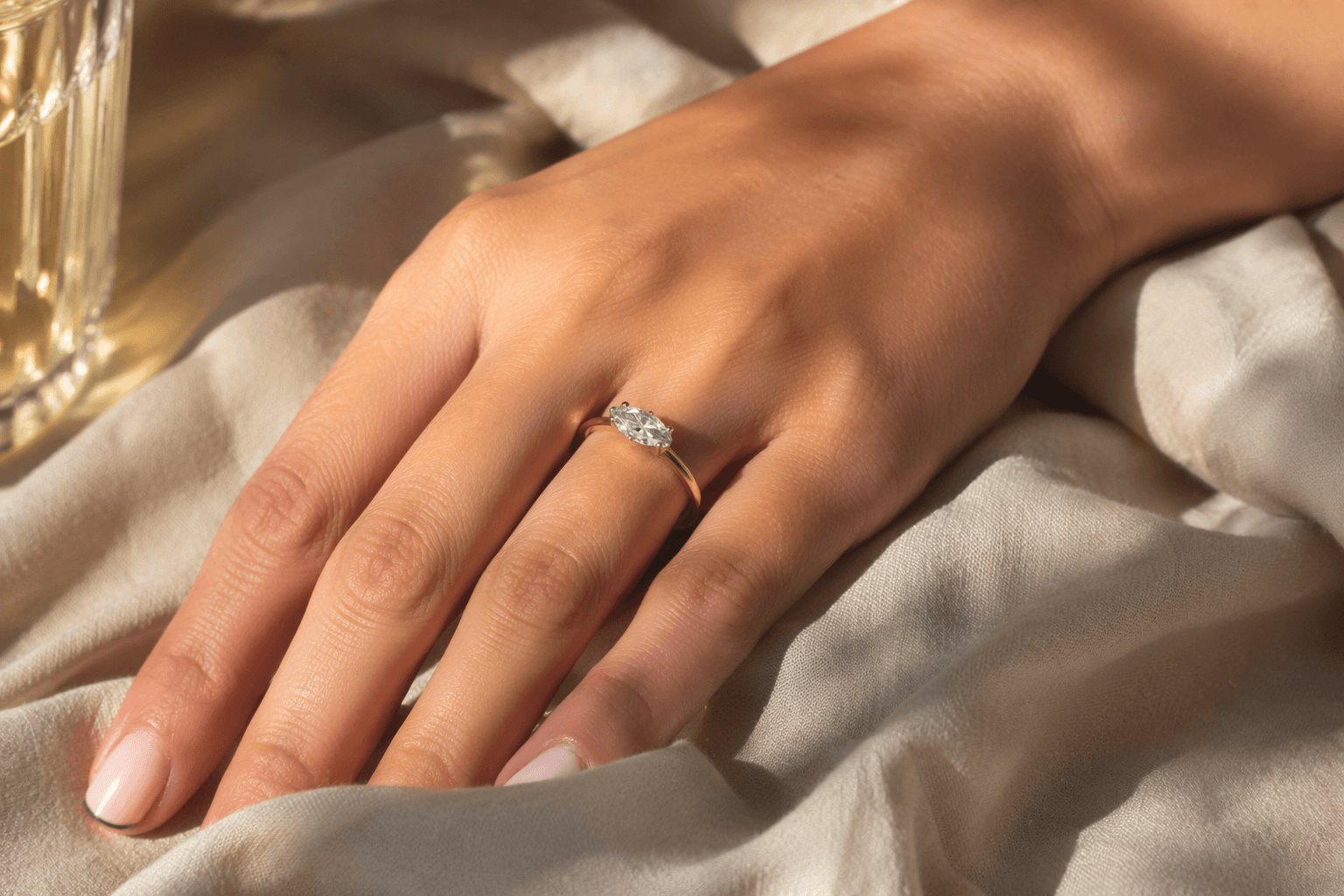
An east-west engagement ring rotates an elongated center stone so it runs horizontally across the finger instead of vertically. That simple turn changes everything: an oval looks more graphic, a pear feels less sentimental, a marquise reads sharper, and an emerald cut becomes a clean strip of light rather than a tall column of facets. The result is a ring that feels current without relying on a larger stone or a louder budget.
The silhouette is not new. East-west settings trace back to the 1920s and the Art Deco movement, when geometry, symmetry, and clean lines shaped jewelry design. What feels fresh now is the way the orientation reads on the hand: less classic solitaire, more intentional design object.
The optical trick behind the appeal
Part of the style’s power is visual. Placing an elongated stone sideways can create an optical illusion that makes the center gem appear larger. The horizontal line also broadens the ring’s footprint, so the stone seems to spread across the finger in a way that feels confident and contemporary.
That is why east-west settings work so well with cuts that already have strong proportions. An emerald cut becomes sleeker. A marquise looks fashion-forward instead of ornate. A pear loses some of its traditional teardrop sweetness and turns into a more abstract shape. Even an oval, the safest of elongated cuts, suddenly feels less expected when it is laid on its side.
- Emerald cut: crisp, architectural, and especially strong when the step facets are allowed to run wide.
- Oval: softer than a rectangle, but sideways it looks more editorial than conventional.
- Pear: the point and curve become a low, graphic silhouette.
- Marquise: the shape’s sharp ends emphasize the horizontal line, especially on slim, diamond-set bands.
- Radiant: its bright face-up pattern can translate well when the setting is used to stretch the stone across the finger.
Why it feels more personal, and more gender-neutral
The east-west setting has broad appeal for both men and women because it sidesteps some of the old rules that still cling to engagement-ring design. A vertical solitaire can signal tradition immediately; a sideways stone feels more like a style choice than a script. That difference matters now, especially as couples look for rings that feel individualized rather than prescribed.
The Knot’s 2024 Jewelry & Engagement Study found that 77% of proposees had some involvement in ring selection, which helps explain why unusual proportions and less literal expressions of romance are gaining ground. The same study reported that round solitaires still made up 28% of engagement-ring designs in 2024, proof that the classic center stone remains dominant even as couples search for alternate silhouettes. East-west sits neatly between those two impulses: recognizable, but not routine.
Zendaya made the sideways ring impossible to ignore
Zendaya renewed public interest in the look, and the attention around her ring says a lot about the style’s cultural power. One report described the piece as a 5.02-carat design by London jeweler Jessica McCormack. Another described it as a 4-carat east-west-set elongated cushion-cut natural diamond in a Georgian-style button-back setting. The differing descriptions still point to the same thing: a ring that uses orientation, not extravagance, to stand out.
That kind of attention has pushed the east-west setting beyond celebrity shorthand. It is now part of a broader conversation about rings that feel less traditional and more identity-driven, a shift jewelry writers and designers say has been building since the late 2010s.
The celebrity cases that helped define the look
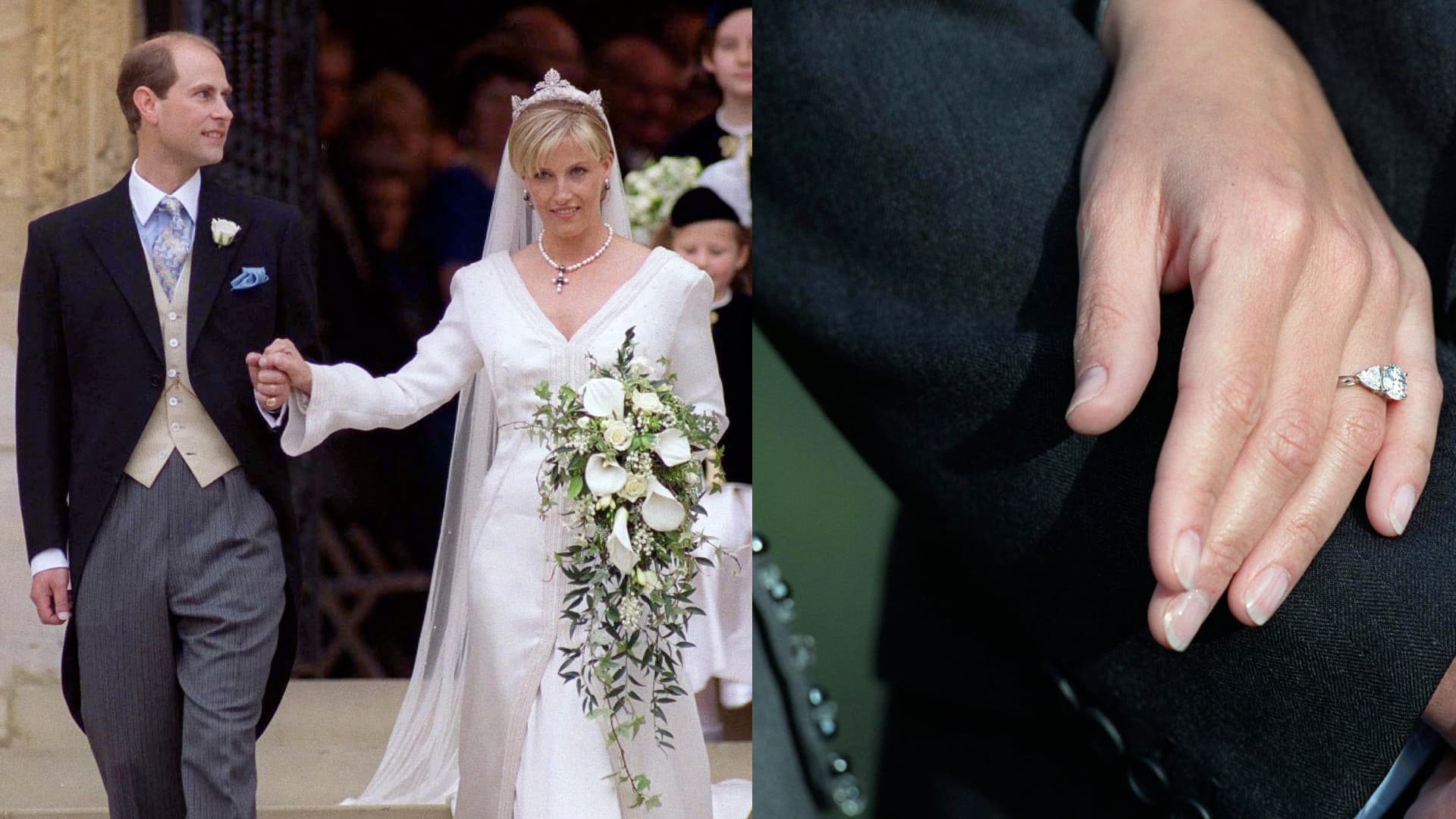
The sideways setting has shown up in a range of high-profile rings, each one proving how differently the orientation can read depending on the stone and mount. Kate Beckinsale wore an emerald-cut diamond turned sideways, giving a familiar cut a cool, linear profile. Portia de Rossi’s horizontal marquise ring sat on a twisted band covered in diamonds, adding texture to the long, low shape.
Catherine Zeta-Jones wears an east-west marquise diamond ring, while Natalia Vodianova received a pear-shaped east-west engagement ring from Antoine Arnault. Together, those examples show the range of the style: minimal or ornate, subtle or statement-making, but always anchored by the same design move, the sideways turn.
How the setting changes the mood of the stone
The best east-west rings do not simply flip a shape for novelty’s sake. They change how the stone occupies space. A vertical oval can elongate the finger in the expected bridal way; the east-west version broadens the line and feels more balanced against a wide band or a sculptural mount. An east-west emerald cut can feel almost like a miniature cuff of light, while a marquise or pear can become more modern when the sharp geometry is allowed to stretch horizontally.
That is why the style has spread across price points and across stone shapes. Whether the center stone is a diamond, an emerald cut, an oval, a pear, a marquise, or a radiant cut, the east-west setting makes the familiar look newly considered. It is a reminder that in engagement rings, the most powerful transformation is not always about size or carat weight. Sometimes it is about turning the stone and letting the shape speak in a different direction.
Know something we missed? Have a correction or additional information?
Submit a Tip