Engagement Rings Go Bigger, Solitaires Return, and Vintage Styles Gain Ground
Taylor Swift and Travis Kelce helped reset the mood: bigger solitaires, antique cuts and bespoke gold settings are replacing the old white-metal rule.
The new engagement-ring brief is bigger, but also more personal
Taylor Swift and Travis Kelce’s reported engagement helped set the tone for what comes next: a ring that feels immediately legible from across a room, yet still individual enough to read as a private statement. That is the tension inside ADIF’s forecast, where conscious luxury and larger diamonds are no longer opposites but part of the same conversation.
The numbers support the shift. The Natural Diamond Council’s Natural Diamond Trends 2025 report, built on more than four million jewelry transactions across 2,500 U.S. specialty jewelers with Tenoris, found that diamond engagement rings accounted for 38% of total natural diamond jewelry sales in 2025. The average engagement ring reached 1.16 carats, and the average price rose to $7,364, nearly 10% higher than 2024. Shoppers are not simply retreating in a cautious economy; they are often trading up, choosing more visible stones and better-made rings with a sharper point of view.
Why the solitaire is back in the spotlight
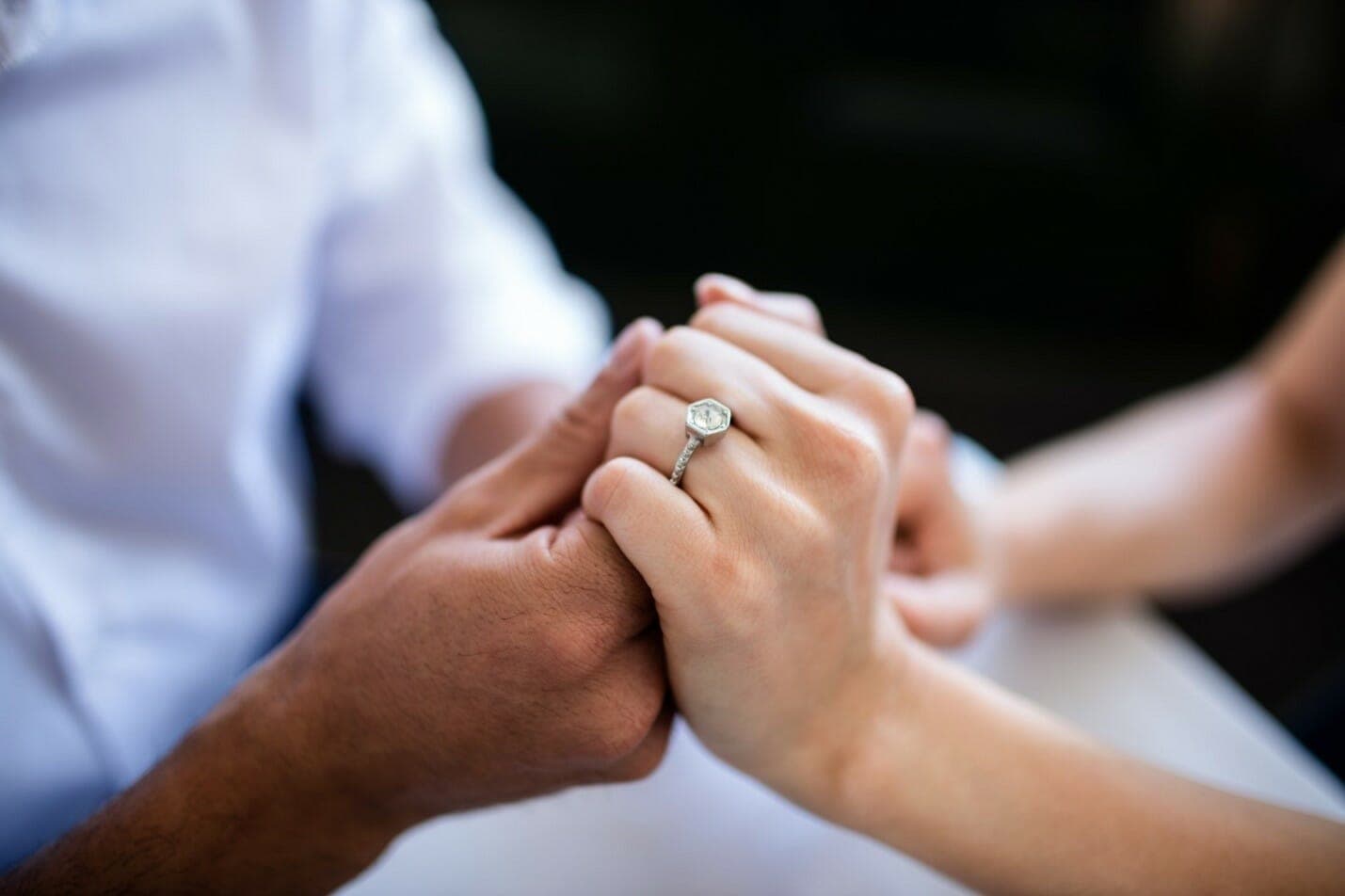
The solitaire is one of the clearest comeback stories in bridal jewelry, but the new version is not shy or spartan. It is bigger, better proportioned, and often paired with a setting that makes the stone look as if it has been edited down to its essence. In practical terms, that means a diamond that is allowed to carry the ring, whether it is held by crisp prongs, wrapped in a sleek bezel, or lifted in a setting that gives it more light and presence.
What feels fresh now is the confidence of the form. A solitaire works because it puts the carat weight and the cutting style front and center, which matters in a market where larger stones are clearly resonating. It also lets buyers spend where the eye lands first, on the center stone, while still keeping the design architectural and clean.
- solitaire engagement ring
- prong-set solitaire
- bezel solitaire
- cathedral solitaire
- oversized center stone
Search terms that fit this mood:
Vintage cuts are making rings feel less uniform
If solitaires are the cleanest expression of the moment, vintage-inspired stones are the most romantic. Forbes reported that Taylor Swift and Travis Kelce’s reported engagement in August 2025 reignited interest in old-cut diamonds and elongated cushion shapes, and designers say clients are now asking for old mine cuts and warmer hues such as champagne and soft brown. That shift gives a ring texture and character, especially when the stone is not trying to look icy or overly perfected.
These cuts matter because they change the mood of the diamond. Old mine cuts, with their softer symmetry and deeper flashes, feel more intimate than a highly engineered modern brilliant. Elongated cushion shapes stretch the finger visually and lend a little cinematic drama, while warmer stones read as deliberate rather than apologetic, especially in yellow gold.
This is also where the market has moved far from the turn-of-the-millennium standard. A jewelry historian told National Jeweler that around 2001, almost all engagement rings were expected to use white metal because diamond quality, not size, was the main emphasis. Today, the emphasis has widened. Buyers still care about clarity and cut, but they also care about silhouette, provenance, and the ring’s emotional language.
Yellow gold is no longer the exception
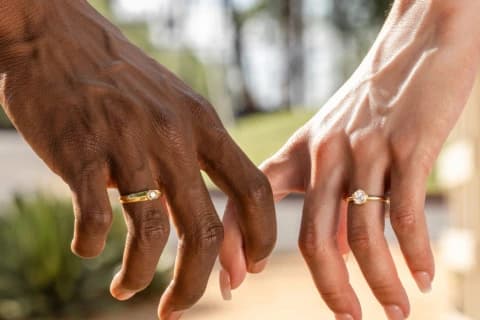
National Jeweler reported that the old rule that engagement rings had to be set in white metals is fading, with yellow gold gaining ground even as white metals remain common. That matters because metal choice now changes the entire read of a ring. White metal can make a stone feel cooler and more modern, while yellow gold introduces warmth and a more jewelry-like richness, especially around antique-inspired stones.
The Knot’s 2026 Real Weddings study, which surveyed more than 10,000 U.S. couples who married in 2025, helps explain why this is happening in the broader market. Couples are less interested in following a single prescribed bridal look and more interested in choosing a metal that suits their skin tone, wardrobe, and sense of self. In other words, the ring is no longer trying to disappear into a category.
Chunky gold and sculptural settings are the new kind of bold
Natural Diamonds says gold prices are at record highs, yet chunky gold rings are still a leading engagement-ring trend. That sounds contradictory until you see how jewelry works: when the material itself becomes more expensive, designers often respond by making the material part of the point. A thicker shank, a sculptural shoulder, or a bold gold frame can make a ring feel substantial and intentional rather than delicate by default.
This is where bespoke design becomes more than a luxury label. A custom ring lets the wearer decide whether the gold should feel polished and minimal, softly rounded, or heavily architectural. It also gives jewelers room to reconcile scale with individuality, which is the real pressure point in the current market. Bigger stones are in demand, but they need a setting that does not look generic beside them.
- the clean solitaire with a substantial center stone
- the antique-inspired ring with old mine or old-cut character
- the yellow-gold ring with sculptural weight
- the bespoke piece that treats the setting as part of the story
Think of the strongest 2026 rings as falling into four visual families:
What the data says about conscious luxury
The phrase conscious luxury can sound abstract until you look at how people are actually buying. The rise in VS1 natural diamonds, up 4% in 2025 after a 15% increase the year before, and VS2 diamonds, up 2% after an 8% increase in 2024, suggests shoppers are thinking carefully about visible quality, not just chasing the highest grade on paper. They want a stone that looks exceptional in real life, not one that only performs under a loupe.
That is the real shape of the new engagement ring. It is larger, yes, but also more considered, more specific, and more willing to show personality in the cut, the metal, and the setting. The best rings now do what the strongest jewelry has always done: they tell you something about the person wearing them before they ever say a word.
This article was produced by Prism’s automated news system from verified source data, official records, and press releases, then run through automated quality and moderation checks before publishing. The system is built and supervised by the people who set the standards it runs under. Read our full AI policy.
Did this article answer your question?