Master Guide to Buying a Stunning 3‑Carat Diamond Ring
A 3-carat diamond's true size lives in its cut proportions, not its weight — here's how spread, table depth, and setting choice determine what you actually see on the finger.
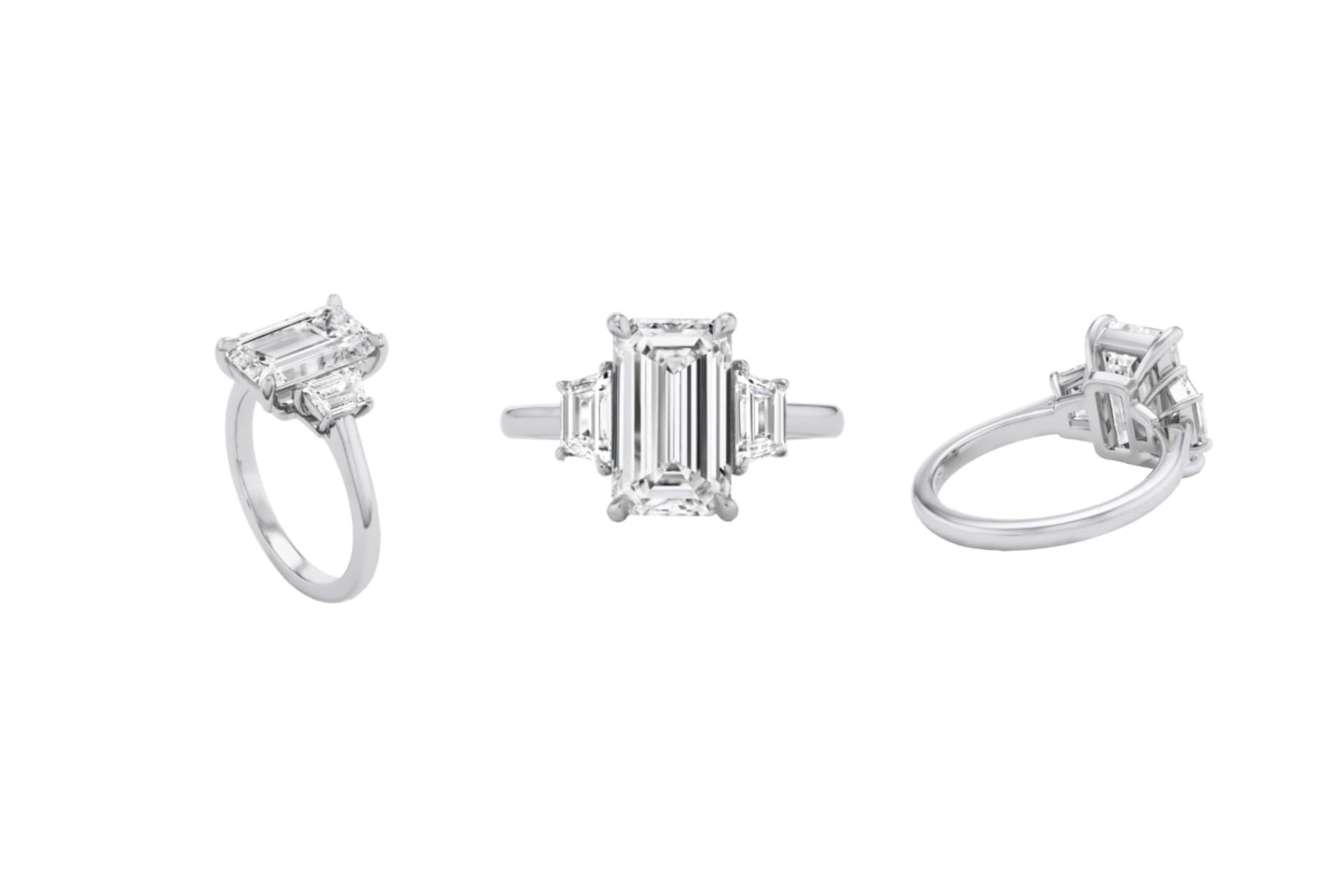
Place a well-cut 3-carat round brilliant on a size-6 finger and it covers roughly 9.4 millimeters of real estate, nearly spanning the full width of the finger's face. That is not an abstraction — it is a physical fact that shapes every decision in this purchase, from the proportions you prioritize to the mount you choose. What surprises most buyers is that two diamonds can share an identical 3-carat weight and look dramatically different in the hand. Cut geometry is the reason, and understanding it is the difference between a stone that commands a room and one that quietly underperforms.
What "3 Carats" Actually Looks Like
Carat is a unit of mass, not dimension: one carat equals 200 milligrams. That means the visual footprint of a 3-carat stone is entirely dependent on how that weight is distributed across its geometry. A 3-carat round brilliant cut to ideal proportions measures approximately 9.25 to 9.4mm across the face. A 3-carat marquise, by contrast, stretches to roughly 15mm by 7.5mm, elongating the finger dramatically and creating a far larger apparent silhouette for the same weight. An oval achieves similar spread with a softer outline.
The practical lesson: buyers fixated on carat weight often miss the more meaningful variable of spread, the face-up surface area actually visible when worn. A deep-cut round brilliant with a depth percentage above 63% buries weight in its belly rather than projecting it face-up, making a 3-carat stone look closer to 2.5. Conversely, a shallow cut opens up spread but sacrifices the internal light performance that makes a diamond worth this investment in the first place.
The Proportions That Govern Brilliance
For a round brilliant at this size, the sweet spot is a depth percentage between 59% and 62.5% and a table percentage between 54% and 58%. These ranges preserve the precise interplay of crown and pavilion angles that sends light back through the crown rather than leaking it out the base. Deviate meaningfully on either parameter and the result is a stone that looks large in a diagram but flat in daylight.
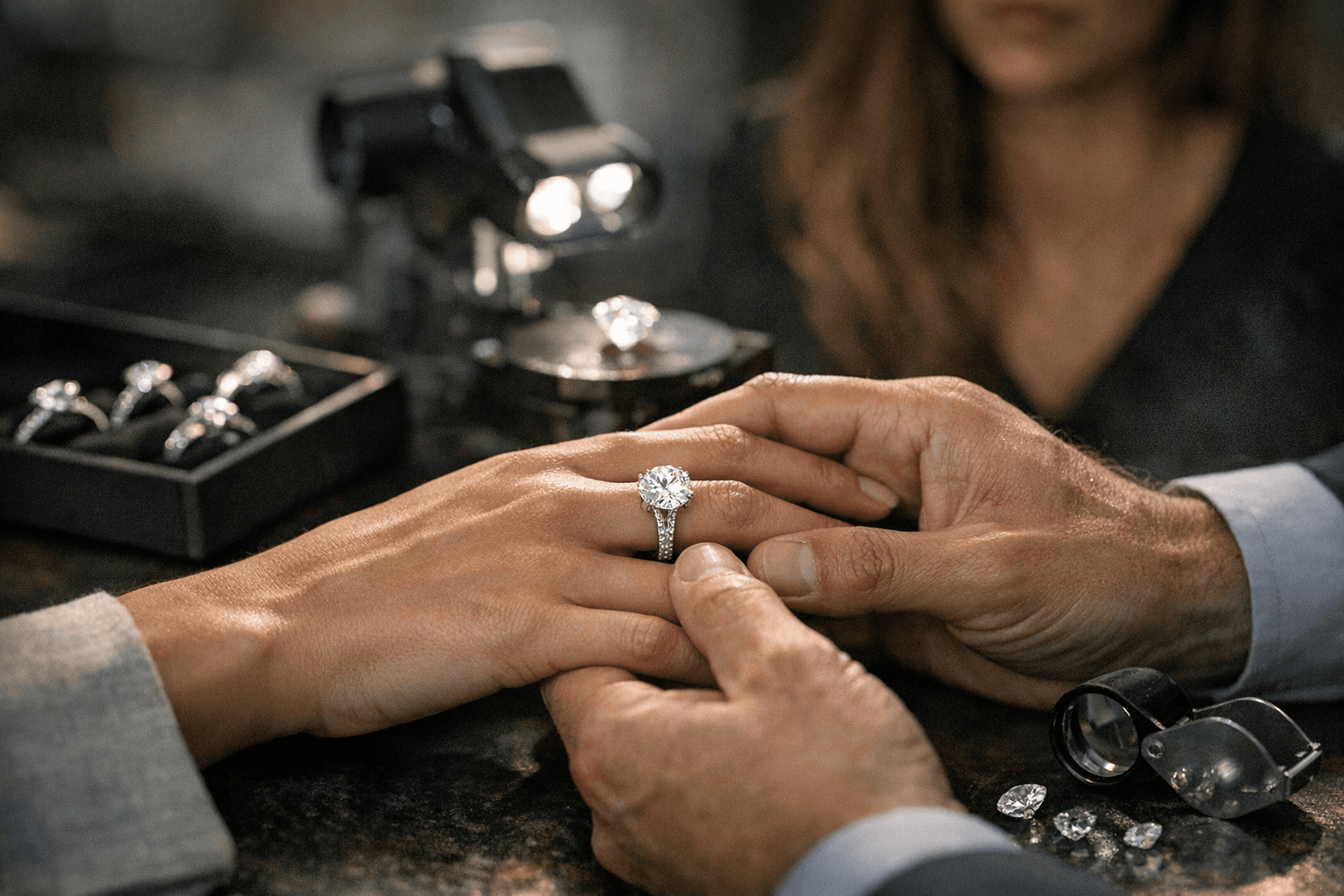
Cushion cuts demand equal attention. An elongated cushion with a depth under 70% and a table under 70% offers generous spread and the crushed-ice scintillation that remains on-trend; a squared cushion cut deeper than that hides its weight and faces up noticeably smaller. Emerald and Asscher cuts, with their step-cut facets and longer light return paths, face up more conservatively than their carat weight suggests — something to factor in if size of presence is the primary goal.
For fancy shapes, one more trap to navigate: the bow-tie effect. Pear, oval, and marquise diamonds can all develop a dark shadow across their belly if the cut geometry is off. A well-cut pear with its 58 facets — such as the Van Cleef and Arpels 3.41-carat example that has appeared at Sotheby's — eliminates that shadow entirely; a poorly proportioned one amplifies it. Always review a high-resolution face-up video, not just the grading report numbers.
Color and Clarity at Scale
At 3 carats, the diamond's expanded table becomes a window into its interior. Inclusions that disappear in a 1-carat stone can be visible to the naked eye in a 3-carat, which is why the clarity recommendation tightens here. VS1 to VS2 is the reliable range for eye-clean stones; finding a genuinely eye-clean SI1 at this size is possible, but uncommon enough that it should not be the plan unless you have personally examined the stone or reviewed loupe-quality video.
Color shifts similarly. G or H color is the practical target for a white-metal setting — either will appear colorless face-up without paying the premium for D through F. In yellow or rose gold, the metal imparts its own warmth, which means an I or J color stone often reads beautifully and allows budget to be redirected toward cut and clarity. One variable to flag specifically: strong or very strong blue fluorescence should be avoided at this size. In natural daylight it can make the stone appear hazy, and it depresses resale value significantly.
Setting Strategy: Presence vs. Protection
The setting is not a passive frame. At 3 carats, it actively shapes how much of the stone the eye perceives, how safely the stone survives daily life, and how much maintenance the ring demands over years of wear.
- Solitaire: A classic four- or six-prong solitaire on a cathedral or straight shank puts the stone on full display, letting its cut and character take complete center stage. The tradeoff is exposure: prongs snag on fabric, catch on hair, and require periodic inspection to ensure they have not loosened. A well-designed low-profile solitaire lowers the stone closer to the hand, reducing snag risk without sacrificing the open-face brilliance. This is the setting that rewards a near-perfect cut and penalizes anything less.
- Halo: A single row of pavé-set diamonds around the center stone amplifies apparent size and creates an intensely brilliant silhouette. The visual boost is real — the halo extends finger coverage and makes the center stone read larger than its actual dimensions. The maintenance cost is also real: small pavé stones can loosen and fall out over time, requiring more frequent professional checks. For daily wearers with active hands, that is a meaningful consideration.
- Bezel: A full bezel encircles the girdle of the stone in a continuous collar of metal, making it the most protective setting available. It is snag-proof, low-profile, and architecturally modern. The genuine tradeoff is that the metal surround slightly reduces the edge-to-edge diamond visible from the top, which can make the stone read marginally smaller. For someone who works with their hands, travels frequently, or simply prefers the streamlined aesthetic, the bezel's protective geometry more than justifies that visual concession. A partial bezel — covering the sides but leaving the crown exposed — offers a compromise between security and light performance.
- Three-stone: Flanking the center diamond with two smaller stones extends finger coverage well beyond what the center stone alone provides, creating a balanced, symmetrical presence. It also introduces the question of whether to match shapes — pairing an emerald-cut center with emerald-cut flankers, for example, creates a coherent linear architecture.
Natural vs. Lab-Grown: The Honest Tradeoff
The price divergence between natural and lab-grown diamonds at 3 carats is the widest it has ever been. A natural stone with G-H color, VS clarity, and an ideal cut runs between $35,000 and $55,000. A lab-grown diamond with the same paper grades — certified by GIA or IGI — costs between $1,800 and $3,500, representing roughly 82% less in acquisition price. The stones are physically and chemically identical; the difference is origin and market perception.
What that price gap does not erase is the resale trajectory. Natural diamond prices at this size have generally increased over time, supported by finite geological supply. Lab-grown prices have been falling for years as growing technology becomes more efficient and supply expands. Buyers who treat the purchase as a long-term asset tend toward natural stones; buyers who prioritize size and optical quality at a given budget, without resale as a factor, find lab-grown compelling. Neither is the wrong answer — the choice depends on which variables matter most to the individual buyer.
Certification, Inspection, and Buying Channels
No purchase at this price point should proceed without an independent grading report. GIA-certified natural diamonds carry a measurable price premium over stones graded by other laboratories, but that premium reflects the market's trust in GIA's consistency. For lab-grown stones, IGI grading is widely accepted and reliable. Avoid certificates from less rigorous labs, especially for a stone in this price range. The certificate's laser inscription on the girdle should match the report number exactly — verify this before purchase.
Beyond the certificate, insist on high-resolution loupe photographs that reveal inclusions and any graining. Inspect the mounting condition if you are buying a set ring: check that prongs are not thinned or bent, that the bezel has not loosened, and that the stone sits level. For auction purchases or pre-owned pieces, a brief independent appraisal adds a layer of protection.
Buying channels at 3 carats include authorized retail, bespoke design houses where you select the stone and setting independently, auction houses where exceptional natural stones occasionally surface at transparent prices, and curated online marketplaces where GIA reports, loupe videos, and return policies have become standard practice. Each channel has its place; what matters in all of them is the same: verify the report, prioritize cut quality over headline carat weight, and budget for a secure, well-crafted setting that protects the investment as reliably as it displays it.
The setting warranty and regular prong checks are not afterthoughts. At this scale, they are part of the cost of ownership — and a 3-carat diamond that is worn confidently every day is worth considerably more than one sitting in a drawer waiting for a special occasion.
This article was produced by Prism’s automated news system from verified source data, official records, and press releases, then run through automated quality and moderation checks before publishing. The system is built and supervised by the people who set the standards it runs under. Read our full AI policy.
Did this article answer your question?