Queen Elizabeth II’s Engagement Ring, a Romanov Diamond Legacy Revealed
A 3-carat diamond from a Romanov-linked tiara, reset in pavé platinum, turned Elizabeth II’s ring into a lesson in heirloom reuse and lasting design.
A ring built from two histories
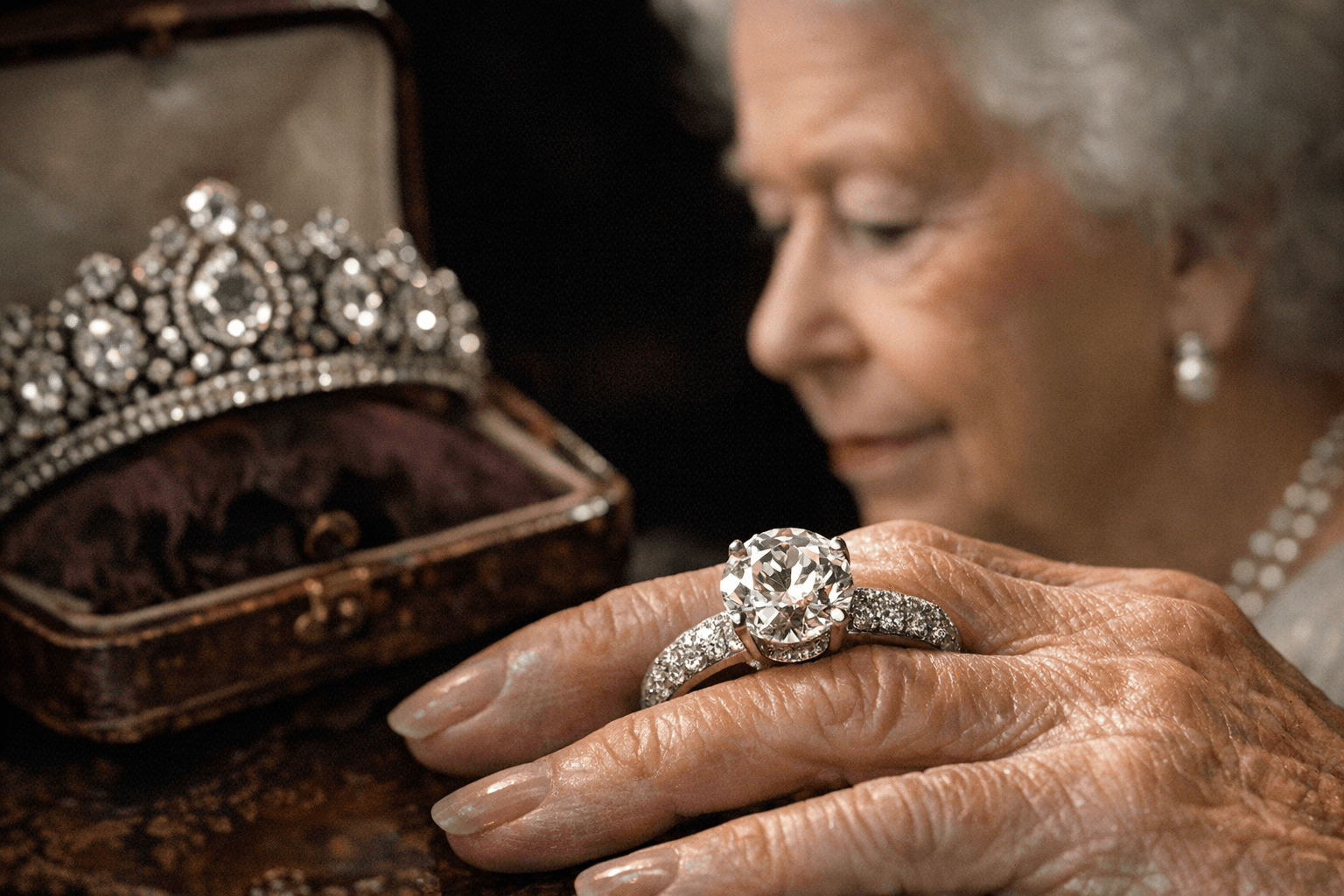
Queen Elizabeth II’s engagement ring carries more than sparkle. Its 3-carat round brilliant-cut center stone was set into a pavé platinum band, and the diamonds came from a tiara that had already lived another life in the royal family. That is why the ring still resonates: it is both a jewel and a record of inheritance, redesigned with enough restraint to feel elegant rather than crowded.
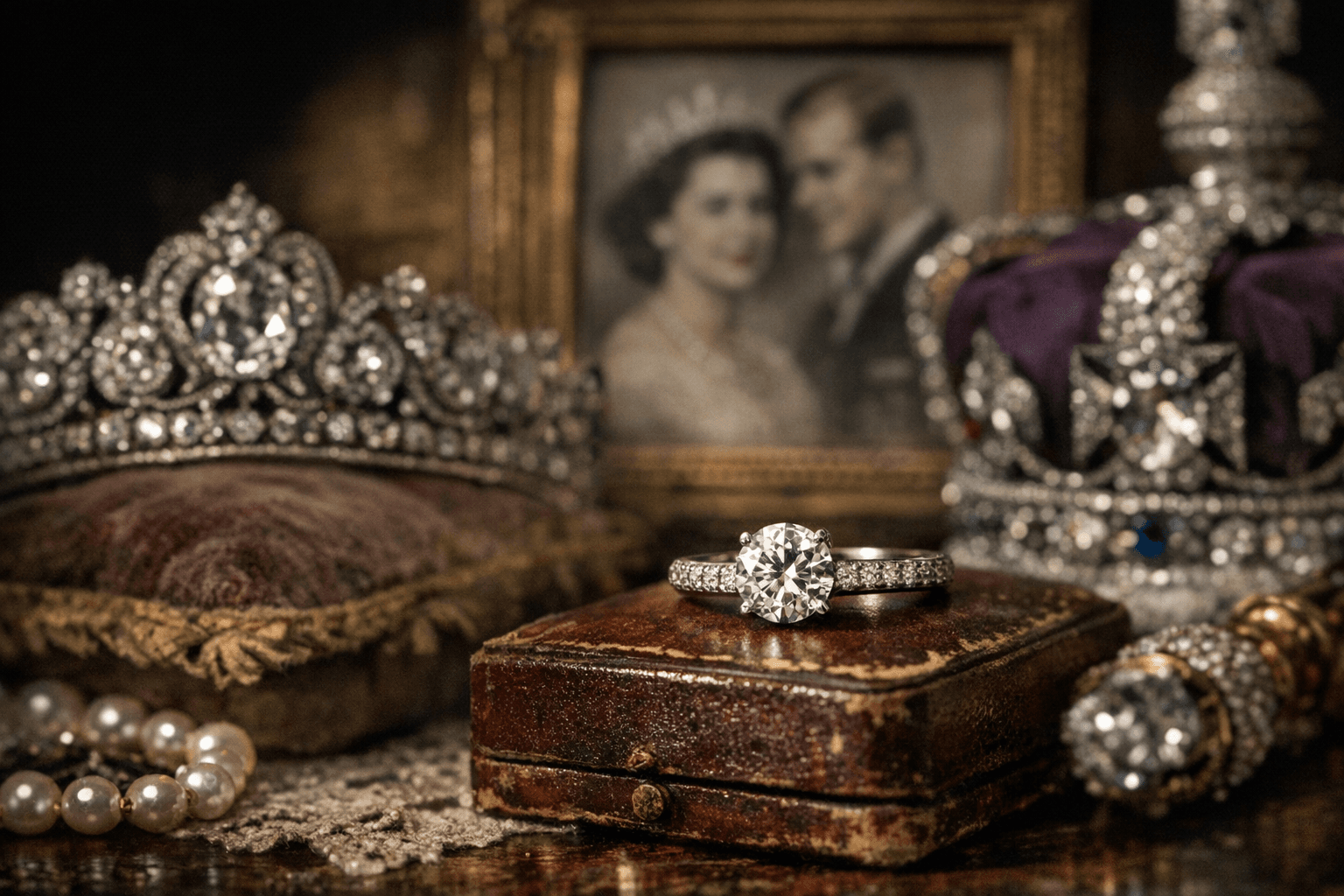
The Royal Family names Philip Antrobus as the jeweller behind the piece, and the materials tell the story immediately. Platinum gives the ring a cool, durable frame, while the pavé setting keeps the surface alive with light without letting the center stone lose command. At roughly $250,000, it sits in the realm of serious heirloom jewelry, but its value is not only about carat weight or metal. It is about the rarity of a ring whose meaning was already established before the proposal itself.
From Romanov treasure to royal engagement
The tiara that supplied the diamonds belonged to Princess Alice of Battenberg, who was later known after marriage as Princess Andrew of Greece and Denmark. That jewel had a history long before it was dismantled for the engagement ring: it was a wedding gift from Tsar Nicholas II and Empress Alexandra Feodorovna of Russia. In other words, the ring does not just carry a family story. It carries Romanov imperial provenance, which adds a layer of historical weight that few modern engagement rings can match.
This matters because provenance is not the same as decoration. The source of the stones is part of the design’s power, and it gives the ring a rare kind of authenticity. There is no vague heritage language here, no borrowed romance built by marketing. The meaning comes from a documented chain of ownership, from Russia to Princess Alice, and then into the hands of Prince Philip for the woman who would become Queen Elizabeth II.
The romance that gave the ring its stage
Elizabeth and Philip first met in 1934, but the engagement that made the ring famous was officially announced on 9 July 1947. They married on 20 November 1947 at Westminster Abbey, a ceremony that placed the ring at the center of a postwar royal moment the public never forgot. Their marriage went on to become the longest royal marriage in British history, which helps explain why the ring has remained so visible in the collective imagination.
The ring’s emotional force comes from how personal the gesture was. Philip did not commission an entirely new jewel from fresh stones. He transformed a family tiara, and in doing so turned inherited material into a modern engagement ring that still felt intimate. That is a useful model for anyone considering heirloom stones today: the best remounts do not erase the past, they make the past wearable.
Why the design still looks current
The ring’s proportions are part of its endurance. A 3-carat round brilliant-cut center stone has the kind of symmetry that reads cleanly from every angle, and the pavé platinum band gives it brightness without visual clutter. Platinum is especially well suited to this kind of work because its pale tone lets diamonds stay visually crisp, and its strength supports delicate pavé setting around the band.
Just as important is what the setting does not do. It does not overwhelm the center stone with excess ornament, and it does not bury the history of the diamonds under a heavy setting style. Instead, the design leaves room for both the stone and the story. That balance is what makes the ring feel timeless rather than merely royal.
- Keep one clear focal point, so the ring reads as intentional, not crowded.
- Let the metal support the stones, not compete with them.
- Preserve the provenance, because family history is part of the design value.
- Reuse can be the most meaningful luxury of all when the old stones are recut or reset with care.
For readers thinking about an engagement ring built from inherited stones, this is the lesson that holds up:
A jewel that extends beyond the proposal
The engagement ring was not the only piece to come from Princess Alice’s dismantled tiara. Diamonds from the same source were also used for Philip’s wedding gift to Elizabeth, an elaborate diamond-and-platinum bracelet. That repetition matters. It shows a coherent approach to jewel-making, where one historic object was carefully divided so that its stones could continue to live in more than one form.
Princess Alice’s reported reaction captures the emotional side of that decision. After seeing the finished ring, she said, “I think the ring is a great success.” It is a simple line, but it fits the jewel perfectly. The ring succeeds because it does not treat inheritance as fixed. It treats inheritance as material that can be reshaped, worn, and passed on again.
That is why Queen Elizabeth II’s engagement ring still feels relevant now. It proves that inherited stones can become something new without losing their history, and that the most memorable engagement rings often succeed when craftsmanship, provenance, and sentiment are allowed to share the same setting.
This article was produced by Prism’s automated news system from verified source data, official records, and press releases, then run through automated quality and moderation checks before publishing. The system is built and supervised by the people who set the standards it runs under. Read our full AI policy.
Did this article answer your question?